← All stories
Psychology

Psychologist Reveals Parents Project Their Own Childhood Trauma Onto Children Who Resemble Them
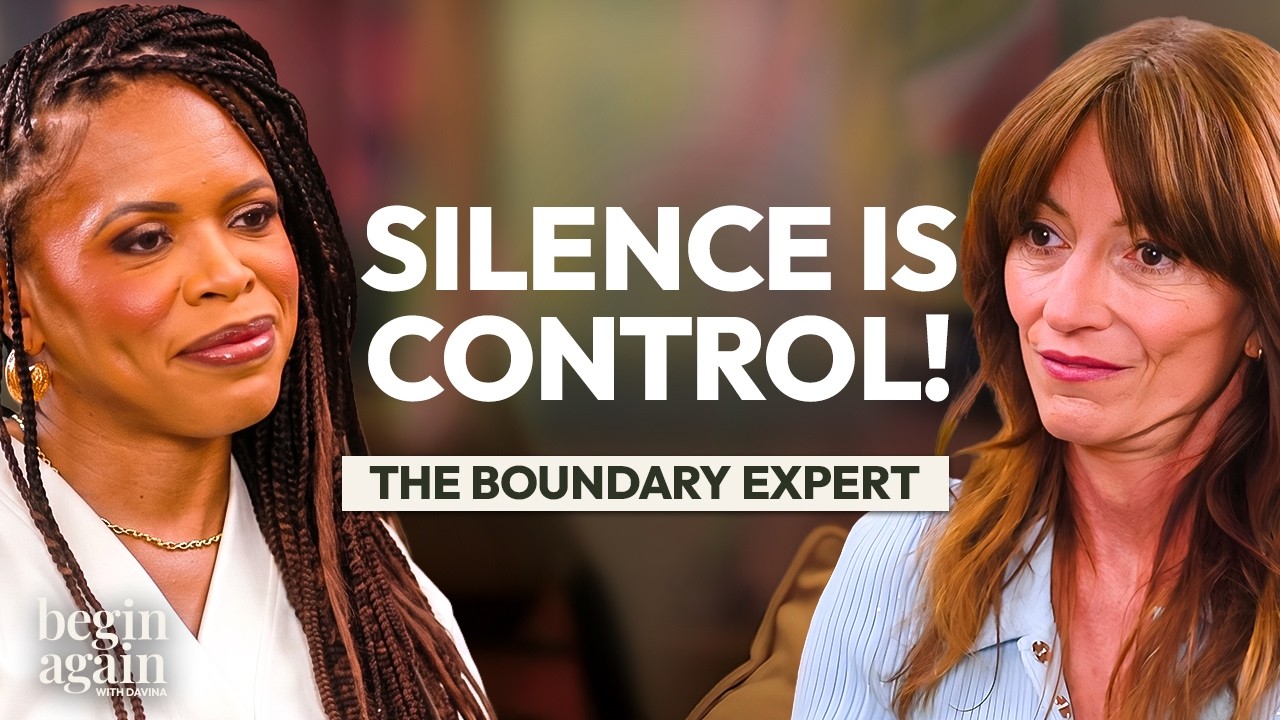

Begin Again with Davina McCall · How Childhood Shapes Your Boundaries and How to Change! · July 16, 2026
Psychologist Reveals Parents Project Their Own Childhood Trauma Onto Children Who Resemble Them
Begin Again with Davina McCall
How Childhood Shapes Your Boundaries and How to Change!
"All I'd done was changed the way I perceived her in my head, that she's not little me, she's an independent person, she's her own person. And from just the micro changes that I made in the way that I related to her made such an enormous We just got on brilliantly. From that moment, I thought, 'My god, I've been putting something on her.'"
Host Davina McCall shares how a child psychologist helped her recognize she was projecting her traumatic childhood onto her eldest daughter who physically resembled her, causing relationship dysfunction. The psychologist pointed out the daughter had a completely different upbringing with stability, present parents, and security. Nedra Glover Tauab confirms this is extremely common, with parents comparing their children to themselves using phrases like "I wouldn't have done that at that age" without recognizing vastly different contexts.

About this episode

Host Davina McCall interviews Dr. Nedra Glover Tauab, a licensed therapist and boundaries expert, on the Begin Again podcast for an in-depth conversation about relationships, childhood trauma, and healthy boundaries. Tauab, author of "Set Boundaries, Find Peace" and "The Balancing Act," reveals intimate details about growing up with alcoholic parents and how that shaped her therapeutic work helping adults reclaim boundary-setting abilities they were denied as children. The most striking disclosure involves Tauab's father using the silent treatment as an emotional control tactic, a pattern she identifies as a widespread manipulation technique in unhealthy relationships. The conversation explores the spectrum of dependency from codependency to counter-dependency, with Tauab warning that codependency becomes particularly damaging when it spans multiple life domains simultaneously—work, family, friendships, and romantic relationships—leaving a person with no space to receive support. McCall contributes her own revelation about projecting childhood trauma onto her eldest daughter until a psychologist helped her recognize the child had a completely different upbringing. Tauab emphasizes that emotional safety is a prerequisite for children developing boundaries, and authoritarian parenting that forbids questioning creates adults who struggle with assertiveness. The episode challenges cultural narratives around hyper-independence, which Tauab describes as an "awkward superpower" born from childhood neglect. Throughout, both women stress that change is possible at any age through practice, self-awareness, and willingness to show up differently in relationships, rejecting the notion that early attachment styles permanently determine adult outcomes.

Key takeaways

More stories More from Begin Again with Davina McCall