Psychology
Boundaries Expert Says Adults Carry Childhood Inability to Set Boundaries into Adulthood
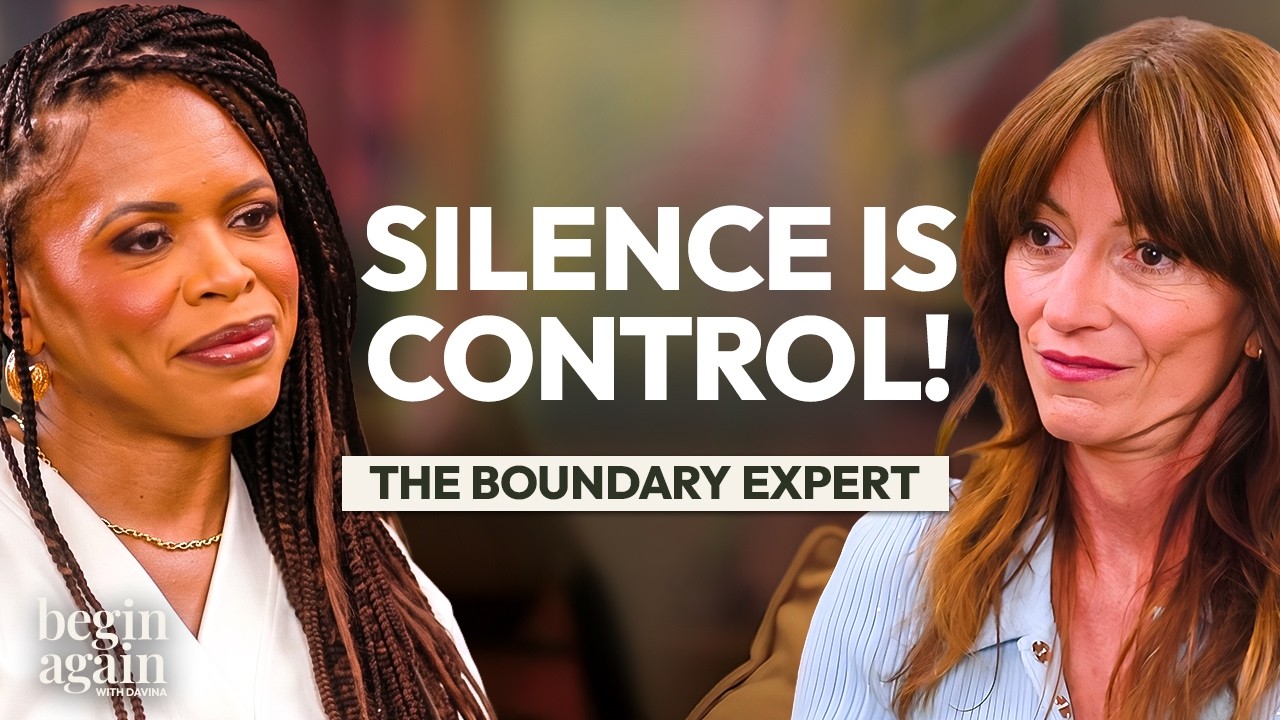
Begin Again with Davina McCall
How Childhood Shapes Your Boundaries and How to Change!
What was said
"Having boundaries requires emotional safety. Or at least physical safety. Yeah, so for kids who are not emotionally safe where they have a caregiver who understands, respects, listens, shows some level of concern, they can't have boundaries. There are some people who grow up in households where where, you know, parents might even say to them, 'You can't say that to me. You have to listen to me. You can't question this.'"
Nedra Glover Tauab explains that children raised without emotional safety cannot develop healthy boundaries, and this deficit persists into adulthood. She reveals that authoritarian parenting styles that forbid children from questioning or pushing back create adults who struggle with assertiveness. Tauab emphasizes that much of her therapeutic work involves teaching adults they now have permission to set boundaries they were denied as children.
Verification status
Attributed speaker claim
Egleze verified who said this and where. The underlying claim has not been independently established by Egleze.
Source and context
Egleze verified who said this and where. The underlying claim has not been independently established by Egleze.
- Programme
- Begin Again with Davina McCall
- Episode
- How Childhood Shapes Your Boundaries and How to Change!
- Clip time
- 6:37
- Original source
- Watch the source segment →
From this episode
Begin Again with Davina McCall