Health, Longevity & Biohacking
Guest Katie says placental hypoxia and sFlt-1 may drive pre-eclampsia
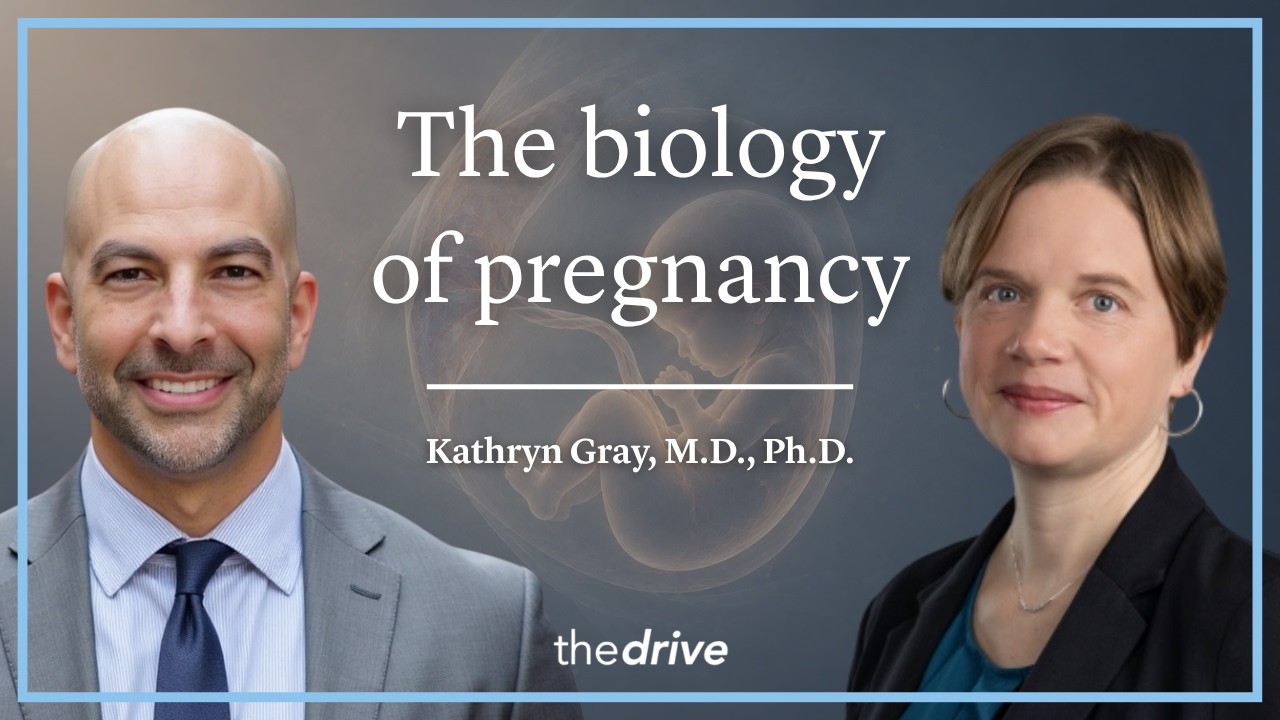

Peter Attia Drive
410 ‒ The biology of pregnancy: physiologic adaptation, childbirth, and long-term maternal health
What was said
"the placenta itself then releases this anti-angiogenic factor called esphlit into the maternal circulation and that molecule soaks up the um uh veaf important growth factor for maintaining um vessel endothelial cell function and that affects both the endothelial cells of the maternal vessels and the endothelial cells in the glomemeus of the kidney."
Guest Katie says a common model of pre-eclampsia involves inadequate remodelling of maternal spiral arteries, leaving the placenta relatively hypoxic. She argues the placenta may then release the anti-angiogenic factor sFlt-1 into maternal circulation, lowering VEGF signalling and impairing endothelial function, including in the kidney, linking hypertension with proteinuria.
Verification status
Attributed speaker claim
Egleze verified who said this and where. The underlying claim has not been independently established by Egleze.
Source and context
Egleze verified who said this and where. The underlying claim has not been independently established by Egleze.
- Speaker
- Katie (guest; surname not stated in provided evidence) · guest
- Programme
- Peter Attia Drive
- Episode
- 410 ‒ The biology of pregnancy: physiologic adaptation, childbirth, and long-term maternal health
- Clip time
- 41:37
- Original source
- Watch the source segment →
From this episode
Peter Attia Drive