Peter Attia Drive
Episode overview

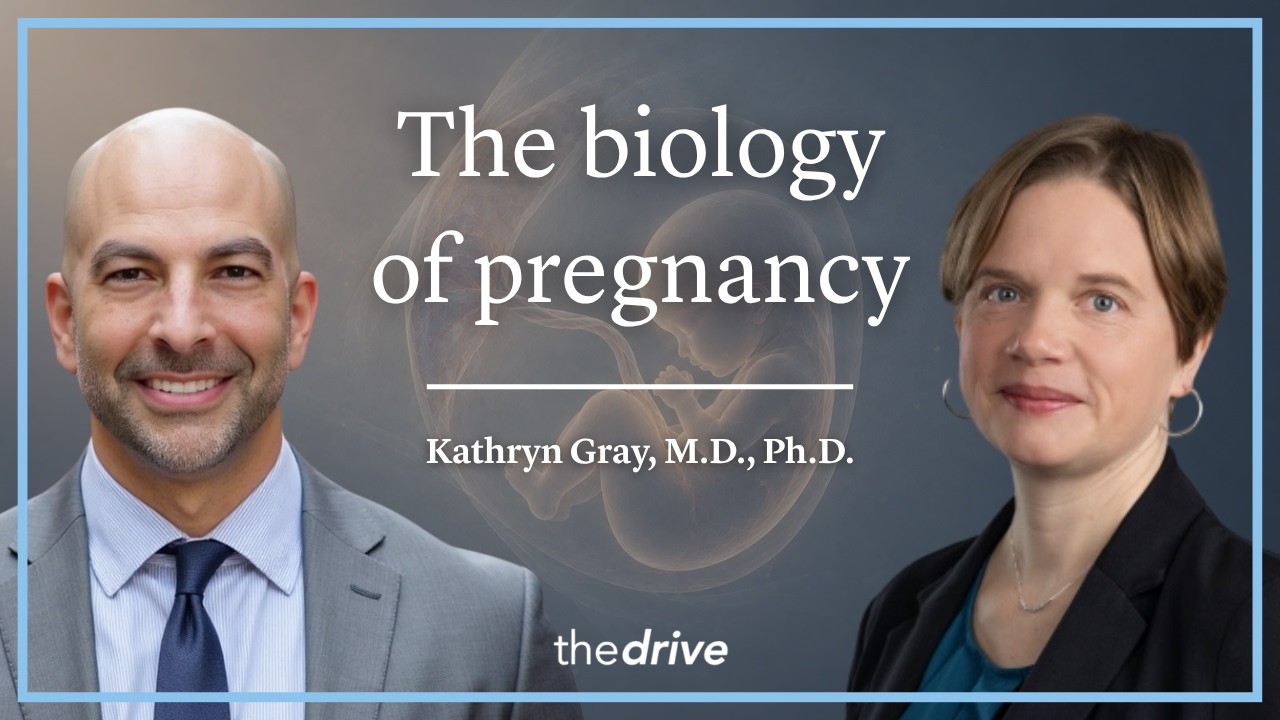
410 ‒ The biology of pregnancy: physiologic adaptation, childbirth, and long-term maternal health

Peter Attia Drive · 5 October 2026 · 2h 1m · 3 Egleze moments
410 ‒ The biology of pregnancy: physiologic adaptation, childbirth, and long-term maternal health ▶

What happened in this episode?

Peter Attia speaks with maternal–fetal medicine specialist Katie (MD–PhD) about pregnancy as a whole-body physiologic “stress test” and what it can reveal about long-term maternal health. They cover early pregnancy hormonal transitions from ovarian support to placental hormone production, and discuss severe nausea and vomiting (hyperemesis gravidarum), with the guest pointing to genetic evidence implicating GDF-15 as a potential therapeutic target.

The conversation devotes substantial time to cardiometabolic adaptation, including plasma volume expansion and insulin resistance. Katie outlines how gestational diabetes is screened (typically 24–28 weeks), why insulin is often first-line when diet changes fail, and says roughly half of gestational diabetes patients later develop type 2 diabetes, making postpartum surveillance important.

On hypertensive disorders, she defines preeclampsia and describes a mechanistic model in which placental hypoxia triggers release of the anti-angiogenic factor sFlt-1, affecting maternal endothelium and kidney function. She says postpartum hypertension can persist for weeks, and argues obstetric history is often missed in primary care despite its predictive value; she also notes genetic overlap between preeclampsia and essential hypertension.

They also discuss caesarean section trends and indications, the limitations of explaining stillbirth (which she says occurs about once per 160 pregnancies after 20 weeks), and advances in non-invasive prenatal screening via cell-free DNA. The episode ends with policy and research concerns, including insurance gaps in US postpartum care and underinvestment in pregnancy research at the NIH.

What are the key points?

Who is speaking?

Named speakers identified in Egleze's source-linked moments from this episode.

Which topics are covered?

How is this page sourced?

Programme
Peter Attia Drive
Published
5 October 2026
Duration
2h 1m
Original episode
Open the original source ↗

Egleze verifies the speaker, source and timestamp for each linked moment. Unless a moment is explicitly marked independently verified, statements remain attributed claims by the named speaker rather than established facts.

Watch original episode More from Peter Attia Drive

3 moments from this episode

Source-linked · editorially selected
01
Health, Longevity & Biohacking

Guest says severe heart or lung disease can make pregnancy medically inadvisable

Katie (guest; surname not stated in provided evidence) · at 12:49 · Attributed speaker claim
there are folks for who have severe enough cardio or pulmonary disease that um they are unable to tolerate that and then the recommendation is really to to not be pregnant.

Discussing pregnancy-related plasma-volume expansion, the guest says some patients with sufficiently severe cardiac or pulmonary disease cannot physiologically tolerate the changes of pregnancy. She says clinical advice in such cases can be to avoid pregnancy.

02
Health, Longevity & Biohacking

Guest Katie says placental hypoxia and sFlt-1 may drive pre-eclampsia

Katie (guest; surname not stated in provided evidence) · at 41:37 · Attributed speaker claim
the placenta itself then releases this anti-angiogenic factor called esphlit into the maternal circulation and that molecule soaks up the um uh veaf important growth factor for maintaining um vessel endothelial cell function and that affects both the endothelial cells of the maternal vessels and the endothelial cells in the glomemeus of the kidney.

Guest Katie says a common model of pre-eclampsia involves inadequate remodelling of maternal spiral arteries, leaving the placenta relatively hypoxic. She argues the placenta may then release the anti-angiogenic factor sFlt-1 into maternal circulation, lowering VEGF signalling and impairing endothelial function, including in the kidney, linking hypertension with proteinuria.

03
Health, Longevity & Biohacking

Guest says about half of gestational diabetes patients later develop type 2 diabetes

Katie (guest; surname not stated in provided evidence) · at 58:04 · Attributed speaker claim
50% of patients who have gational diabetes will develop type 2 diabetes.

The guest says around 50% of patients diagnosed with gestational diabetes will later develop type 2 diabetes. She adds that recommendations include regular postpartum diabetes screening and counselling on lifestyle measures such as diet, weight management and exercise; the host describes pregnancy as a physiologic ‘stress test’ that can reveal future risk.