Feel Better, Live More with Dr Rangan Chatterjee
Episode overview

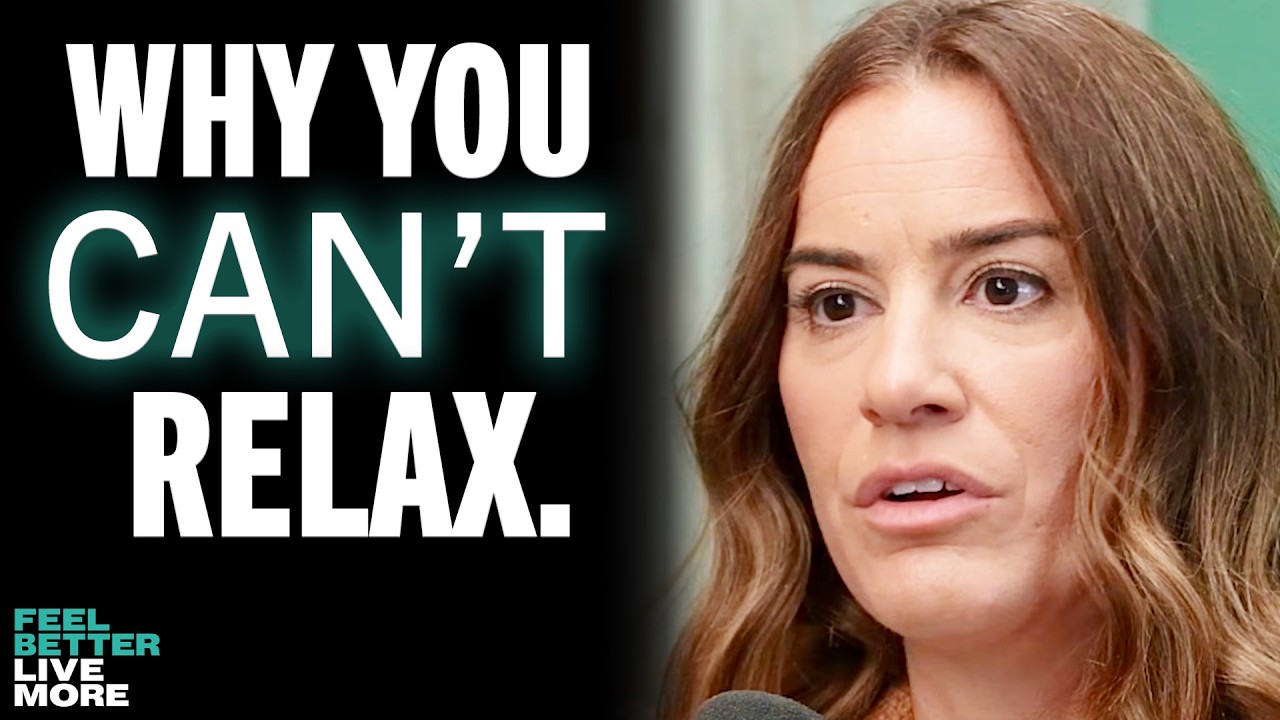
The Hidden Reason You Can't Stop Overthinking, People-Pleasing And Overworking with Dr Nicole LePera #664

Feel Better, Live More with Dr Rangan Chatterjee · 10 June 2026 · 5 Egleze moments
The Hidden Reason You Can't Stop Overthinking, People-Pleasing And Overworking with Dr Nicole LePera #664 ▶

What happened in this episode?

On this episode of Feel Better Live More, host Dr. Rangan Chatterjee was joined by clinical psychologist Dr. Nicole LePera, known online as The Holistic Psychologist, to discuss her new book Reparenting the Inner Child: The New Science of Our Oldest Wounds and How to Heal Them. LePera presented a nervous-system-centered framework for understanding how childhood adaptations—formed in response to emotionally immature, critical, or status-oriented parents—continue to drive adult behaviors like people-pleasing, overwork, hypersensitivity to criticism, and chronic busyness. She revealed that trauma is transmitted epigenetically across generations, citing research showing children inherit metabolic and stress responses from ancestors, and disclosed that development begins in utero with eggs created while mothers were still in their grandmothers' wombs. LePera argued that awareness alone is insufficient for healing; individuals must reconnect with their bodies through practices like conscious check-ins, bilateral stimulation, walking in nature, and presence during daily activities. She challenged popular protocols like cold plunges, warning they can harm people with dysregulated nervous systems, and reframed constant busyness as a survival strategy to avoid overwhelming internal sensations. The conversation emphasized that all parents inevitably cause some developmental wounds, but healing is possible at any age through the two-step process of becoming aware and making different choices. LePera stressed that healing is non-linear, that conflict in relationships is normal and necessary for growth, and that the moment insight is gained is the moment change has already begun. She closed by offering hope that individual healing creates safety in communities and changes the world one nervous system at a time.

What are the key points?

Which topics are covered?

How is this page sourced?

Programme
Feel Better, Live More with Dr Rangan Chatterjee
Published
10 June 2026
Original episode
Open the original source ↗

Egleze verifies the speaker, source and timestamp for each linked moment. Unless a moment is explicitly marked independently verified, statements remain attributed claims by the named speaker rather than established facts.

Watch original episode More from Feel Better, Live More with Dr Rangan Chatterjee

5 moments from this episode

Source-linked · editorially selected
01
Psychology

Psychologist Reveals Constant Busyness Is Survival Strategy to Avoid Childhood Pain

at 44:40 · Attributed speaker claim
Keeping ourselves busy keeps our attention outward, not inward on us. For a lot of us who never had safety and security, the ability to just be in childhood, rest, feel at ease—stillness, solitude—there was a time where I lived in New York City and had to have a television on at night because the sound of solitude, of silence, of not having all of my days planned, the minute my body had the opportunity to stop, what was I met with? The agitation, the overwhelming sensations that busyness was protecting me from.

LePera traced chronic busyness and inability to rest to dysregulated nervous systems formed in unpredictable or chaotic childhoods. She disclosed her own struggle with stillness, requiring constant noise and scheduled activities to avoid overwhelming internal sensations. The claim reframes productivity culture as a widespread trauma response rather than ambition.

02
Health, Longevity & Biohacking

Clinical Psychologist Claims Inner Child Wounds Formed in Womb by Ancestral Trauma

at 51:38 · Attributed speaker claim
The egg that developed all of us as humans was actually created in the womb of our grandmother as our mother was in her own gestation period. A part of us was living back then. Development begins in utero. All of us who come from insecure ancestral experiences—whether they were displaced by war, immigrated to a new country, there was abuse—we now know that's when our brain begins to form.

Dr. Nicole LePera explained that trauma is transmitted epigenetically across generations, with women born carrying eggs created while their mothers were in their grandmothers' wombs. She argued that nervous system dysregulation begins before birth, influenced by ancestral stress, cortisol levels, and environmental circumstances. This challenges the traditional view that childhood begins at birth and suggests healing must address inherited physiological patterns.

03
Science

Dutch Famine Study Shows Children Inherit Parents' Starvation Responses Through Epigenetics

at 52:51 · Attributed speaker claim
Women who were pregnant during this time, their body changed in terms of the way they utilize energy, held on to fat. What they then saw in the children that were born to these women was the same sort of changes where their body, the way it used energy, the way it held on to fat. And then over time they would begin to evidence some physical diseases, high blood pressure, cancer, a million different other things.

LePera cited the Dutch Hunger Study as proof that bodies adapt to scarcity and pass those metabolic changes to offspring even when food becomes abundant. She argued modern weight and metabolic issues may stem from ancestral famine responses, but noted the research also showed lifestyle changes can reverse inherited patterns within one generation.

04
Relationships & Family

All Parents Traumatize Their Children Because Perfect Parenting Is Impossible

at 1:10:29 · Attributed speaker claim
It is unrealistic to imagine that moments of disconnection, not meeting an expectation, not meeting a child's need or a partner's need is part of the human experience. Conflict, disagreement, disconnection, unmet needs are a natural part of a relational experience. What is an indicator of the health of a relationship is the ability to have a different awareness, make space for a different perspective, take accountability, and repair on the other side of it.

LePera argued all children experience developmental wounds because no parent can be perfectly attuned at all times, reframing the goal from avoiding all harm to modeling repair after rupture. She emphasized that interpersonal research shows conflict is normal and that the capacity to acknowledge, apologize, and reconnect determines relationship security, not the absence of mistakes.

05
Health, Longevity & Biohacking

Psychologist Says Cold Plunges Can Harm People With Dysregulated Nervous Systems

at 1:35:17 · Attributed speaker claim
Cold will stress our body out. Our blood vessels constrict, our muscles become tense. I discovered cold therapy very early on in my journey, but I was in such a dysregulated, overwhelmed body that it felt near intolerable. I had since learned that actually that was my body sending a signal that I should not be tolerating it to that degree.

LePera challenged the universal promotion of cold exposure, warning that for people with already overwhelmed nervous systems, cold plunges can cause additional harm rather than benefit. She recommended starting with cool rather than cold water and prioritizing nervous system regulation before adding stressors, contradicting influencer protocols that promote extreme cold for everyone.