Lewis Howes School of Greatness
Episode overview

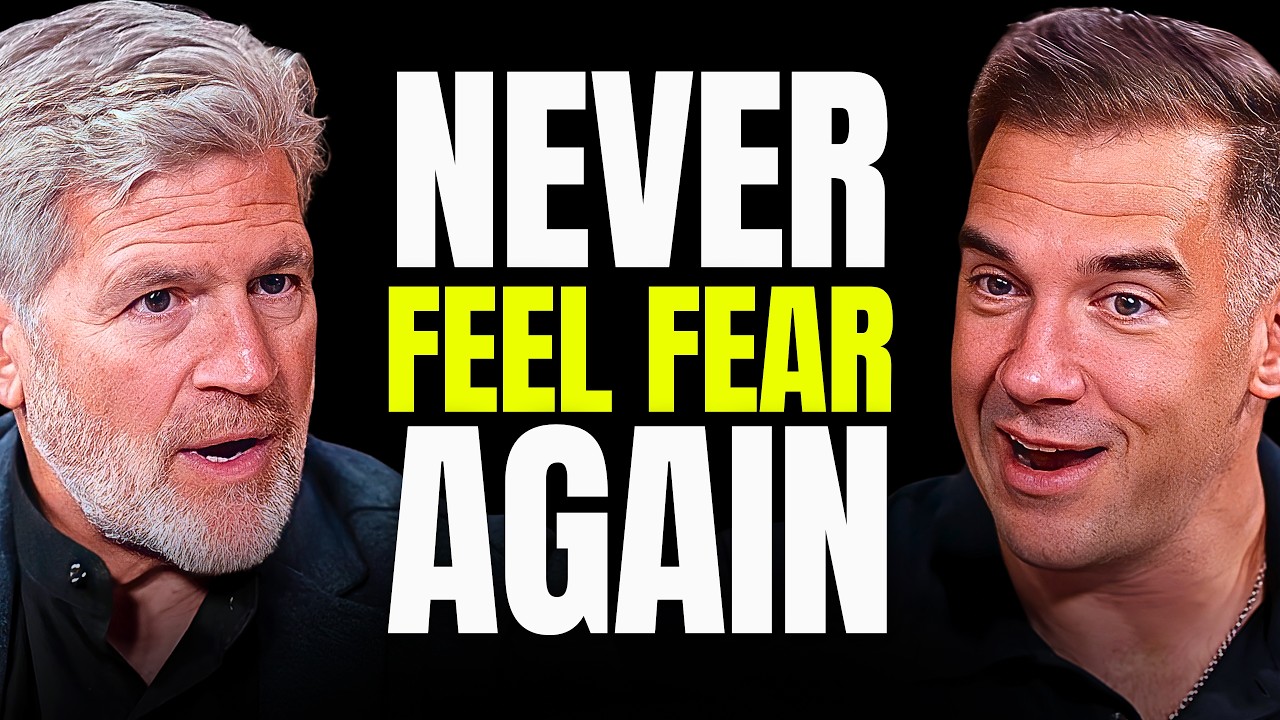
Neurosurgeon: Change How Your Brain Works in 30 Days | Dr. Mark McLaughlin

Lewis Howes School of Greatness · 13 July 2026 · 1h 20m · 5 Egleze moments
Neurosurgeon: Change How Your Brain Works in 30 Days | Dr. Mark McLaughlin ▶

What happened in this episode?

Dr. Mark McLaughlin, a certified neurosurgeon with over 25 years of experience and more than 8,000 brain and spine surgeries, joins Lewis Howes to discuss what operating on over 1,000 brains has taught him about fear, performance, and the human mind. McLaughlin reveals that fear is not the enemy but ignorance of fear is, arguing that fear always impedes performance and must be systematically dismantled. He shares transformational stories from his career, including receiving news of his father's terminal cancer diagnosis moments before a complex surgery, discovering a brain cyst had disappeared mid-operation four years into his practice, and carrying guilt for 16 years over a pediatric patient's poor outcome until learning the family was grateful he saved their son's life. McLaughlin challenges conventional wisdom about self-esteem, arguing that elite performers should have no esteem rather than high or low esteem, and that connecting with oneself is more important than judging oneself. He introduces his IRISE protocol for handling surgical emergencies and his fear framework that maps fear into four quadrants. McLaughlin also reveals he now operates on friends after his coach convinced him he was morally obligated to do so, contradicting the medical tradition taught by his surgeon grandfather. The conversation explores neuroplasticity, the difference between the brain and the mind, and how language shapes reality. McLaughlin emphasizes that outcomes should not define surgeons, that judgmentalness toward others reflects self-judgment, and that taking responsibility without blame or fault is the key to leadership and continuous improvement.

What are the key points?

Which topics are covered?

How is this page sourced?

Programme
Lewis Howes School of Greatness
Published
13 July 2026
Duration
1h 20m
Original episode
Open the original source ↗

Egleze verifies the speaker, source and timestamp for each linked moment. Unless a moment is explicitly marked independently verified, statements remain attributed claims by the named speaker rather than established facts.

Watch original episode More from Lewis Howes School of Greatness

5 moments from this episode

Source-linked · editorially selected
01
Health, Longevity & Biohacking

Neurosurgeon says fear not courage drove him to operate after father's terminal diagnosis

at 12:46 · Attributed speaker claim
My father was my mentor and just a huge leader in my life. And the news was bad that he had cancer and his prognosis was really poor. Right before I'm about to go into surgery. I don't think I can do this. I don't think that this is a good time to do surgery. What you did was, is you reminded yourself of who you are. You dismantled fear by reminding yourself of who you are, and you began to love your father more, love your patient more, and love what you do more.

Dr. McLaughlin received devastating news about his father's terminal cancer diagnosis moments before a complex brain surgery. He nearly canceled but proceeded by shifting his mindset from fear to love, dedicating the operation to his father while focusing on serving his patient.

02
Health, Longevity & Biohacking

Brain surgeon reveals outcomes don't define him after 16-year struggle with patient case

at 20:20 · Attributed speaker claim
I realized on that moment, I had the story all wrong. I kept blaming myself for his bad outcome when in fact I did the best I could in a very difficult situation and I kept his family intact. And on that day, I recognized, like, I cannot judge myself on my outcomes. I got to show up to work, do what I was trained to do, and the chips fall where they may.

Dr. Mark McLaughlin shares how a pediatric brain tumor case with complications haunted him for 16 years, causing him to quit pediatric neurosurgery. Years later, he discovered the patient was still alive with his family, leading to a profound realization that he had been holding himself to an impossible standard by judging his worth based on surgical outcomes rather than his effort and skill.

03
Psychology

Neurosurgeon argues self-esteem is disease and elite performers should have no esteem

at 23:34 · Attributed speaker claim
I don't want to have high self-esteem. I don't want to have low self-esteem. I want no esteem. Esteem is a roller coaster that I don't want to ride. Self-esteem is not helpful. Connecting with yourself is. Being who you are, accepting who you are as it is, understanding that you're enough. The disease of self-esteem. I think that if you really talk about elite performers that day in and day out deliver what they need to, they don't have esteem. They have no esteem. Not high esteem, not low esteem, no esteem.

Dr. McLaughlin makes the controversial claim that self-esteem itself is harmful to performance because it creates comparison and judgment. He argues elite performers succeed by accepting themselves as enough rather than riding the roller coaster of high or low self-esteem, distinguishing self-esteem from self-identity and self-connection.

04
Health, Longevity & Biohacking

Brain surgeon reveals cyst disappeared during operation forcing him to adapt mid-surgery

at 42:49 · Attributed speaker claim
i bring the microscope in and

Four years into his career, Dr. McLaughlin encountered a black swan event when a brain cyst visible on scans was not where expected during surgery. Unable to reach his senior partner for help, he methodically retraced his steps and discovered the cyst had moved position, successfully completing the operation and experiencing a transformational shift in confidence.

05
Health, Longevity & Biohacking

Brain surgeon now operates on friends after coach challenged his conventional wisdom

at 1:09:43 · Attributed speaker claim
I started operating on my friends. Never operate on your friends because what if something goes wrong? My coach helped me. He said, wait a minute, you love this person? They're your friend? And this is an operation that you can do better than anybody else or as good as anybody else? He said, then why aren't you? You're morally obligated to operate on them. I've probably operated on about 10 or 15 friends.

Dr. McLaughlin was taught by his surgeon grandfather and uncles never to operate on friends due to the emotional risk. Years later, his performance coach reframed this, arguing he was morally obligated to operate on friends because he cared most about their outcomes. He has since performed 10-15 surgeries on friends with good results.