← All stories
Money

Bilyeu warns Japan may use ‘force’ if growth fails to lure capital back
Tom Bilyeu Impact Theory · Your 401k Is Built On Borrowed Japanese Money — And It's Being Called Back — We Had To React · July 30, 2026
Bilyeu warns Japan may use ‘force’ if growth fails to lure capital back

Tom Bilyeu Impact Theory
Your 401k Is Built On Borrowed Japanese Money — And It's Being Called Back — We Had To React
"If they can't, they're going to have to accept that the yen is going to go down or that they're going to have to force people to bring their money back. Force, whether that's legally forced, penalty force, or hey, you're going to go to jail if you don't force, it will come with force."
Tom Bilyeu argues Japan’s long-term problem is attracting risk-adjusted returns at home, and suggests that if growth does not improve, authorities could resort to coercive measures to compel repatriation. He frames a spectrum from regulatory penalties to more overt capital controls, while stressing this is a scenario rather than a confirmed plan.

About this episode

Tom Bilyeu’s Impact Theory episode is a reaction and running commentary on an explainer by finance YouTuber Andre Jikh about Japan’s yen weakness, rising yields and the global ‘yen carry trade’. Jikh outlines how decades of near-zero Japanese rates encouraged investors to borrow cheaply in yen and buy higher-yielding foreign assets, arguing that this funded “trillions” in global positions and helped underpin demand for US Treasuries and risk assets.

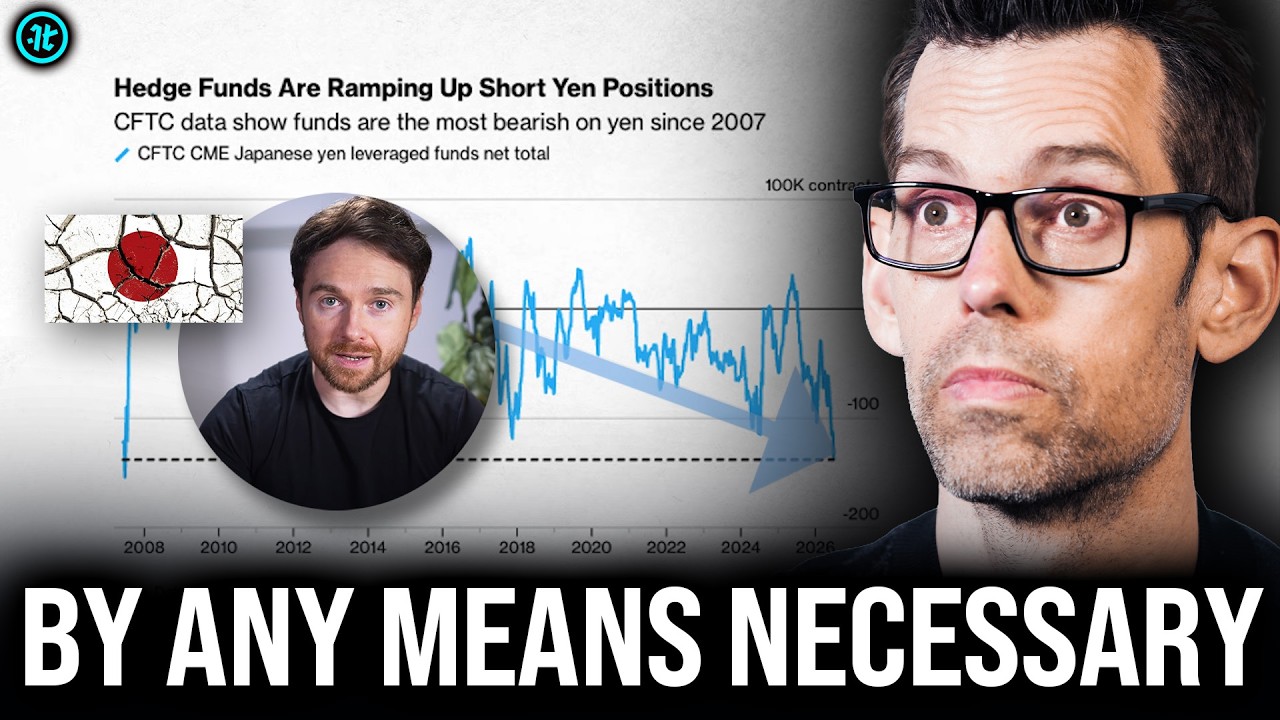
Jikh says Japan is now being pushed to choose between protecting the yen and keeping government borrowing costs low, as bond yields rise despite inflation easing. He cites CFTC positioning data showing large, visible hedge-fund shorts against the yen, while also arguing official FX interventions and modest rate rises have had limited effect.

A central claim is that Japanese policy is shifting towards repatriation: Jikh says Japan’s finance minister encouraged the $1.8 trillion GPIF to move away from foreign assets and back into Japan, noting the fund’s sizeable US Treasury holdings. He argues that if Japan and other holders step back, the US may need higher rates to attract new buyers. Bilyeu challenges viral claims that ‘Article 589’ provides a legal mechanism for a forced recall of yen funding, calling the provision narrowly scoped, but he speculates that if Japan cannot generate attractive domestic growth, authorities could still attempt stronger measures to pull capital home. Jikh also claims Japan has advanced crypto regulation to incentivise capital returning and create new demand for Japanese government bonds via stablecoin-style structures.

Key takeaways

More stories More from Tom Bilyeu Impact Theory