Andre Jikh says Japan urged GPIF to shift assets back home
"On July 10th, the Japanese government made an announcement about this. The finance minister of Japan said she wants the GPIF, that's the government pension investment fund, which is the biggest pension fund in the world, worth $1.8 trillion, to start moving its investments away from foreign assets and into Japanese assets. Now, that fund holds roughly $230 billion of US treasuries alone, plus hundreds of billions of dollars in US stocks."
About this episode
Tom Bilyeu’s Impact Theory episode is a reaction and running commentary on an explainer by finance YouTuber Andre Jikh about Japan’s yen weakness, rising yields and the global ‘yen carry trade’. Jikh outlines how decades of near-zero Japanese rates encouraged investors to borrow cheaply in yen and buy higher-yielding foreign assets, arguing that this funded “trillions” in global positions and helped underpin demand for US Treasuries and risk assets.
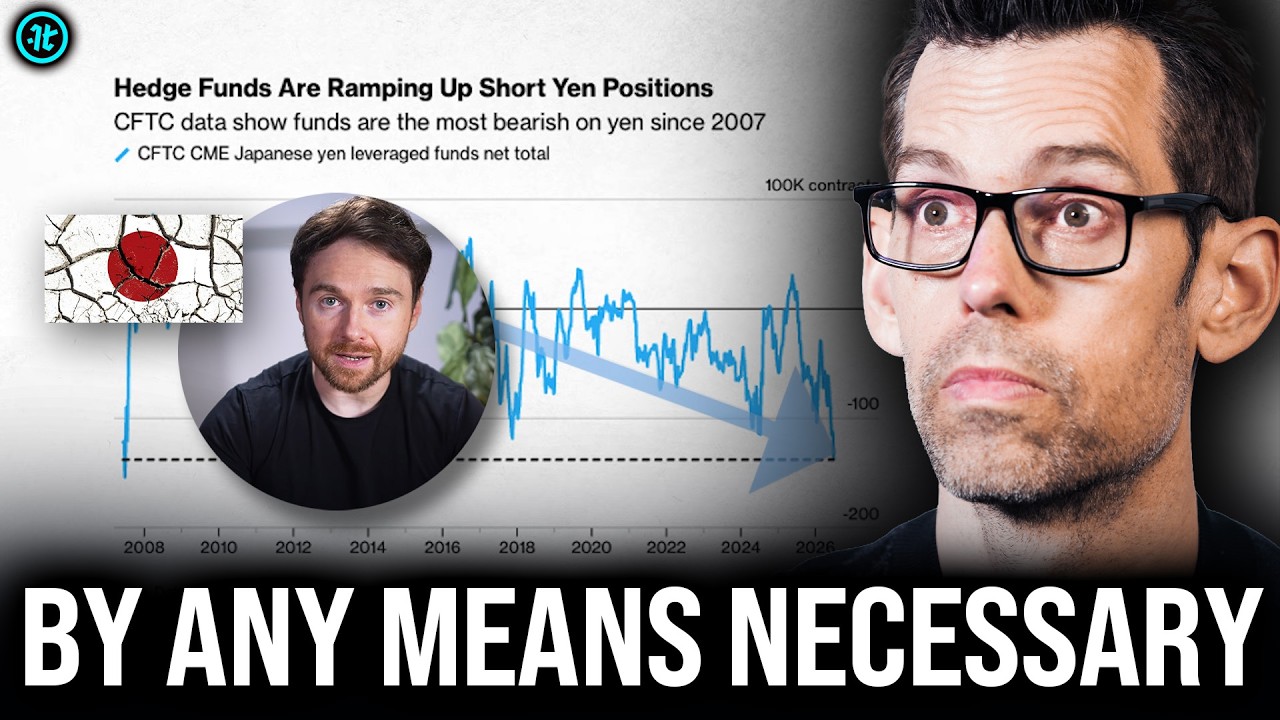
Jikh says Japan is now being pushed to choose between protecting the yen and keeping government borrowing costs low, as bond yields rise despite inflation easing. He cites CFTC positioning data showing large, visible hedge-fund shorts against the yen, while also arguing official FX interventions and modest rate rises have had limited effect.
A central claim is that Japanese policy is shifting towards repatriation: Jikh says Japan’s finance minister encouraged the $1.8 trillion GPIF to move away from foreign assets and back into Japan, noting the fund’s sizeable US Treasury holdings. He argues that if Japan and other holders step back, the US may need higher rates to attract new buyers. Bilyeu challenges viral claims that ‘Article 589’ provides a legal mechanism for a forced recall of yen funding, calling the provision narrowly scoped, but he speculates that if Japan cannot generate attractive domestic growth, authorities could still attempt stronger measures to pull capital home. Jikh also claims Japan has advanced crypto regulation to incentivise capital returning and create new demand for Japanese government bonds via stablecoin-style structures.
Key takeaways
- Andre Jikh argues Japan’s decades-long zero-rate environment enabled a global yen carry trade funding overseas assets.
- Jikh says Japan’s bond yields have risen sharply, creating tension between defending the yen and keeping debt servicing manageable.
- Jikh cites CFTC data indicating large, visible leveraged short positioning against the yen.
- Jikh claims Japan’s finance minister urged the GPIF pension fund to shift allocations from foreign assets back into Japanese assets.
- Tom Bilyeu disputes social-media claims about ‘Article 589’ as a tool for forced recall of overseas yen funding.
- Bilyeu speculates that if Japan cannot restore domestic growth and returns, coercive capital measures could become the remaining option.
- Jikh claims Japan’s crypto regulatory moves are designed to incentivise repatriation and support demand for Japanese government bonds.