Kent says officials urged pre-emptive steps to deter Israeli strike

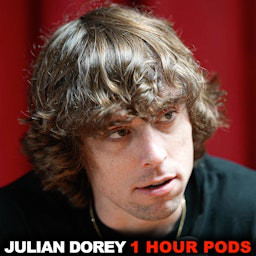
"Yeah, we proposed this in order to prevent the 12-Day War from happening, to prevent the Israelis from attacking, because we knew that once the Israelis got off the ground with this attack, law of unintended consequences, we don't know what's going to happen."
About this episode
Julian Dorey interviews Joe Kent, introduced as a former senior counterterrorism official working under US Director of National Intelligence Tulsi Gabbard, about his decision to resign in March amid the Iran conflict. Kent frames the war as avoidable and morally unacceptable, citing his military background and the death of his late wife. He alleges that Israel’s government and a supporting ecosystem of donors, media and think-tanks exerted undue influence on US decision-making and helped shift President Donald Trump’s effective red line on Iran from preventing a nuclear weapon to demanding zero enrichment—an approach Kent says Iran would not accept.
Kent describes internal debates ahead of a “12-day war” and “Operation Midnight Hammer”, saying he and others floated proposals intended to deter an Israeli strike but were ignored. He claims Israeli officials privately prioritised regime change or “regime decapitation” in Tehran and were prepared for a rally-around-the-flag effect, while publicly selling the nuclear issue as the central threat. Kent also contends that Trump’s earlier efforts to withdraw forces from Syria and Afghanistan were obstructed by officials and bureaucratic inertia, and argues such dynamics can prevent the president from ensuring execution of decisions.
In a broader institutional critique, Kent says US intelligence collection capabilities in places like Iran have atrophied, increasing reliance on liaison reporting—including from Israel—making independent verification harder during crises.
Key points:
- Kent says he resigned on principle over the Iran war and wanted to speak publicly about how it was decided.
- He alleges Israel and allied networks influenced US red lines and messaging on Iran.
- He claims Trump’s Syria drawdown order was blocked, and connects that delay to his wife’s death.
- He says officials proposed steps to deter an Israeli strike before the “12-day war” but were rebuffed.
- He argues US unilateral intelligence collection on Iran has weakened, increasing reliance on Israeli liaison intelligence.
- Kent says Israeli officials privately spoke in terms of regime change/decapitation rather than only nuclear concerns.
Key takeaways
- Joe Kent says he resigned from a senior counterterrorism role after the Iran war began.
- Kent alleges Israeli government influence, donors and media networks shaped US Iran policy.
- He claims Trump’s Syria withdrawal order was delayed by internal obstruction and ties this to his wife’s death.
- Kent says proposals to deter an Israeli strike before the “12-day war” were rejected.
- He argues US intelligence collection on Iran has “atrophied”, increasing reliance on Israeli reporting.