
Timcast IRL
Episode overview

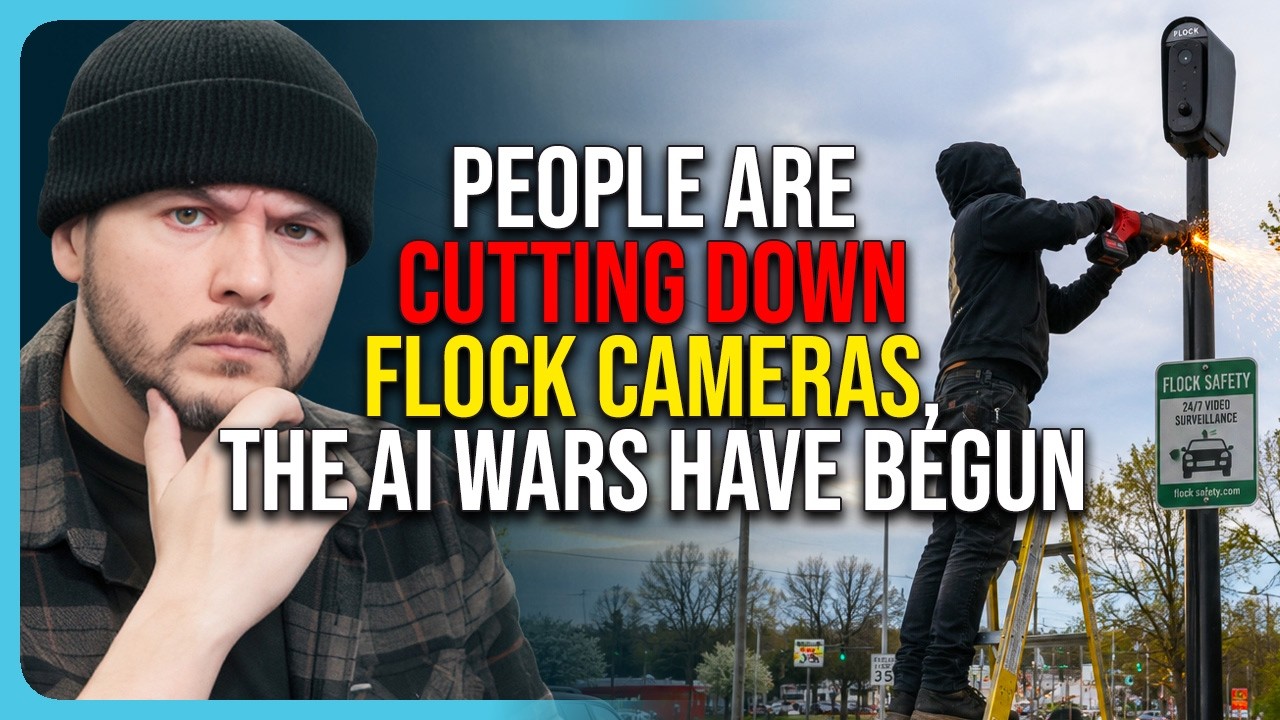
People Are CUTTING DOWN Flock Cameras, The AI Wars Have Begun

Timcast IRL · 21m · 3 Egleze moments
People Are CUTTING DOWN Flock Cameras, The AI Wars Have Begun
Episode summary

Tim Pool and his co-hosts discuss the accelerating disruption of AI across policing, medicine, entertainment, and daily life, focusing on both the technological inevitability and societal resistance. The episode centers on growing backlash against Flock surveillance cameras in Houston, where residents are physically cutting down the devices amid reports of wrongful arrests from misidentified license plates and facial recognition errors. One case highlighted involved a woman jailed for four months in a state she had never visited based on faulty AI, losing her home and livelihood before being exonerated. The hosts debate whether DSA-affiliated activists opposing the cameras are motivated by legitimate privacy concerns or ideological opposition to technology they cannot control. Pool predicts AI surgical robots will surpass human doctors within 18 months, citing recent robotic gallbladder removal and the advantage of shared learning across all robotic units. The conversation shifts to Neuralink-style brain-computer interfaces, with hosts predicting widespread adoption despite conservative resistance, comparing it to social pressure that drove Xbox Live adoption. Pool reveals power companies attempted to route data center transmission lines through his podcast property but reconsidered after realizing the public attention it would generate. The group concludes that AI music and content creation will make traditional artistic careers nearly impossible for emerging artists, though established acts with loyal fanbases may survive through live performance.

Key points
Watch original episode More from Timcast IRL

3 moments from this episode

Source-linked · editorially selected
01
AI & Tech

AI surgeons will surpass human doctors within 18 months, FDA approval soon after

The host predicts AI surgical robots will become commercially viable within 18 months, with FDA approval following within a year. The claim follows recent successful robotic gallbladder removal using standard surgical tools. The key advantage cited is that robotic surgeries share data across all units, creating a collective experience base of hundreds of thousands of procedures versus individual human surgeons' limited experience.

Read this moment →
02
AI & Tech

Power companies targeting podcast property for data center infrastructure, host claims political pressure stopped it

Tim Pool claims power companies attempted to run transmission lines through his podcast studio property to support data center expansion, ostensibly for community needs. He alleges that after making a single phone call and the companies realizing the public attention it would generate through his platform, the route was reconsidered. Pool frames this as evidence that data center infrastructure projects avoid high-profile properties to prevent public awareness and opposition.

Read this moment →
03
AI & Tech

Woman jailed four months after facial recognition AI wrongly identified her as criminal

A woman was wrongfully arrested based on faulty facial recognition AI, held in jail for four months in a state she had never visited, and lost her home, pets, and job before her lawyer proved the mistake. The case illustrates growing concerns about law enforcement's reliance on AI surveillance systems like Flock cameras, which have led to multiple wrongful arrests when officers follow AI flags without reviewing contradictory evidence.

Read this moment →