Diary of a CEO
Episode overview

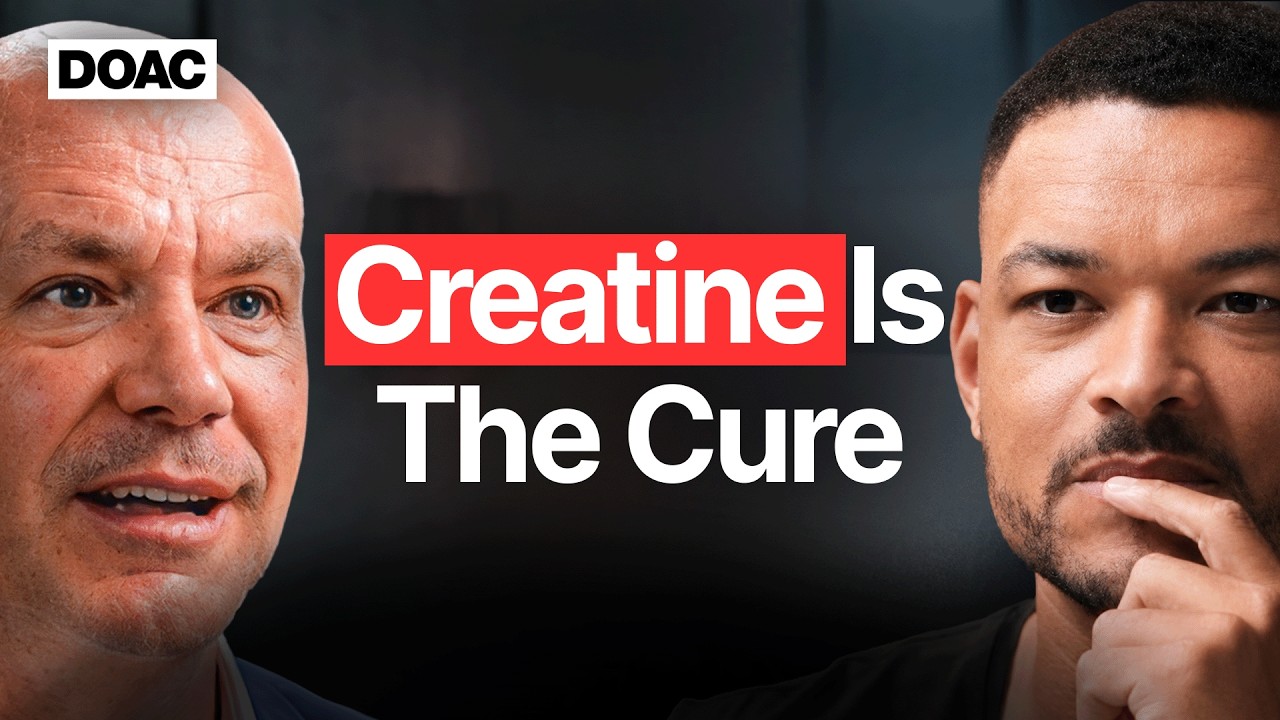
Creatine Expert: Creatine Is The Secret To Weight Loss

Diary of a CEO · 15 June 2026 · 5 Egleze moments
Creatine Expert: Creatine Is The Secret To Weight Loss ▶

What happened in this episode?

Steven Bartlett sits down with Dr. Darren Candow, one of the world's leading creatine researchers who has published over 120 papers on the supplement, for a comprehensive discussion on creatine's benefits far beyond muscle building. Dr. Candow, a professor of kinesiology who has assessed over 1,000 subjects in his lab, reveals that creatine's most promising applications may lie in brain health, mental performance under stress, and healthy aging rather than athletic performance alone. The conversation begins by systematically debunking five major myths about creatine—kidney damage, water retention, gender specificity, hair loss, and muscle cramps—before diving into dosing protocols that vary dramatically based on use case. While 5 grams daily suffices for muscle maintenance, Dr. Candow explains that metabolically stressed brains from sleep deprivation, jet lag, or intense cognitive demand may require 20 to 30 grams daily to see benefits, citing German studies where such doses offset 21 hours of sleep deprivation. He presents compelling evidence that creatine doubled remission rates in women with major depression when combined with antidepressants, and that young athletes taking it slept an hour longer on training days. The discussion covers bone health in postmenopausal women, emerging Alzheimer's research showing 11% increases in brain creatine levels, potential prophylactic use for concussion in contact sports, and why vegans and vegetarians respond best to supplementation. Dr. Candow emphasizes weight training as the single most important exercise modality for longevity, describing it as superior to cardio for maintaining the musculoskeletal system while delivering similar cardiovascular benefits. He reveals his personal stack—10 grams of creatine daily as a baseline, escalating to 25 grams when traveling across time zones—and explains why CreaPure monohydrate with third-party NSF certification is the only form worth taking. The episode concludes with Dr. Candow admitting that despite decades of research, scientists still don't know the optimal individualized dose for most people, and that fear of death drives his passion for longevity research.

What are the key points?

Which topics are covered?

How is this page sourced?

Programme
Diary of a CEO
Published
15 June 2026
Original episode
Open the original source ↗

Egleze verifies the speaker, source and timestamp for each linked moment. Unless a moment is explicitly marked independently verified, statements remain attributed claims by the named speaker rather than established facts.

Watch original episode More from Diary of a CEO

5 moments from this episode

Source-linked · editorially selected
01
Health, Longevity & Biohacking

Leading Creatine Researcher Cannot Find Anyone Who Shouldn't Take Supplement

at 17:30 · Attributed speaker claim
I've published over 120 papers just on creatine alone. We've done at least 30 to 40 studies in our lab, and I can't find anybody that can't or shouldn't take creatine.

Dr. Candow stated that across decades of research involving over 1,000 subjects assessed in his lab alone, he has found no population that should avoid creatine at recommended doses. This includes children, pregnant women (preliminary evidence), and elderly populations, dramatically expanding who should consider supplementation.

02
Health, Longevity & Biohacking

Creatine Expert Reveals 30 Grams Daily Needed to Offset Sleep Deprivation

at 30:52 · Attributed speaker claim
There's 25 and here's 30. So a classic study was done last year when they gave 30 grams to a group of young individuals who volunteered to be sleep deprived for 21 hours. And that level of creatine increased creatine levels in the brain and it offset some of the negative effects.

Dr. Darren Candow, who has published over 120 papers on creatine, revealed that while healthy brains may need minimal supplementation, metabolically stressed brains from sleep deprivation require dramatically higher doses—up to 30 grams daily. This contradicts standard 5-gram recommendations and suggests most people in modern high-stress environments need far more than previously thought.

03
Health, Longevity & Biohacking

Study Shows Creatine Doubled Remission Rates in Women with Major Depression

at 45:13 · Attributed speaker claim
In a clinical trial of women with major depression, adding 5 grams of creatine to their daily antidepressant doubled their remission rate over 8 weeks.

Research from Perry Renshaw's group at the University of Utah demonstrated that creatine supplementation as an adjunct therapy doubled treatment success in clinical depression cases. Dr. Candow noted that populations with depression, anxiety, and Alzheimer's all show reduced baseline creatine stores in the brain, suggesting a metabolic component to these conditions.

04
Health, Longevity & Biohacking

Young Athletes Taking Creatine Slept One Hour Longer on Training Days

at 45:13 · Attributed speaker claim
We did that study a few years ago in young biological females who were healthy, and on the days that they trained and took creatine—this is interesting because they actually slept an hour longer compared to a placebo.

Dr. Candow's research found that young female athletes taking creatine supplementation spontaneously slept approximately one hour longer on training days versus placebo. This unexpected finding suggests creatine may improve sleep homeostasis and recovery, though the mechanism remains unclear and requires replication in male subjects.

05
Health, Longevity & Biohacking

Top Researcher Says Most People Don't Know Optimal Creatine Dose

at 1:08:43 · Attributed speaker claim
If you were to say, what's the best dose, Darren, to take? I say, I have no clue. Every creatine researcher said, I don't know. We still don't know the best dose that every person can take that will check off all the boxes, especially in the brain.

Despite being the most researched supplement and Dr. Candow having published 120+ papers on it, he admitted researchers still cannot determine individualized optimal dosing. Doses range from 3 grams for muscle maintenance to 30 grams for acute cognitive stress, with substantial individual variation based on body size, stress levels, and metabolic state.