Young Athletes Taking Creatine Slept One Hour Longer on Training Days
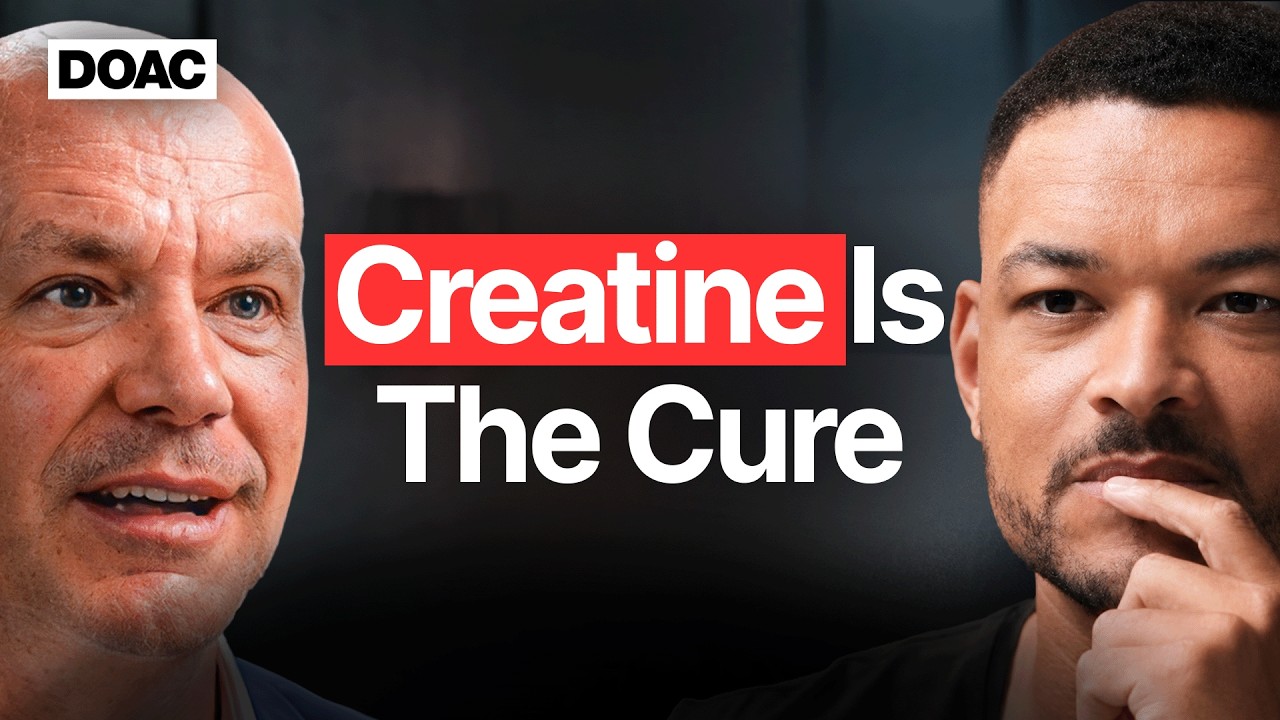
"We did that study a few years ago in young biological females who were healthy, and on the days that they trained and took creatine—this is interesting because they actually slept an hour longer compared to a placebo."
About this episode
Steven Bartlett sits down with Dr. Darren Candow, one of the world's leading creatine researchers who has published over 120 papers on the supplement, for a comprehensive discussion on creatine's benefits far beyond muscle building. Dr. Candow, a professor of kinesiology who has assessed over 1,000 subjects in his lab, reveals that creatine's most promising applications may lie in brain health, mental performance under stress, and healthy aging rather than athletic performance alone. The conversation begins by systematically debunking five major myths about creatine—kidney damage, water retention, gender specificity, hair loss, and muscle cramps—before diving into dosing protocols that vary dramatically based on use case. While 5 grams daily suffices for muscle maintenance, Dr. Candow explains that metabolically stressed brains from sleep deprivation, jet lag, or intense cognitive demand may require 20 to 30 grams daily to see benefits, citing German studies where such doses offset 21 hours of sleep deprivation. He presents compelling evidence that creatine doubled remission rates in women with major depression when combined with antidepressants, and that young athletes taking it slept an hour longer on training days. The discussion covers bone health in postmenopausal women, emerging Alzheimer's research showing 11% increases in brain creatine levels, potential prophylactic use for concussion in contact sports, and why vegans and vegetarians respond best to supplementation. Dr. Candow emphasizes weight training as the single most important exercise modality for longevity, describing it as superior to cardio for maintaining the musculoskeletal system while delivering similar cardiovascular benefits. He reveals his personal stack—10 grams of creatine daily as a baseline, escalating to 25 grams when traveling across time zones—and explains why CreaPure monohydrate with third-party NSF certification is the only form worth taking. The episode concludes with Dr. Candow admitting that despite decades of research, scientists still don't know the optimal individualized dose for most people, and that fear of death drives his passion for longevity research.
Key takeaways
- Dr. Candow revealed that sleep-deprived or metabolically stressed brains may require 20 to 30 grams of creatine daily to see cognitive benefits, far exceeding the standard 5-gram muscle maintenance dose.
- Clinical trials showed that adding 5 grams of creatine to antidepressants doubled remission rates in women with major depression over 8 weeks, according to University of Utah research.
- Young female athletes taking creatine slept approximately one hour longer on training days compared to placebo in Dr. Candow's studies, suggesting unexpected sleep quality benefits.
- After publishing 120+ papers on creatine and assessing over 1,000 subjects, Dr. Candow stated he cannot find any population that should avoid creatine at recommended doses, including children and preliminary evidence in pregnancy.
- Weight training was identified as superior to cardiovascular exercise for longevity because it delivers similar cardiovascular benefits while uniquely maintaining muscle mass, strength, and bone density that decline 1-3% annually after age 40.
- Only creatine monohydrate with CreaPure certification and third-party NSF testing should be used, as 90% of off-the-shelf creatine products tested contained little to no actual creatine.
- Dr. Candow admitted that despite decades of research, scientists still don't know the optimal individualized creatine dose, which varies by body size, metabolic stress, and whether targeting muscle, bone, or brain benefits.