Modern Wisdom
Episode overview

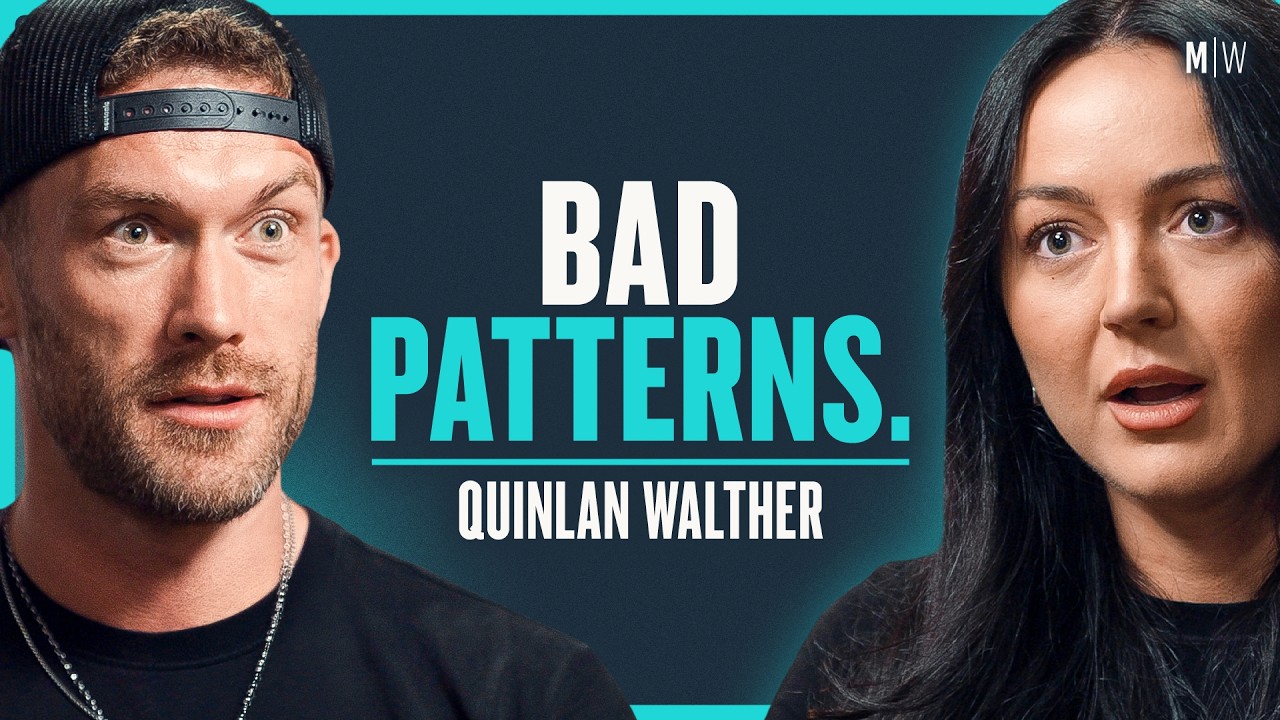
How The Partner You Choose Reveals Your Self-Worth - Quinlan Walther - #1110

Modern Wisdom · 13 June 2026 · 5 Egleze moments
How The Partner You Choose Reveals Your Self-Worth - Quinlan Walther - #1110 ▶

What happened in this episode?

On this episode of Modern Wisdom, host Chris Williamson sits down with therapist and relationship expert Quinn and Walter for an intensive exploration of attachment, self-trust, and why modern relationships are failing. Quinn and Walter opens with a provocative diagnostic: if someone told you they could judge your self-worth by your partner choice, your emotional reaction reveals everything. The conversation quickly escalates into deeper territory as she argues that most emotional distress stems not from external uncertainty but from doubting one's ability to handle future feelings. Quinn and Walter introduces her framework of self-trust built on four pillars: curiosity, capacity, compassion, and commitment, claiming these are prerequisites for sustainable fulfillment. A central thesis emerges: people systematically confuse anxiety for chemistry because childhood attachment patterns wire the nervous system to interpret familiar chaos as love. She delivers a controversial claim that empathy without boundaries is actually self-abandonment serving selfish needs to avoid loneliness. Williamson pushes back throughout, exploring whether high achievers apply the wrong work-harder mindset to relationships and whether AI dating represents salvation or dystopia. Quinn and Walter contends modern culture suffers from arrested development, with people unable to differentiate self from others, making differing opinions feel existentially threatening. The episode concludes with practical repair strategies and a call to return to embodied, in-person connection over algorithmic matching.

What are the key points?

Which topics are covered?

How is this page sourced?

Programme
Modern Wisdom
Published
13 June 2026
Original episode
Open the original source ↗

Egleze verifies the speaker, source and timestamp for each linked moment. Unless a moment is explicitly marked independently verified, statements remain attributed claims by the named speaker rather than established facts.

Watch original episode More from Modern Wisdom

5 moments from this episode

Source-linked · editorially selected
01
Psychology

Most Emotional Issues Come From Uncertainty About Future Feelings, Not Events

at 3:01 · Attributed speaker claim
The majority of our issues, emotional anyway issues, come from uncertainty. What's going to happen to me? What are people going to think of me? What am I going to think of myself? But more importantly, how am I going to feel if this person breaks up with me, if I don't get this job, if someone that I love dies. Most of it is how am I going to feel on the other end of that?

Quinn and Walter proposes that emotional distress stems not from fear of external events but from uncertainty about one's ability to handle the feelings those events produce. She argues self-trust—confidence in supporting yourself through any emotion—is the only strategy that addresses all situations.

02
Psychology

Relationships Fail Because People Choose Familiar Pain Over Unfamiliar Heaven

at 9:46 · Attributed speaker claim
Your nervous system will always choose a familiar hell over an unfamiliar heaven. How many people had the distant and difficult-to-please father that they had to perform for? And then if love is easily given to them in adulthood, they feel like they should run away, or it's not worthy of something. There's something wrong with people who show them love too easily, and there's something alluring about people that make them work for it.

Williamson and Quinn and Walter discuss how unresolved childhood wounds create attraction to familiar dysfunction. People repeat painful attachment patterns because uncertainty about healthy love feels more threatening than the known pain of dysfunction, perpetuating destructive relationship cycles until consciously addressed.

03
Psychology

People Mistake Anxiety for Chemistry Because of Childhood Conditioning, Therapist Claims

at 12:55 · Attributed speaker claim
If you're talking to someone who grew up with really steady caregivers, really attuned caregivers, their association with love is going to be calm and steady and consistent versus someone else who's really used to inconsistent caregivers, not feeling like a priority, love being hot and cold or hurtful, then that sense of adrenaline that kicks in when you meet someone who mimics the same, you're going to say, oh, that's love.

Quinn and Walter explains that people confuse red-flag activation with romantic chemistry due to childhood attachment patterns. Those raised with inconsistent care interpret adrenaline and chaos as love, while securely attached individuals experience love as calm. This fundamental misreading of bodily sensations drives destructive relationship choices.

04
Psychology

Emotional Empathy Without Boundaries Is Actually Self-Abandonment, Says Quinn and Walter

at 41:22 · Attributed speaker claim
Empathy without boundaries is self-abandonment. And on the backend of empathy that lacks boundaries, is some sense of lack. Like, okay, if I just empathize enough, if I can understand why this person is treating me so badly, then I'll be able to rationalize it and I can keep them around a little bit longer because I still need to be chosen.

Quinn and Walter argues that excessive empathy in relationships serves a selfish function, allowing people to rationalize mistreatment to avoid facing abandonment fears. She contends that over-empathizing becomes a protection mechanism masking deeper insecurity about being alone, transforming what appears virtuous into self-destructive behavior.

05
Relationships & Family

Modern Dating Crisis Rooted in Inability to Differentiate Self From Others

at 54:24 · Attributed speaker claim
I think it's a socialization issue where we aren't really taught how to relate in a way that says, tell me who you are and I'll tell you who I am. And we can still have a relationship even if all of these characteristics don't align. Your self is a threat to my self.

Quinn and Walter identifies modern relationship struggles as stemming from arrested emotional development where people cannot maintain their identity while connecting with different others. This egocentricity makes differing views feel threatening, preventing healthy differentiation and fueling both male-female cultural incompatibility and online tribalism.