What happened in this episode?
Neil deGrasse Tyson and co-host Chuck Nice field audience questions across solar system science, astrophysics fundamentals, and space policy. Tyson explains why some astronomers have proposed an unseen “Planet 9”: patterns in Kuiper Belt object motions are interpreted by some as evidence of an additional gravitational influence, though he stresses the idea remains speculative and contested, and notes the Rubin Observatory’s survey design could in principle detect moving objects.
On Pluto’s status, Tyson recounts how improved telescopes and the discovery of comparable Kuiper Belt objects drove the International Astronomical Union’s definition changes, emphasising criteria such as orbit-clearing and orbital behaviour. He links the reclassification to an earlier historical precedent in which early “planets” between Mars and Jupiter were later grouped as asteroids.
The episode also covers the relationship between quantum physics and semiconductors, with Tyson arguing quantum theory underpins modern electronics and computing. He discusses how galaxy shapes relate to rotation, gas content, and collisions, citing computational modelling that explained many “peculiar” galaxies catalogued in the 20th century.
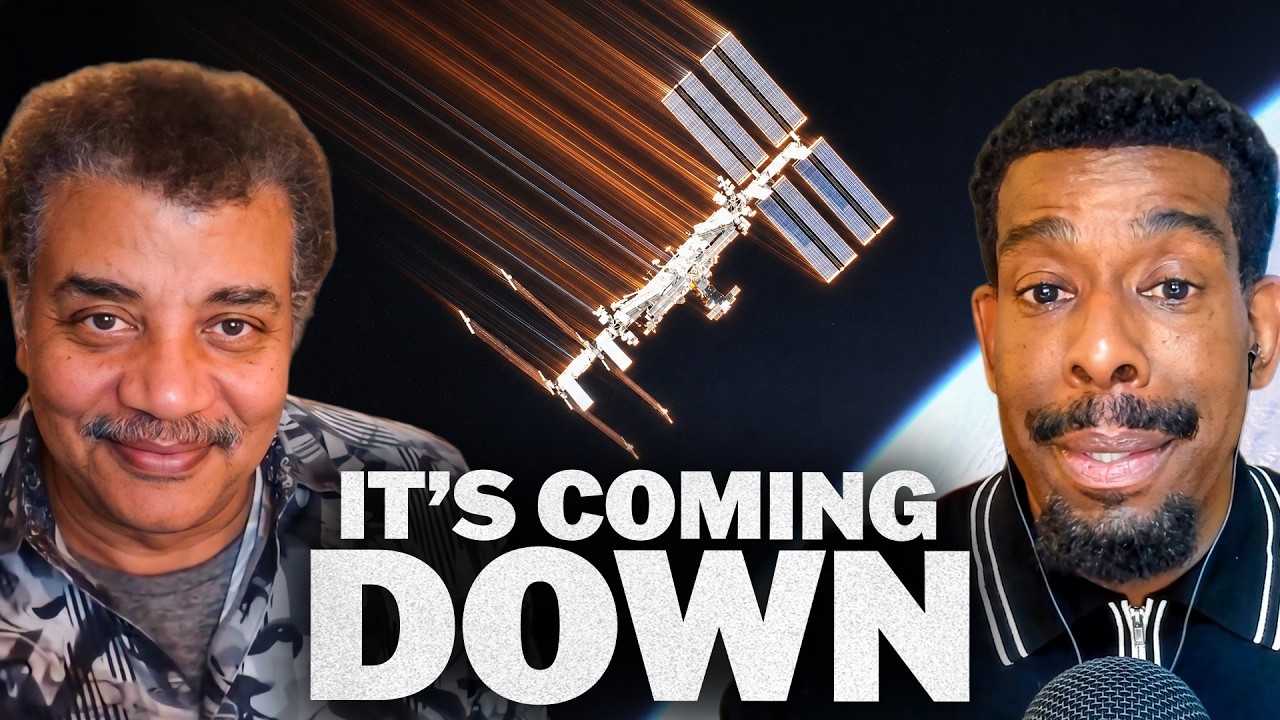
Later, Tyson addresses speculative ideas about dark matter, entertaining (without endorsing) notions such as parallel-universe matter contributing gravitational effects. On the ISS, he comments on the reported 2030-31 deorbit timeframe and argues NASA funding debates are often influenced by geopolitical competition, particularly with China. He closes with a personal recollection of a 1999 Leonid meteor that appeared to be heading directly towards him before burning up.