Duncan Trussell Family Hour
Episode overview

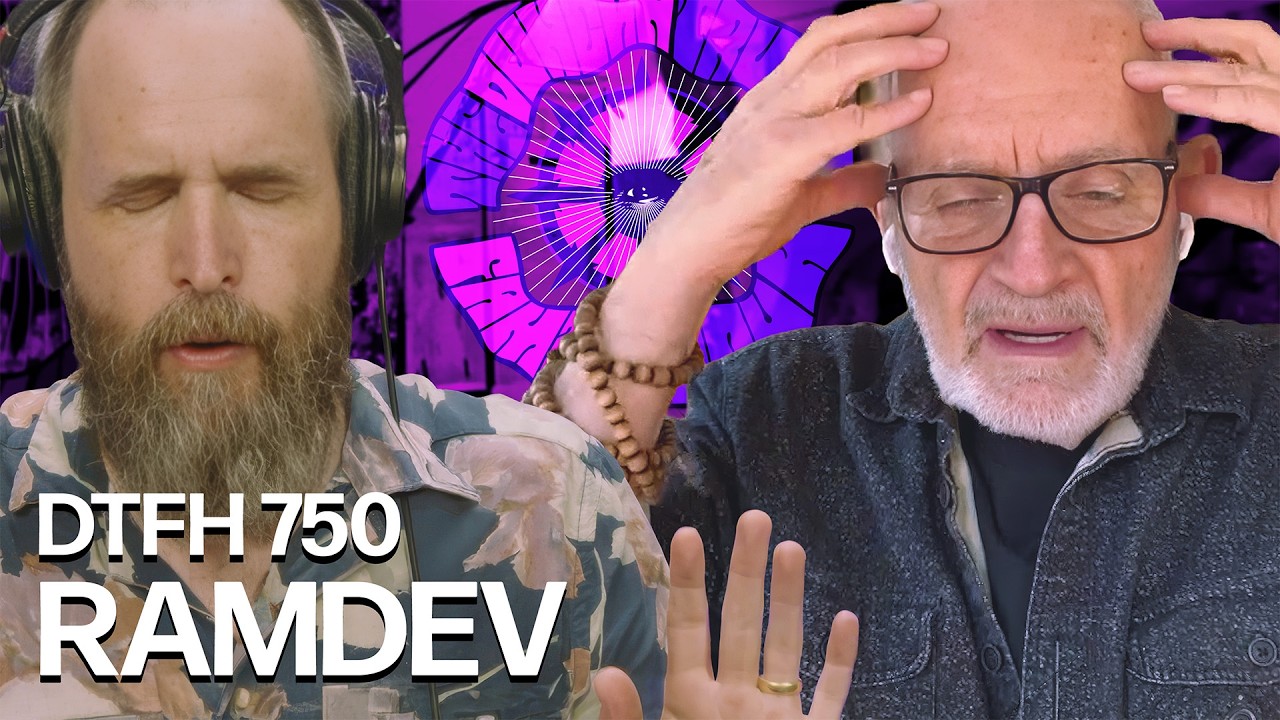
754: RamDev

Duncan Trussell Family Hour · 5 Egleze moments
754: RamDev
Episode summary

Duncan Trussell welcomed spiritual teacher and author Ram Dass to the Duncan Trussell Family Hour for a two-hour exploration of dying, compassion, and grounded spiritual practice. Ram Dass, whose new book 'How to Live So You Can Die Without Fear' releases June 16th, challenged Western misconceptions about heart-centered practice, arguing that contemporary spirituality dangerously neglects the first three chakras—grounding, centering, and self-worth—which provide the stable foundation necessary for the heart to remain open during crisis. The conversation opened with Trussell's visceral anxiety about his four children's mortality, which Ram Dass used to distinguish between authentic compassion and self-interested care disguised as concern for others. A major thread examined how Americans struggle with traditional Buddhist practices because childhood trauma prevents simple heart-opening techniques like contemplating one's mother from working. Ram Dass introduced his 'Tantric Three-Step' framework for processing overwhelming political rage and cultural exhaustion: embodied mindfulness that drops narrative, compassionate relationship with suffering, and tantric recognition that all phenomena are awakened energy. The pair explored near enemies—attachment masquerading as love, pity disguised as compassion—and why elite UFC fighters often radiate the same open-hearted presence as advanced meditators, attributing this to martial artists' natural inhabitation of belly chakras. Ram Dass warned that 40% of Americans now skip meals while billions fund overseas military operations, describing widespread exhaustion among his clients and calling his dharma-based approach essential infrastructure for sustainable activism. The episode closed with mantra practice at three levels and promotion of free resources at livingdying.org.

Key points
Watch original episode More from Duncan Trussell Family Hour

5 moments from this episode

Source-linked · editorially selected
01
Faith & Spirituality

Ram Dass Introduces Tantric Three Step Practice for Processing Political Rage

Ram Dass presented a three-step framework for engaging with overwhelming political anger and exhaustion without numbing out. The practice moves from dropping conceptual narrative into bodily sensation, then opening the heart to suffering, and finally recognizing all emotions as divine energy. He positioned this as essential infrastructure for sustainable activism amid constant crisis.

Read this moment →
02
Faith & Spirituality

Spiritual Teacher Claims Americans Cannot Open Hearts by Thinking of Mothers

Ram Dass recounted a Tibetan lama's realization that the traditional Buddhist practice of opening the heart by contemplating one's mother fails in American culture due to widespread childhood trauma and dysfunctional family dynamics. This cultural difference highlights how Western practitioners face unique obstacles requiring alternative approaches to compassion practices.

Read this moment →
03
Health, Longevity & Biohacking

Ram Dass Claims Martial Artists Access Open Hearts Through Belly Chakras Not Meditation

Duncan Trussell observed that elite UFC fighters radiate the same gentle, open-hearted energy as advanced spiritual practitioners. Ram Dass explained this by noting that martial artists naturally inhabit the first three chakras—grounding and centering—which creates a stable foundation for the heart to open, bypassing traditional meditation paths. This challenges the assumption that only contemplative practice leads to compassion.

Read this moment →
04
Faith & Spirituality

Compassion Defined as Mixture of Sadness and Joy That Transcends Both

Ram Dass corrected Western misunderstandings of compassion by defining it as simultaneously holding grief for suffering and joy from an open heart, rather than sentimental niceness. This Tibetan teaching reframes compassion as a stable state of consciousness that contains both sadness and transcendent joy, not an emotion projected toward others.

Read this moment →
05
Relationships & Family

Ram Dass Reveals Near Enemy of Love Is Attachment Not Hatred

Ram Dass introduced the Buddhist concept of near and far enemies, explaining that the near enemy of love—which masquerades as love—is actually attachment, not hatred. He illustrated how most romantic relationships contain transactional elements disguised as pure affection, requiring practitioners to disentangle love from self-interest through grounded, embodied practice.

Read this moment →