← All stories
Politics

Executive Branch Agencies Accused of Unconstitutional Legislative Power for Century
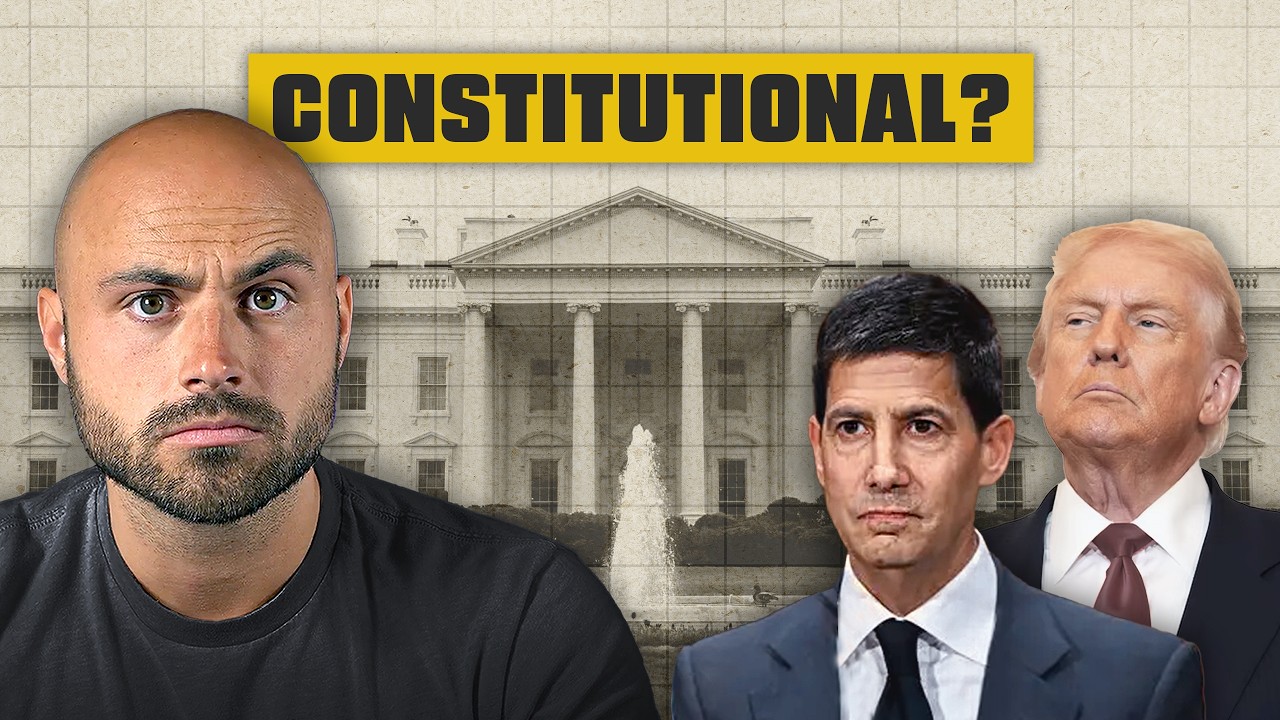
Heresy Financial · The Supreme Court Just Radically Expanded Federal Power · July 6, 2026
Executive Branch Agencies Accused of Unconstitutional Legislative Power for Century
Heresy Financial
Heresy Financial
The Supreme Court Just Radically Expanded Federal Power
"All legislative powers herein granted shall be vested in a Congress of the United States, which shall consist of a Senate and a House of Representatives. It is very clear, it is explicitly clear that the only people who are allowed to come up with the regulations, who are allowed to write the laws, are specifically just Congress."
The video argues that executive branch agencies have been unconstitutionally exercising legislative authority for over 100 years by creating regulations and rules that function as laws. According to Article 1, Section 1 of the Constitution, only Congress has legislative power, yet federal agencies under the executive branch have been writing the majority of rules in the 100,000-page Federal Register. This constitutional violation means the president now wields both executive and de facto legislative power.

About this episode

In this Heresy Financial analysis, the host examines a landmark 5-4 Supreme Court ruling that significantly expands presidential power while creating a specific carve-out for the Federal Reserve. The Court overturned 91 years of precedent by allowing President Trump to fire heads of independent agencies within the executive branch, including Democratic FTC official Rebecca Kelly Slaughter. Trump called it the greatest increase in presidential power in a century. However, the Court blocked Trump's attempt to fire Federal Reserve official Lisa Cook, maintaining the Fed's political independence. The host provides a constitutional analysis arguing that while the ruling appears to restore executive power as originally designed in Article 2, it compounds a deeper problem: executive branch agencies have been unconstitutionally exercising legislative authority for over a century. Congress has abdicated its Article 1 responsibility as the sole legislative body by allowing agencies to write regulations that function as laws. The Federal Register, now over 100,000 pages, consists primarily of agency-written rules rather than congressional legislation. The analysis notes that until the 2024 overturning of Chevron deference, these agencies also exercised judicial power by having courts defer to their interpretations of their own regulations, making them judge, jury, and executioner. The host warns that regardless of political affiliation, concentrating power in the presidency is dangerous because opponents will eventually control that office. Regarding the Federal Reserve, the video argues its independence is only from political parties, not from government itself, as its congressional mandate serves to maximize government revenue through maximum employment, stable prices, and moderate long-term interest rates.

Key takeaways

More stories More from Heresy Financial