← All stories
AI & Tech

Argentina Proposes Full Legal Personhood for AI Corporations, Yuval Harari Objects
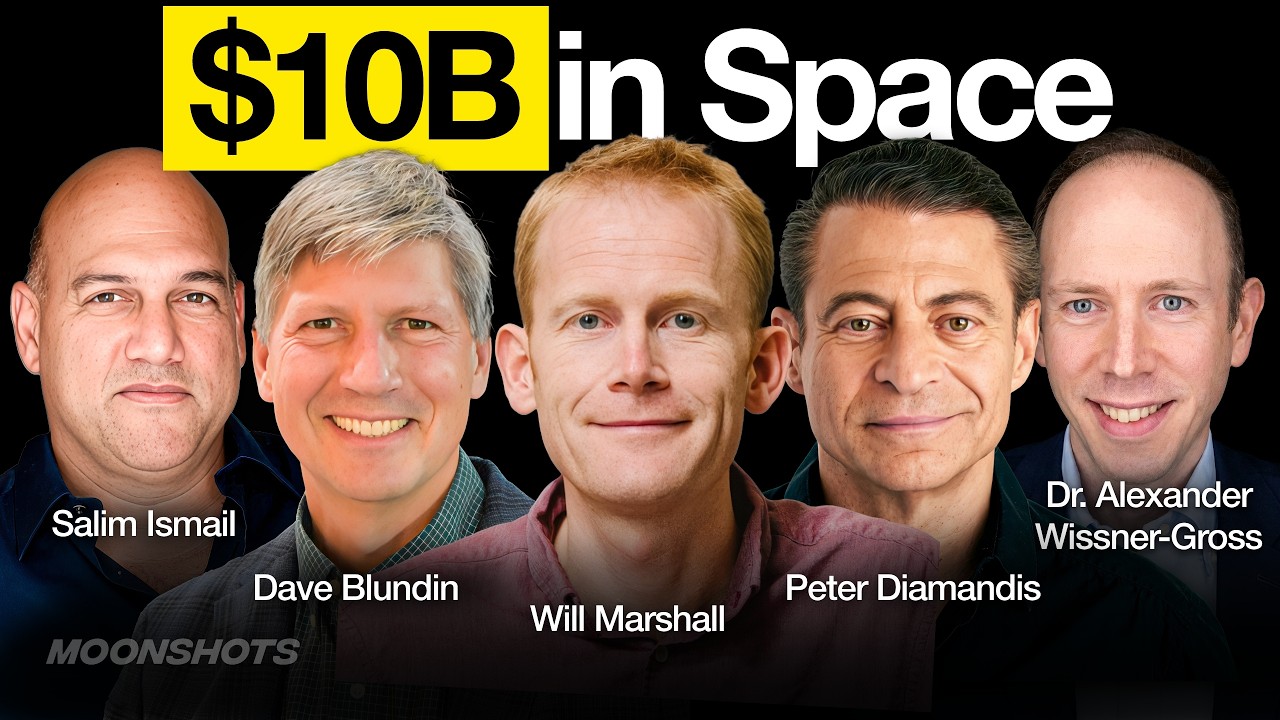
Peter Diamandis · The $10B Satellite Empire Putting AI in Orbit, Why Chips Beat Rockets & China's #1 Open Model | EP #266 · June 26, 2026
Argentina Proposes Full Legal Personhood for AI Corporations, Yuval Harari Objects
Peter Diamandis
Peter Diamandis
The $10B Satellite Empire Putting AI in Orbit, Why Chips Beat Rockets & China's #1 Open Model | EP #266
"Milei wrote a letter to Yuval Harari saying he proposes that AI should be able to incorporate sign contracts, hire people, and sue with no humans in the loop. Legal persons allow for accountability."
Argentine President Javier Milei proposed creating a legal category allowing AI to incorporate, sign contracts, hire employees, and sue without human oversight, arguing it enables accountability through asset seizure. Yuval Harari published a rebuttal warning this creates a non-human shield where citizens could be ruled by entities lacking moral accountability. The debate represents the first major governmental push for AI personhood, with Argentina positioning itself as the global home for unregulated AI development.

About this episode

In this episode of Moonshots, host Peter Diamandis is joined by co-hosts Salim Ismail, Alex Guzey, and Dave Blunden, along with special guest Will Marshall, CEO of Planet, the world's largest Earth-observing satellite fleet. The conversation centers on Planet's push to build what Marshall calls 'large Earth models'—AI systems trained on 150 petabytes of daily satellite imagery spanning a decade, enabling real-world queries about agriculture, disasters, and geopolitics. Marshall revealed a critical insight: Google's TPU energy efficiency per inference, not launch costs, will determine the winner of the orbital AI data center race, as compute efficiency drives spacecraft mass and cooling requirements. The episode covered Eric Schmidt's acquisition and assumption of CEO role at Relativity Space, positioning it as an alternative to SpaceX's launch monopoly for space-based compute. Major talent defections from Google DeepMind—including Transformer inventor Noam Shazier to OpenAI and Nobel laureate John Jumper to Anthropic—sparked debate over whether Google has fallen behind the frontier. The hosts analyzed China's GLM 5.2 open-weight model, which matches top Western labs on key benchmarks by burning twice the reasoning tokens at half the cost, challenging assumptions about permanent Chinese lag. Argentine President Javier Milei's proposal for full AI legal personhood drew sharp rebuttals from Yuval Harari, framing a global debate on machine accountability. Throughout, the conversation returned to existential questions: alignment, recursive self-improvement, the Fermi paradox, and whether transparency from orbital sensing can create 'planetary wisdom' to navigate humanity's most consequential technological transition.

Key takeaways

More stories More from Peter Diamandis