← All stories
Politics

Ball Claims Trump Administration Imposed Anthropic Export Controls With 90 Minutes Notice
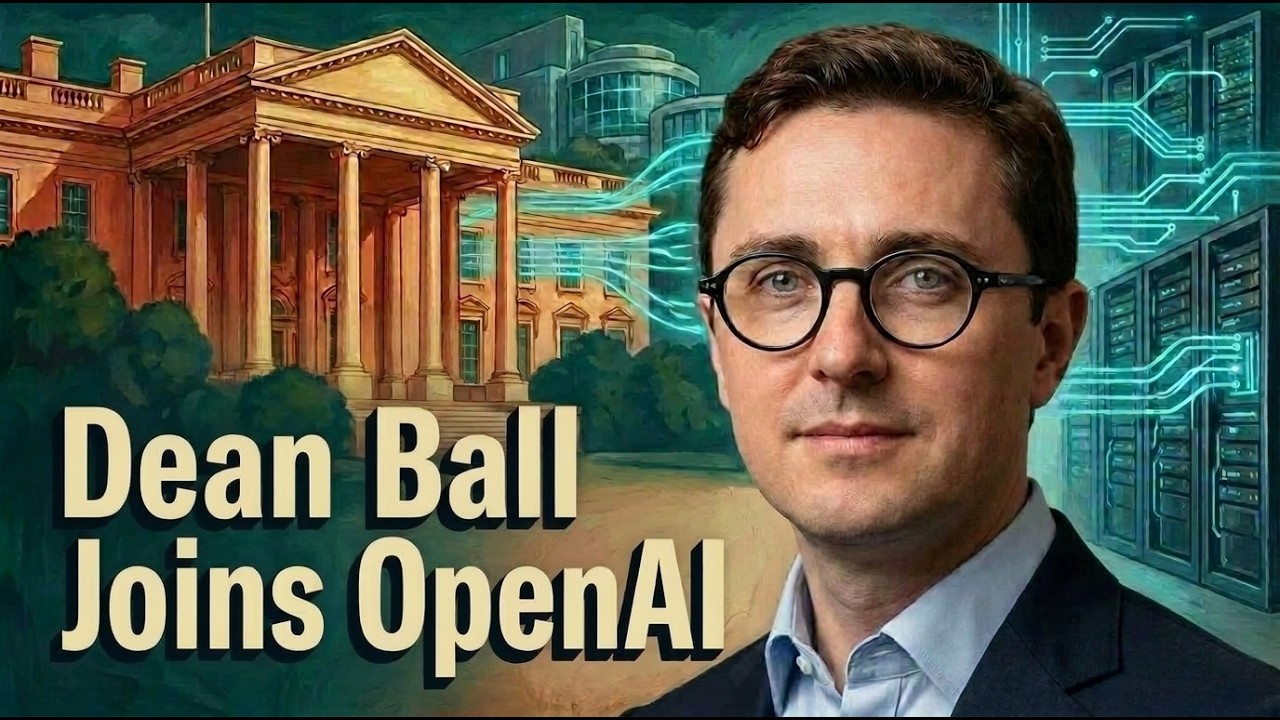
Cognitive Revolution · Dean Ball, on Joining OpenAI: New Power Centers, Frontier AI Policy, & Main Character Energy · June 20, 2026
Ball Claims Trump Administration Imposed Anthropic Export Controls With 90 Minutes Notice
Cognitive Revolution
Dean Ball, on Joining OpenAI: New Power Centers, Frontier AI Policy, & Main Character Energy
"Seems hard to imagine how that's consistent with global export controls on Frontier models imposed with 90 minutes' notice on the entire, on all non-US persons."
Dean Ball criticized the Trump administration for imposing sudden export controls on Anthropic's Fable model with only 90 minutes of notice to international users. He argued this directly contradicted the AI Action Plan's principle of exporting American AI globally and confirmed the fears of international partners that the US might arbitrarily cut off model access.

About this episode

Nathan Labenz interviewed Dean Ball, who recently announced he will join OpenAI to build and lead a new Strategic Futures team tasked with shaping frontier AI policy for the company's senior leadership. Ball, who previously worked on America's AI Action Plan in the Trump White House, provided extensive commentary on the current state of AI governance, the relationship between frontier labs and government, and his decision to move from independent commentary to direct involvement with OpenAI. The conversation centered on Ball's critique of recent government actions, particularly the Department of Defense's supply chain risk designation of Anthropic and the sudden export controls on the Fable model, which he argued were driven partly by poor personal relationships between Anthropic leadership and Trump administration officials. Ball revealed that the AI Action Plan contained provisions for government commandeering of all US data centers in national emergencies, written in deliberately mundane language. He explained his decision to join OpenAI was driven by the need for direct access to frontier capabilities and internal deliberations to do effective policy work, noting that frontier labs represent a fundamentally new kind of powerful actor requiring new governance paradigms. Ball emphasized he retained complete editorial independence in his public writing as part of his employment agreement. He described recursive self-improvement as likely more continuous than discontinuous, though still requiring serious advance planning for potential slowdown scenarios. Ball argued that broad diffusion of AI capabilities to many industries and actors is critical for maintaining democratic balance against potential government monopolization, and expressed concern that current policy trends toward classified testing regimes could undermine public oversight. He characterized the current moment as a high-leverage period for individual human agency before potential machine supremacy.

Key takeaways

More stories More from Cognitive Revolution