F-18 pilot says he ejected at 695 mph seconds before ocean impact
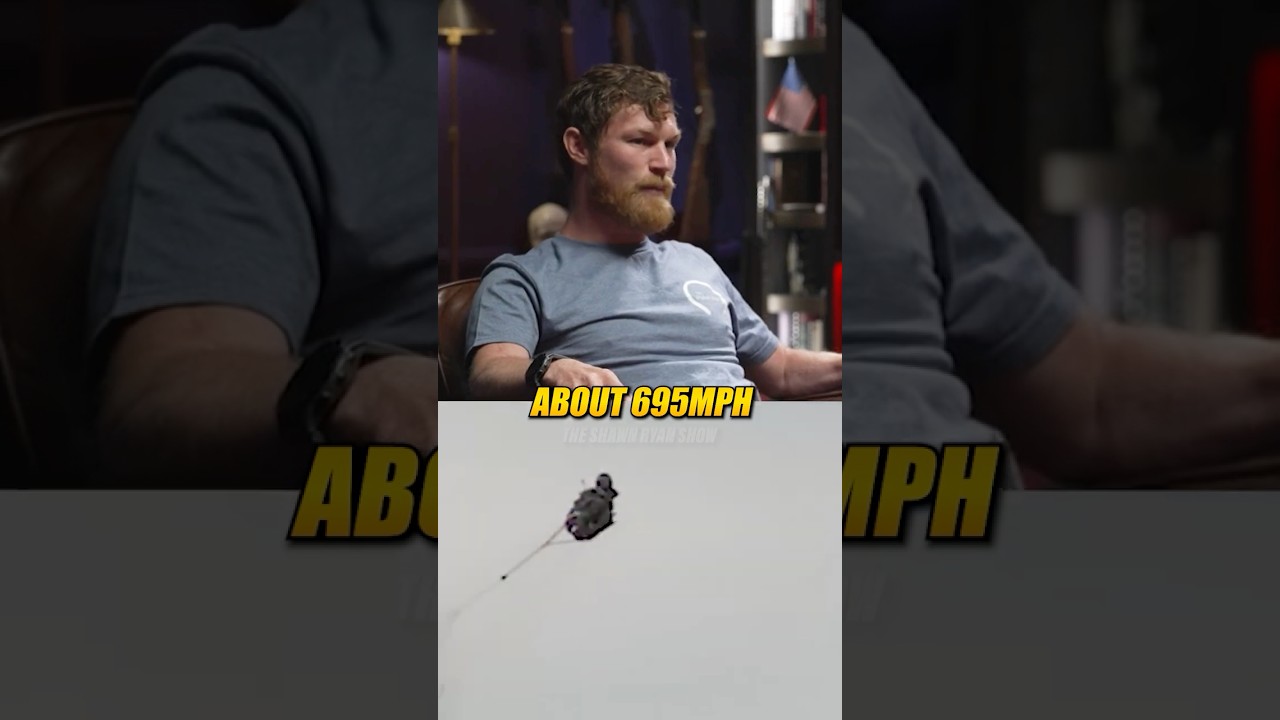
"2 seconds before I impacted the ocean going 95% the speed of sound at almost sea level, about 695 mph, I yanked that ejection handle. The jet flew right in the ocean and just vaporized into nothing. What jacked me up so bad was impacting the sound barrier with my body."
About this episode
In this short excerpt from the Shawn Ryan Show, the host asks a guest—identified only as an F-18 pilot in the clip—how he survived ejecting at 695 mph. The pilot recounts a dive towards the ocean while experiencing around 7.5 G, accelerating into the transonic region just below the speed of sound. He says that as he pulled as hard as he could to recover, a system he calls the “G bucket” engaged to prevent the aircraft from overstressing in the high-drag transonic regime and effectively overrode his control input. The pilot describes realising he was still pointed straight at the ocean with “the stick in my lap” as the jet “just stopped turning”, followed by the radar altimeter warning “altitude, altitude”. He says he could see the whitecaps and was extremely close to the surface. According to his account, he pulled the ejection handle about two seconds before impact, at roughly 95% of the speed of sound and near sea level (around 695 mph). He states the aircraft then struck the ocean and “vaporized”, and that the most severe effect on his body was “impacting the sound barrier” during ejection.
Key takeaways
- A guest F-18 pilot says he ejected at near sea level at about 695 mph.
- He describes pulling about 7.5 G in a dive as the jet entered the transonic region.
- He says a protective system he calls the “G bucket” overrode his recovery inputs to prevent overstress.
- He recounts the radar altimeter warning sounding as the ocean rapidly approached.
- He says he ejected roughly two seconds before the aircraft hit the ocean.
- He attributes his worst physical trauma to crossing the sound barrier during the ejection.