Samuel Moyn says Medicare’s lack of long-term care cover is scandalous
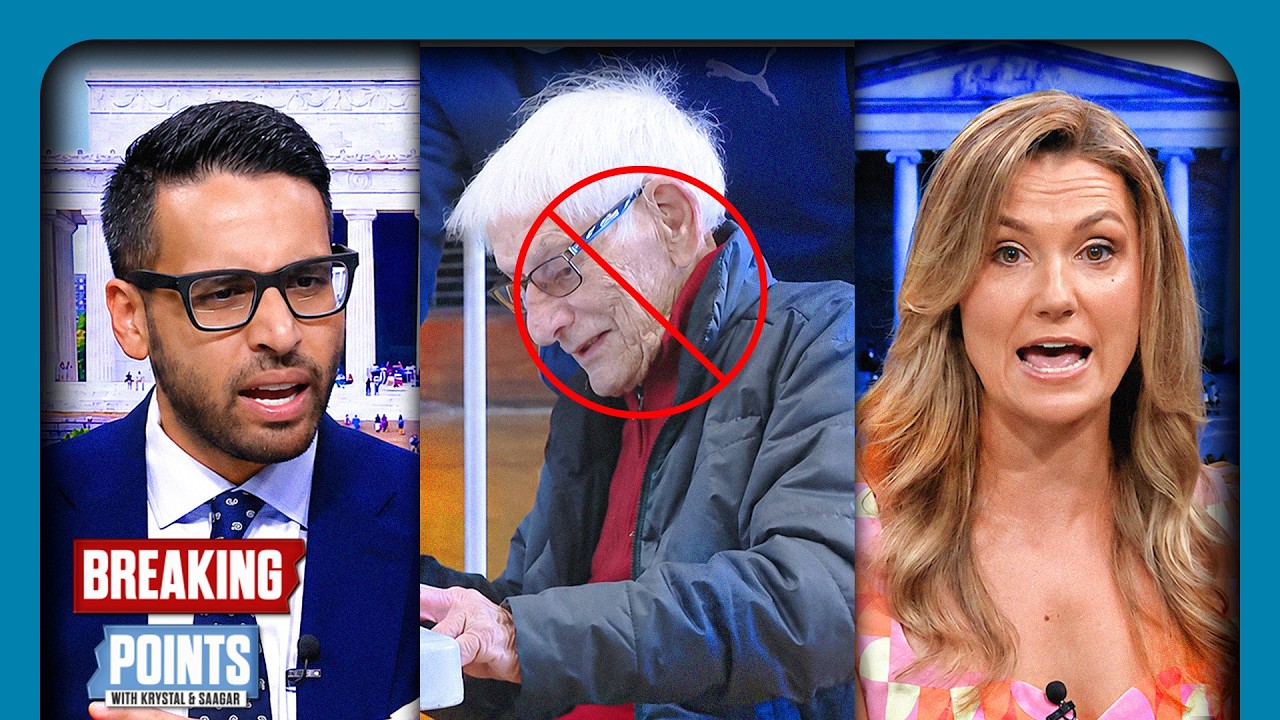
"Our welfare state does not because Medicare excludes long-term maintenance of older people which is a scandal."
About this episode
Breaking Points interviews Yale Law School professor Samuel Moyn about his book Gerontocracy in America and his argument that US institutions increasingly reflect the interests of older Americans. Moyn distinguishes the age of politicians from what he calls broader “elder control” through voting patterns, campaign finance and wealth. He proposes conventional measures such as age limits for office, but also floats more structural interventions including youth quotas for representation, easier voting access for younger people (holiday voting, looser registration rules), and changes to election frequency.
The most contentious exchange centres on Moyn’s suggestion that younger voters’ ballots should be given extra weight because younger people live longer under the policies chosen; he insists he is not calling to strip older people of voting rights. He cites examples intended to show age skew in participation, including a claim that the median age of New Mexico primary voters in 2024 was 72.
Host counterarguments stress class and campaign finance as the core drivers of political power, warning that age-based analysis can become divisive. Moyn responds that age can be a “modality” through which class is lived, alongside factors such as race and gender. On policy, he argues against cutting Social Security as a route to intergenerational fairness, and calls Medicare’s lack of long-term care coverage a “scandal”, advocating more socialised care and higher taxation of wealthy older people. The conversation closes with a brief joking aside about Mitch McConnell.
Key takeaways
- Samuel Moyn argues the US is a “gerontocracy” driven by older voters and wealth, not only older politicians.
- He supports age limits for office and suggests youth quotas to broaden generational representation.
- He proposes increasing the weight of younger voters’ ballots based on their longer policy horizon, while saying he is not advocating stripping older people of the vote.
- He claims New Mexico’s 2024 primary electorate had a median age of 72, using it to argue low-salience elections skew older.
- He says campaign donors and wealth concentration among older Americans shape candidate selection and policy outcomes.
- He rejects cutting Social Security as a route to intergenerational fairness and instead favours higher taxation on wealthy older people.
- He calls Medicare’s exclusion of long-term care coverage a “scandal” and argues for more socialised care.