Pints with Aquinas
Episode overview

Experiencing the Beautiful Love of God (Mother Natalia) | Ep. 582

Pints with Aquinas · 4 Egleze moments
Experiencing the Beautiful Love of God (Mother Natalia) | Ep. 582
Episode summary

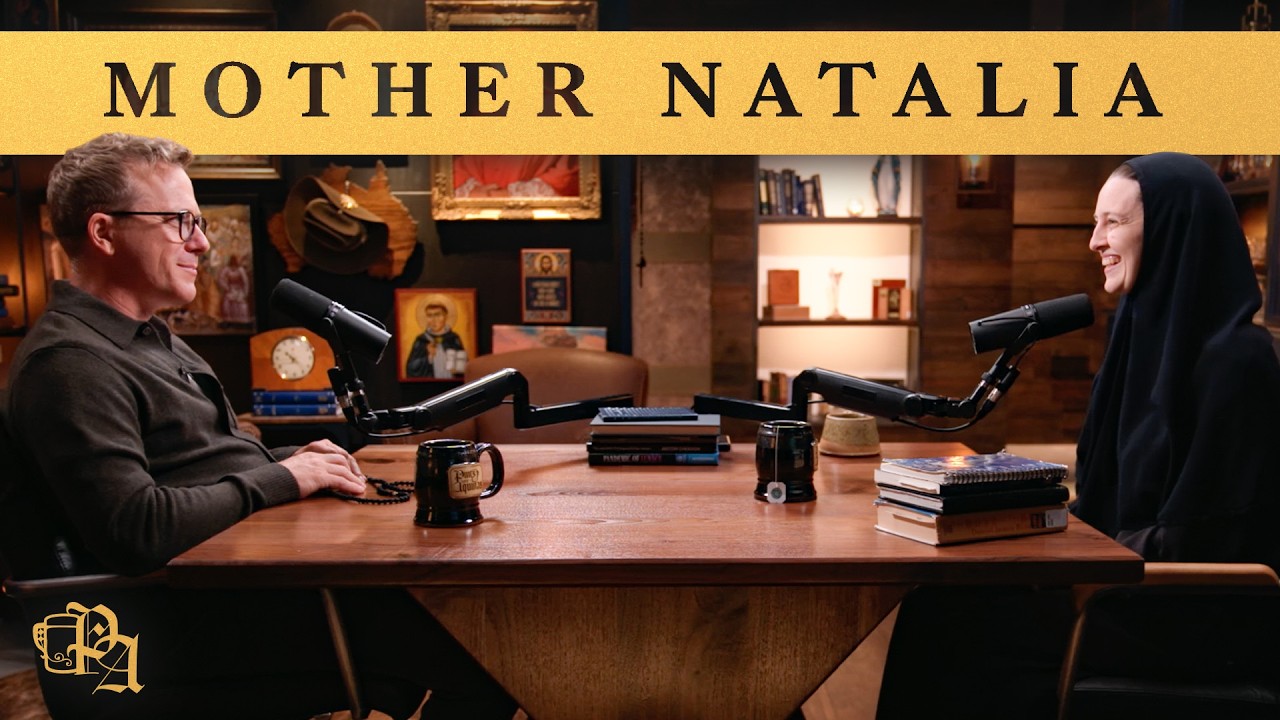
On Pints with Aquinas, host Matt Fradd interviewed Mother Natalia, an Eastern Catholic Byzantine nun, for a wide-ranging discussion on monastic life, spiritual formation, and the nature of authentic holiness. The conversation led with Mother Natalia's striking admission that she seriously considered leaving her monastery just six months before her life profession after 4.5 to 6 years of formation, requiring an emergency retreat with her spiritual father. She revealed she has experienced no doubts since taking final vows five years ago. The nun shared controversial perspectives that challenged common Catholic assumptions, including her admission that she no longer misses Eucharistic adoration, which she had developed an unhealthy dependence on before becoming Byzantine. She argued forcefully against Archbishop Fulton Sheen's characterization of nuns' confessions as trivial, insisting that interior sins like disobedience to the Holy Spirit can be more serious than external grave sins. Mother Natalia disclosed personal struggles including what she called an addiction to dating before religious life and a realization that much of her perceived generosity was actually rooted in self-love. The discussion explored the importance of Eastern Catholic tradition, with Mother Natalia explaining that Byzantines represent a legitimate expression of Catholicism that should resist blending with Western practices. She emphasized that monastic life involves living with broken, sinful people rather than angels, describing community life as a rock tumbler that smooths rough edges through constant friction. The conversation concluded with practical advice for women discerning religious vocations, stressing the absolute necessity of daily prayer and complete honesty rather than trying to present an idealized version of oneself to a community.

Key points
Watch original episode More from Pints with Aquinas

4 moments from this episode

Source-linked · editorially selected
01
Faith & Spirituality

Eastern Catholic Nun Reveals She Doubted Her Vocation Until Life Profession

Mother Natalia disclosed that she seriously considered leaving her monastery just six months before taking her final vows after 4.5 to 6 years of formation. She told her spiritual father she was prepared to leave and needed him to take her seriously. Since her life profession five years ago, she has experienced no doubts about her vocation, though she acknowledges this is atypical.

Read this moment →
02
Faith & Spirituality

Monastic Reveals She Was Addicted to Dating Before Entering Religious Life

Mother Natalia disclosed she struggled with what she called an addiction to dating before entering monastic life. She described finding her identity in relationships and the dopamine hits of attention, not knowing who she was or what she liked when single. Breaking this pattern required intentional periods of abstinence from dating during her missionary work.

Read this moment →
03
Faith & Spirituality

Byzantine Nun Says Her Generosity Was Actually Rooted in Self-Love

Mother Natalia shared a revelation about her character after years in the monastery. She discovered that acts she believed were pure generosity—like making coffee for sisters in bad moods—were actually motivated by self-interest to make her own life more pleasant. This represented a key moment of self-awareness in her spiritual formation.

Read this moment →
04
Faith & Spirituality

Nun Describes Interior Sins as More Serious Than External Crimes

Mother Natalia challenged Archbishop Fulton Sheen's famous quote about nuns' confessions being like being stoned with popcorn. She argued that seemingly small interior sins like disobedience to the Holy Spirit can be more serious than external grave sins. She shared that ignoring a clear prompting from the Spirit not to ask a question was one of her gravest sins, despite the question itself being objectively innocent.

Read this moment →