ZOE Science & Nutrition
Episode overview

How grocery stores scam you into destroying your diet - 6 foods to eat instead

ZOE Science & Nutrition · 24 September 2026 · 1h 1m · 3 Egleze moments
How grocery stores scam you into destroying your diet - 6 foods to eat instead ▶

What happened in this episode?

ZOE host Jonathan Wolf speaks with King’s College London professors Tim Spector and Sarah Berry about how supermarket packaging and product formulation can steer shoppers towards ultra-processed foods. They argue that front-of-pack claims such as “low fat”, “sugar-free”, “gluten-free” and “high protein” can function as marketing signals rather than reliable indicators of healthfulness, and advise checking ingredient lists for added sugars, sweeteners, emulsifiers and other additives.

Berry says randomised trials show selecting low-fat foods over full-fat alternatives does not lead to weight loss, and claims the latest US dietary guidance has moved away from low-fat recommendations. Spector claims “high protein” labelling creates a health halo and later describes the practice as a “scam” when applied to ultra-processed snack products.

The pair outline six shopping “rules”, including prioritising staples eaten daily and increasing plant diversity. Berry cites “new research” suggesting that swapping refined staples (white bread, rice and pasta) for wholegrain versions could raise average wholegrain intake from around 16g/day to 75g/day and reduce risks of all-cause mortality, type 2 diabetes and cardiovascular disease by about 10%. She also describes a six-week King’s College trial in which consuming nuts for 20% of calories improved intermediate cardiovascular markers compared with typical snacks, which she says equated to a 30% reduction in cardiovascular disease risk.

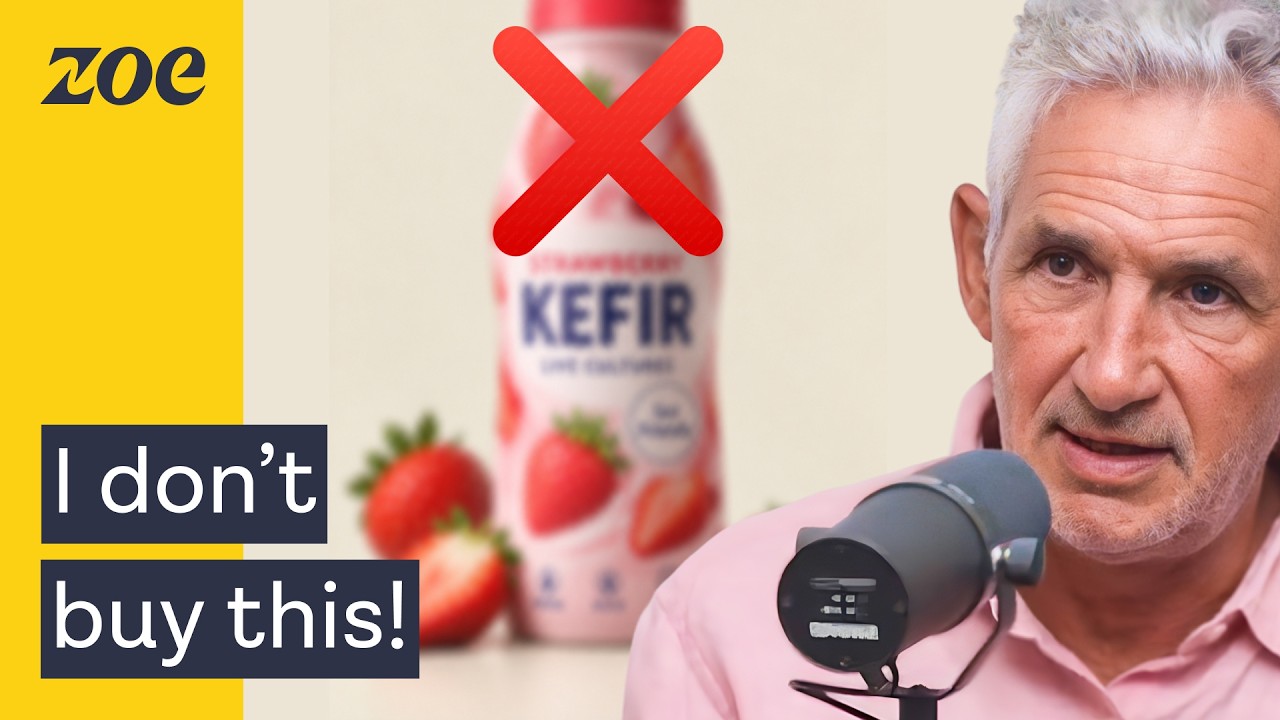
Spector discusses “ferment deception”, warning kefir and kombucha products may contain additives or be labelled via added cultures rather than traditional fermentation, and suggests choosing plainer options. The episode includes a substantial promotional segment for ZOE-branded snack bars.
What are the key points?

Who is speaking?

Named speakers identified in Egleze's source-linked moments from this episode.

Which topics are covered?

How is this page sourced?

Programme
ZOE Science & Nutrition
Published
24 September 2026
Duration
1h 1m
Original episode
Open the original source ↗

Egleze verifies the speaker, source and timestamp for each linked moment. Unless a moment is explicitly marked independently verified, statements remain attributed claims by the named speaker rather than established facts.

Watch original episode More from ZOE Science & Nutrition

3 moments from this episode

Source-linked · editorially selected
01
Health, Longevity & Biohacking

Sarah Berry says low-fat choices do not drive weight loss

Sarah Berry · at 9:07 · Attributed speaker claim
"The evidence from randomized control trials are really clear that if you're selecting low-fat foods above full fat foods, it does not result in weight reduction. the latest US guidelines have uh changed their view of fats."

Sarah Berry says randomised controlled trials show choosing low-fat over full-fat alternatives does not lead to weight reduction. She argues fat should be judged by food and fat type, and says US dietary guidance no longer favours low-fat foods overall.

02
Health, Longevity & Biohacking

Sarah Berry says King’s College snack trial favoured nuts over typical snacks

Sarah Berry · at 33:48 · Attributed speaker claim
"I conducted a trial at Kings some years ago where we asked people to consume 20% of their calories from either nuts or UK typical US typical snacks. We monitored them for six weeks. At the end of the six weeks, the improvement in um lots of intermediary cardiovascular risk measures, so things like blood cholesterol, blood vessel function in those consuming the nuts versus those consuming US UK typical snacks equated to a 30% reduction in cardiovascular disease."

Sarah Berry says she ran a six-week King’s College London trial in which participants got about 20% of their calories from either nuts or typical snacks. She says the nut group improved intermediate cardiovascular risk markers such as cholesterol and blood-vessel function. She says those changes equated to a 30% reduction in cardiovascular disease risk versus the typical-snack group.

03
Health, Longevity & Biohacking

Sarah Berry says wholegrain swaps could cut disease risks by 10%

Sarah Berry · at 44:27 · Attributed speaker claim
"If we were to change our staples of white rice, white pasta, and white bread, we would change from our average intake of whole grains being around, say, 16 grams a day. We could get it up to 75 grams a day. And at that level, you reduce your risk of all cause mortality, type 2 diabetes, cardiovascular disease by around 10%."

Sarah Berry says new research suggests swapping white bread, rice and pasta for wholegrain versions could raise average wholegrain intake from about 16g a day to around 75g. She says that intake level is linked to roughly a 10% lower risk of all-cause mortality, type 2 diabetes and cardiovascular disease, though the study is not identified in the clip.