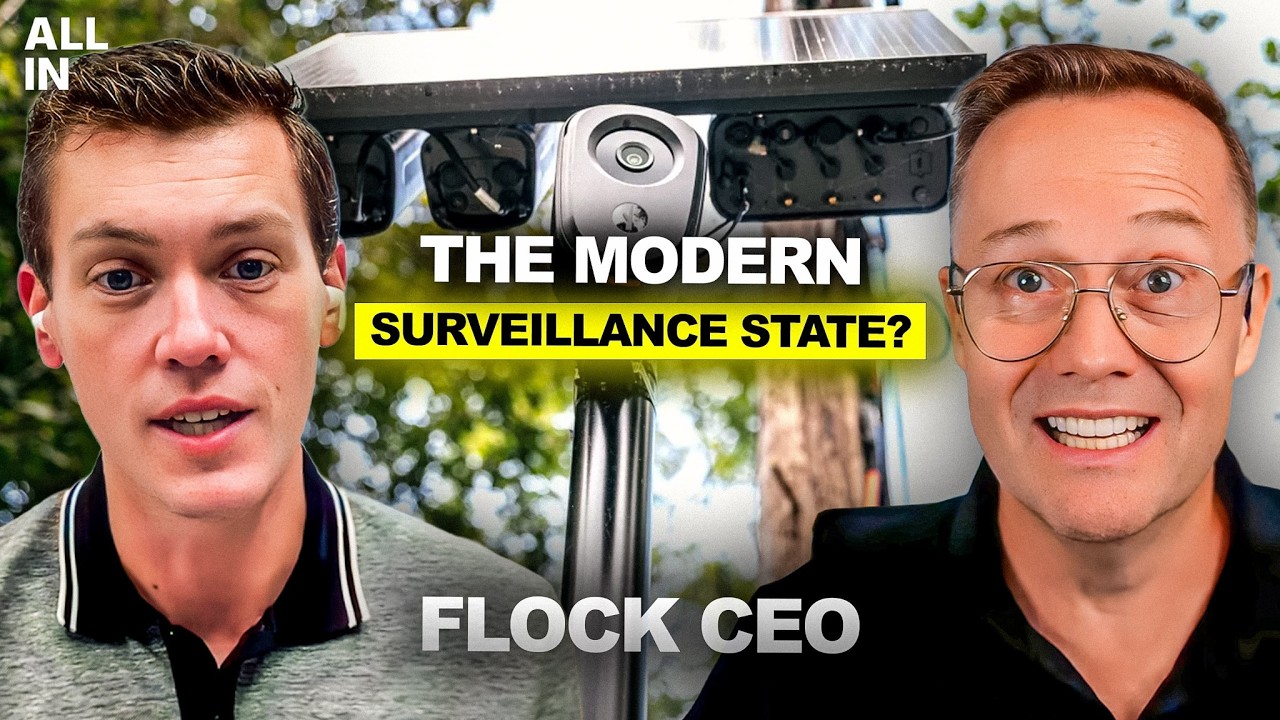
What happened in this episode?
Jason Calacanis interviews Flock Safety CEO Garret Langley about the expansion of automated licence-plate readers and drones in US policing, and the political backlash over privacy. Langley describes Flock’s sales process as centred on city council approvals, saying the company attends thousands of council meetings to explain what its products do and do not do.
A key policy point is retention: Langley says Flock has shifted its default licence-plate data retention from 30 days to seven, while arguing elected bodies should still set the final rule. He also claims Flock estimates most cases can be solved within seven days, while acknowledging longer retention may matter in delayed-reporting or delayed-discovery offences.
On misuse, Langley argues scepticism often stems from distrust of police rather than the hardware itself. He says Flock built an “audit assistance” tool to flag abnormal search behaviour and claims it has helped identify officer abuse, including alleged sackings. The pair discuss whether systems should require supervisor approval, and Langley says controls may need to vary by department size.
They also touch on AI risks—particularly “reckless” automation in 911 systems—and Langley says Flock does not want to define “suspicion” or pursue predictive-policing features. Finally, he promotes Flock’s drone deployments as a way to triage calls and reduce dangerous encounters, while accepting that transparency and accountability expectations will continue to rise.