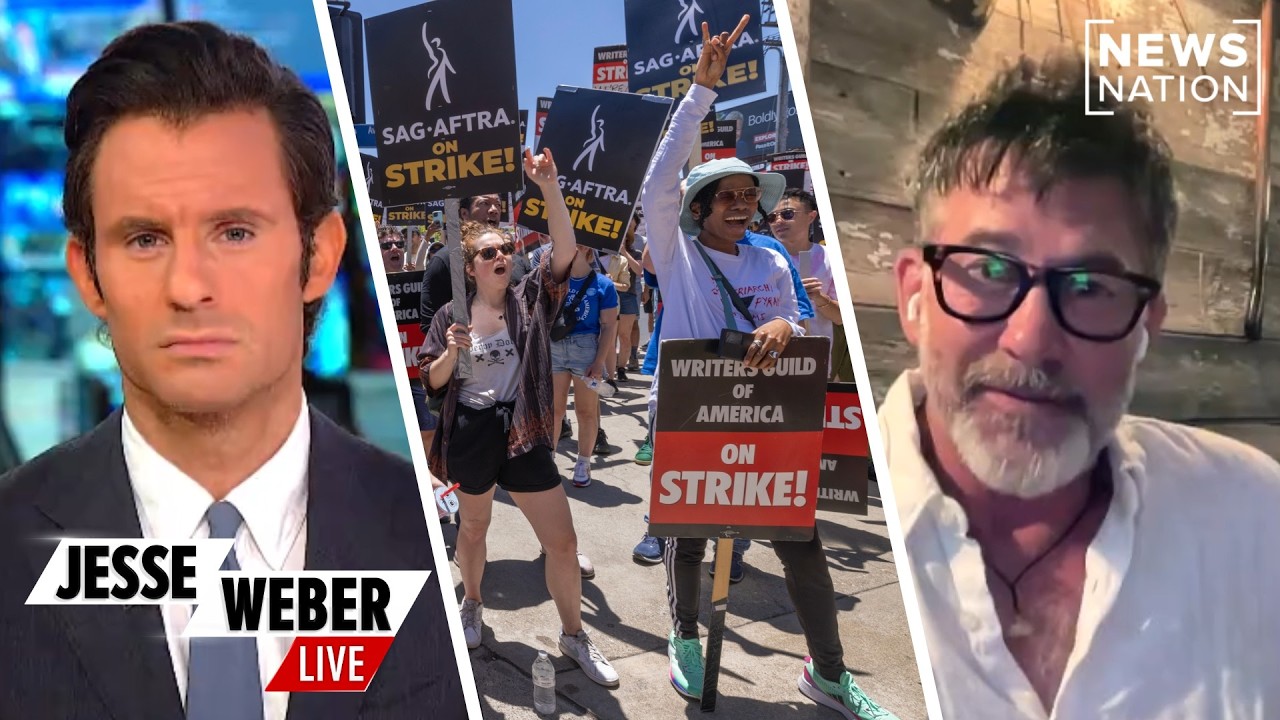
Episode summary
In this short NewsNation segment, host Jesse Weber reports on the rapid uptake of AI tools in China’s “micro-drama” sector — vertical, sub-90-second serialised shows made for mobile audiences — and argues it offers a cautionary signal for Hollywood. Weber says creators are using AI to generate scripts, craft backgrounds and create virtual actors at a fraction of traditional costs, and he cites the state-run People’s Daily as putting AI-created micro-dramas at about 95% of output in the first three months of the year.
Weber then interviews actor and writer Joe Flanigan (a SAG-AFTRA member), who calls the trend a “huge warning sign” amid existing industry pressures such as streaming economics. Flanigan claims some writers are already using AI to draft scripts and then putting their own names on the work. He argues that while major stars may be relatively insulated in the near term, “working class” roles in Hollywood — including background performers and some crew — are likely to be hit first, especially in short-form content. Flanigan also raises a broader concern about storytelling and “human experience” if narratives are increasingly generated by predictive models rather than lived experience.
The segment touches on union guardrails, with Flanigan pointing to Writers Guild language asserting a writer is a human being, and he describes disputes over “recognisability” thresholds for using a performer’s likeness.
Key points:
- Weber cites People’s Daily: ~95% of micro-dramas early-year output “entirely AI created”.
- Micro-dramas are described as vertical, under 90 seconds, and mobile-first.
- AI is said to be used for scripts, backgrounds, and virtual actors.
- Flanigan calls AI adoption a “huge warning sign” for Hollywood.
- He claims some writers are using AI and attributing the scripts to themselves.
- He predicts entry-level roles and background performers will be affected first.
- He discusses union guardrails and disputes over likeness/recognisability.