Mario Nawfal Interviews
Episode overview

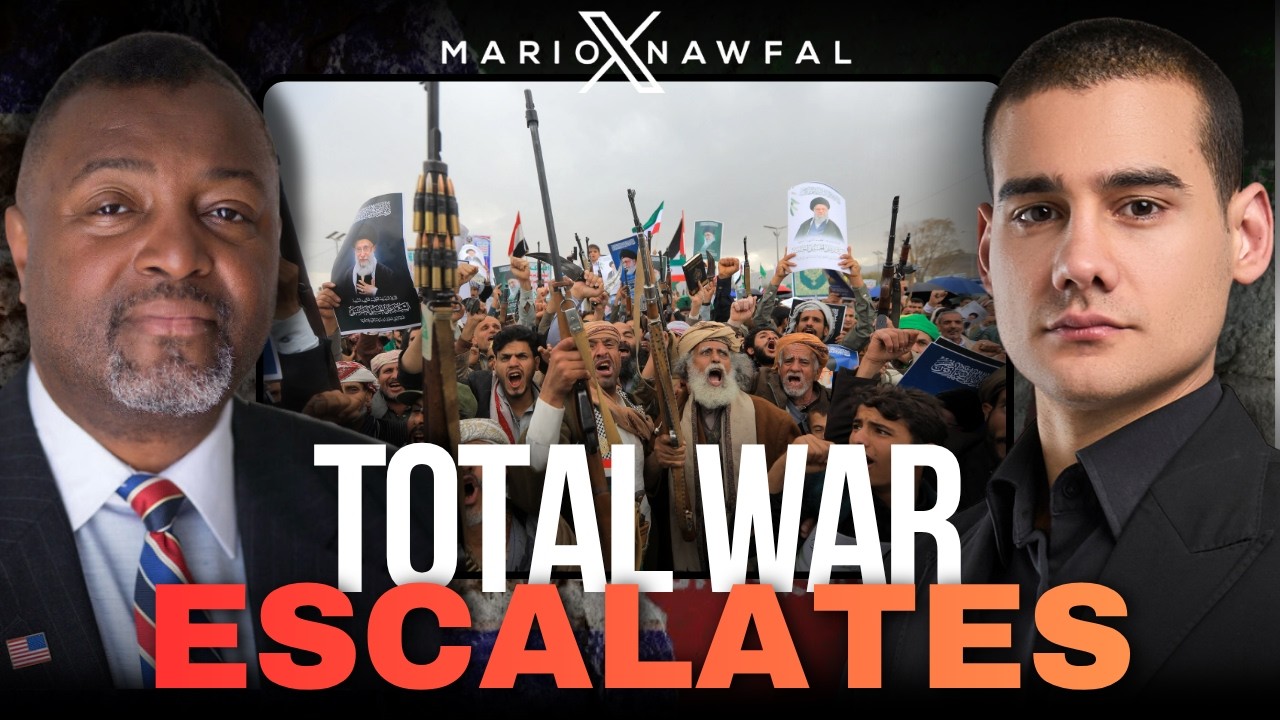
BREAKING: IRAN HITS SHIPS, YEMEN ATTACKS SAUDI, U.S. CONSULATE IN UAE SHUT - w/ Malcolm Nance

Mario Nawfal Interviews · 13 July 2026 · 52m · 5 Egleze moments
BREAKING: IRAN HITS SHIPS, YEMEN ATTACKS SAUDI, U.S. CONSULATE IN UAE SHUT - w/ Malcolm Nance ▶

What happened in this episode?

In an emergency discussion between host Mario and military intelligence analyst Malcolm Nance, the podcast covers rapidly escalating military confrontations across the Middle East as the US-Iran conflict enters what Nance calls "a new dimension." The most dramatic development involves Saudi Arabia bombing the runway at Sana'a International Airport as an Iranian airliner carrying Houthi officials returning from Ayatollah Khamenei's funeral attempted to land, forcing the plane to divert to a derelict airfield. Yemen has responded with ballistic missile attacks on Saudi bases and threatened to close the Bab el-Mandeb strait. President Trump formally notified Congress that US military operations against Iran resumed July 7th, triggering a 60-day War Powers Act authorization window. Trump also announced an unprecedented policy charging ships a 20 percent fee to transit the Strait of Hormuz while blocking Iranian vessels entirely, compared to Iran's 1.5 percent fee for their traffic separation scheme. The president made direct appeals to Iranian citizens on Fox News, explicitly stating the US has operatives inside Iran ready to support an uprising. Iran struck Omani radar stations at Musandam Peninsula to blind US naval intelligence, and attacked facilities in Bahrain, UAE, and Saudi Arabia. Nance, a 40-year intelligence veteran, expressed alarm at what he characterizes as a return to full-scale war without clear strategy, warning that US proxy forces being mobilized across Lebanon, Syria, Iraq, and Yemen will fail against Iranian-backed groups. He criticized the administration's approach as lacking realistic assessment of operational requirements, noting that taking and holding the Strait of Hormuz would require thousands of Marines facing advanced anti-ship missile systems. Both hosts expressed concern that oil prices could reach $200 per barrel if both the Strait of Hormuz and Bab el-Mandeb are closed, potentially cutting 30-35 percent of global energy supplies.

What are the key points?

Who is speaking?

Named speakers identified in Egleze's source-linked moments from this episode.

Which topics are covered?

How is this page sourced?

Programme
Mario Nawfal Interviews
Published
13 July 2026
Duration
52m
Original episode
Open the original source ↗

Egleze verifies the speaker, source and timestamp for each linked moment. Unless a moment is explicitly marked independently verified, statements remain attributed claims by the named speaker rather than established facts.

Watch original episode More from Mario Nawfal Interviews

5 moments from this episode

Source-linked · editorially selected
01
Geopolitics

Saudi Arabia Bombs Yemeni Airport Runway to Divert Iranian Airliner Carrying Houthi Delegation

at 1:18 · Attributed speaker claim
Saudi Arabia had a combat air patrol over that airport. And as they were about on approach and about to land, the Saudi Air Force bombed the runway in order for them to turn away and not land at Sana'a International Airport.

Saudi fighter jets bombed the runway at Sana'a International Airport as an Iranian airliner carrying Houthi officials returning from Ayatollah Khamenei's funeral was approaching, forcing it to divert to a derelict airfield in Hudaydah. The attack, which occurred in front of waiting news crews including Al Jazeera, represents a dramatic escalation rather than a simple interception. Yemen has since responded with ballistic missile attacks on Saudi military bases and threatened to close the Bab el-Mandeb strait.

02
Espionage

Iran Attacks Omani Radar Stations to Blind US Naval Intelligence in Strait

at 11:48 · Attributed speaker claim
Today, in order to blind the Americans, the Iranians attacked the Omani surface radar station of the Omani Coast Guard at Musandam, on the Musandam Peninsula. This now blinds Oman to the tanker traffic and surface ships.

Iran struck Omani Coast Guard radar facilities at Musandam Peninsula and other locations, eliminating surveillance coverage of ship traffic through the Strait of Hormuz. The attacks came days after the US bombed Iranian facilities at Duqm, Oman while conducting negotiations with Oman about traffic-sharing arrangements. Iran apparently suspected Oman was providing real-time radar intelligence to US forces and conducted the strikes to eliminate American situational awareness in the strait.

03
Military

Trump Formally Notifies Congress US Military Operations Against Iran Resumed July 7th

Donald Trump · at 17:45 · Attributed speaker claim
In a letter sent to congressional leaders on Friday and obtained by the New York Times on Monday, the president wrote that American forces engaged in defensive strikes against targets within Iran on July 7th.

President Trump has formally notified Congress that military hostilities with Iran resumed on July 7th, triggering a new 60-day War Powers Act clock that expires September 7th. The notification classifies these as a new phase of conflict requiring congressional authorization to continue beyond the deadline. This comes as Trump has lost key Senate allies including Lindsey Graham and faces difficulty securing war authorization votes.

04
Espionage

Trump Calls for Iranian Uprising, Says US Has People Ready Inside Country

at 24:45 · Attributed speaker claim
Our country wants to help you and we want to see it all work out. We have people ready, willing, and able, but they have to know what you want. That's up to you.

President Trump directly addressed the Iranian people on Fox News, explicitly stating the US has operatives positioned inside Iran ready to assist an uprising. Military analyst Malcolm Nance interpreted this as Trump publicly confirming CIA and Israeli intelligence presence conducting clandestine operations inside Iran. The statement represents an overt call for regime change and acknowledgment of covert operations typically kept classified.

05
Geopolitics

Trump Announces US Will Charge 20 Percent Fee for Ships Transiting Strait of Hormuz

at 26:49 · Attributed speaker claim
Iranian ships are not allowed through the Strait of Hormuz, and non-Iranian ships have to pay a 20% fee.

The Trump administration has announced what it calls a "guardian of the Strait" policy charging vessels a 20 percent transit fee through the Strait of Hormuz while blocking Iranian ships entirely. This comes as an alternative to Iran's Traffic Separation Scheme which charges only 1.5 percent. The policy represents a major escalation in US control over the waterway through which 20-30 percent of the world's oil flows.