Trump Formally Notifies Congress US Military Operations Against Iran Resumed July 7th
"In a letter sent to congressional leaders on Friday and obtained by the New York Times on Monday, the president wrote that American forces engaged in defensive strikes against targets within Iran on July 7th."
About this episode
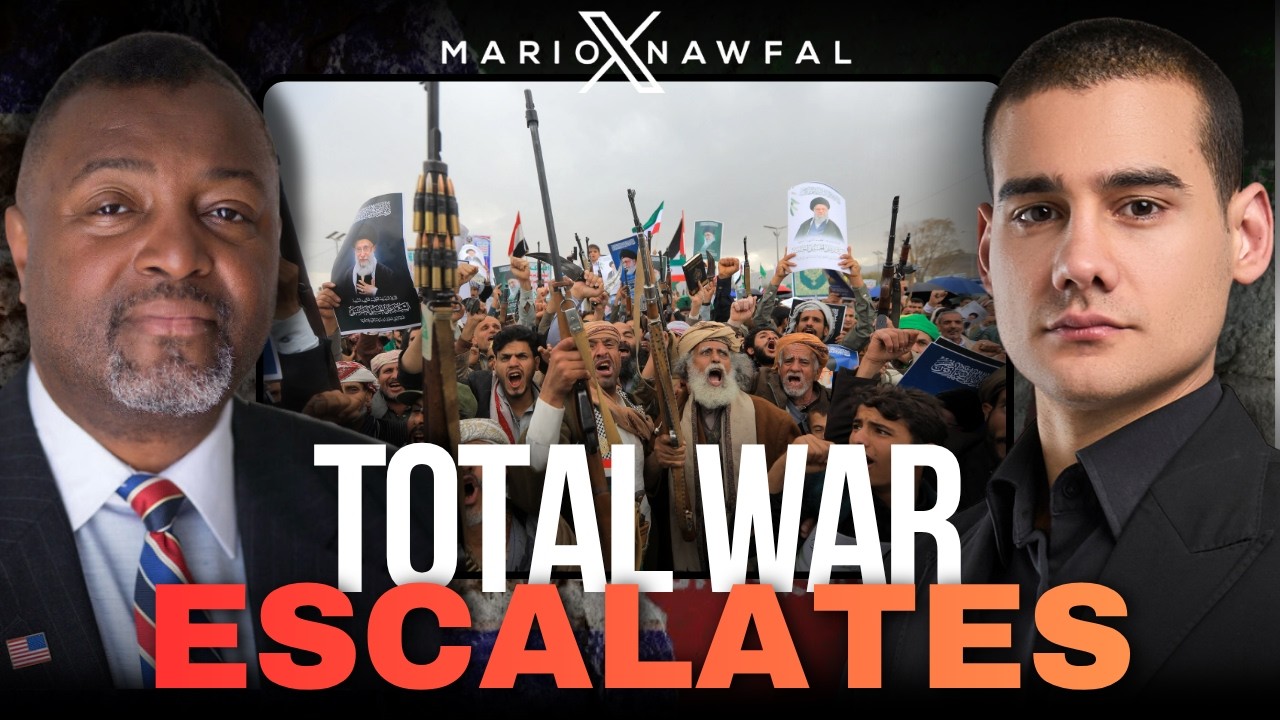
In an emergency discussion between host Mario and military intelligence analyst Malcolm Nance, the podcast covers rapidly escalating military confrontations across the Middle East as the US-Iran conflict enters what Nance calls "a new dimension." The most dramatic development involves Saudi Arabia bombing the runway at Sana'a International Airport as an Iranian airliner carrying Houthi officials returning from Ayatollah Khamenei's funeral attempted to land, forcing the plane to divert to a derelict airfield. Yemen has responded with ballistic missile attacks on Saudi bases and threatened to close the Bab el-Mandeb strait. President Trump formally notified Congress that US military operations against Iran resumed July 7th, triggering a 60-day War Powers Act authorization window. Trump also announced an unprecedented policy charging ships a 20 percent fee to transit the Strait of Hormuz while blocking Iranian vessels entirely, compared to Iran's 1.5 percent fee for their traffic separation scheme. The president made direct appeals to Iranian citizens on Fox News, explicitly stating the US has operatives inside Iran ready to support an uprising. Iran struck Omani radar stations at Musandam Peninsula to blind US naval intelligence, and attacked facilities in Bahrain, UAE, and Saudi Arabia. Nance, a 40-year intelligence veteran, expressed alarm at what he characterizes as a return to full-scale war without clear strategy, warning that US proxy forces being mobilized across Lebanon, Syria, Iraq, and Yemen will fail against Iranian-backed groups. He criticized the administration's approach as lacking realistic assessment of operational requirements, noting that taking and holding the Strait of Hormuz would require thousands of Marines facing advanced anti-ship missile systems. Both hosts expressed concern that oil prices could reach $200 per barrel if both the Strait of Hormuz and Bab el-Mandeb are closed, potentially cutting 30-35 percent of global energy supplies.
Key takeaways
- Saudi Arabia bombed Sana'a airport runway to prevent Iranian airliner carrying Houthi delegation from landing, prompting Yemeni ballistic missile retaliation and threats to close Bab el-Mandeb strait
- Trump administration announced 20 percent fee for ships transiting Strait of Hormuz while blocking Iranian vessels, compared to Iran's 1.5 percent traffic separation scheme fee
- President Trump formally notified Congress that US military operations against Iran resumed July 7th, starting new 60-day War Powers Act authorization clock expiring September 7th
- Trump publicly called for Iranian uprising on Fox News and acknowledged US has operatives inside Iran ready to assist, confirming covert CIA and Israeli intelligence presence
- Iran struck Omani Coast Guard radar stations at Musandam Peninsula to eliminate US surveillance capabilities monitoring Strait of Hormuz ship traffic
- Malcolm Nance warned closure of both Strait of Hormuz and Bab el-Mandeb could cut 30-35 percent of global energy supplies and drive oil to $200 per barrel
- US conducting daytime strikes against Iran for first time after months of night operations, indicating difficulty assessing battle damage with thermal imaging alone