Modern Wisdom
Episode overview

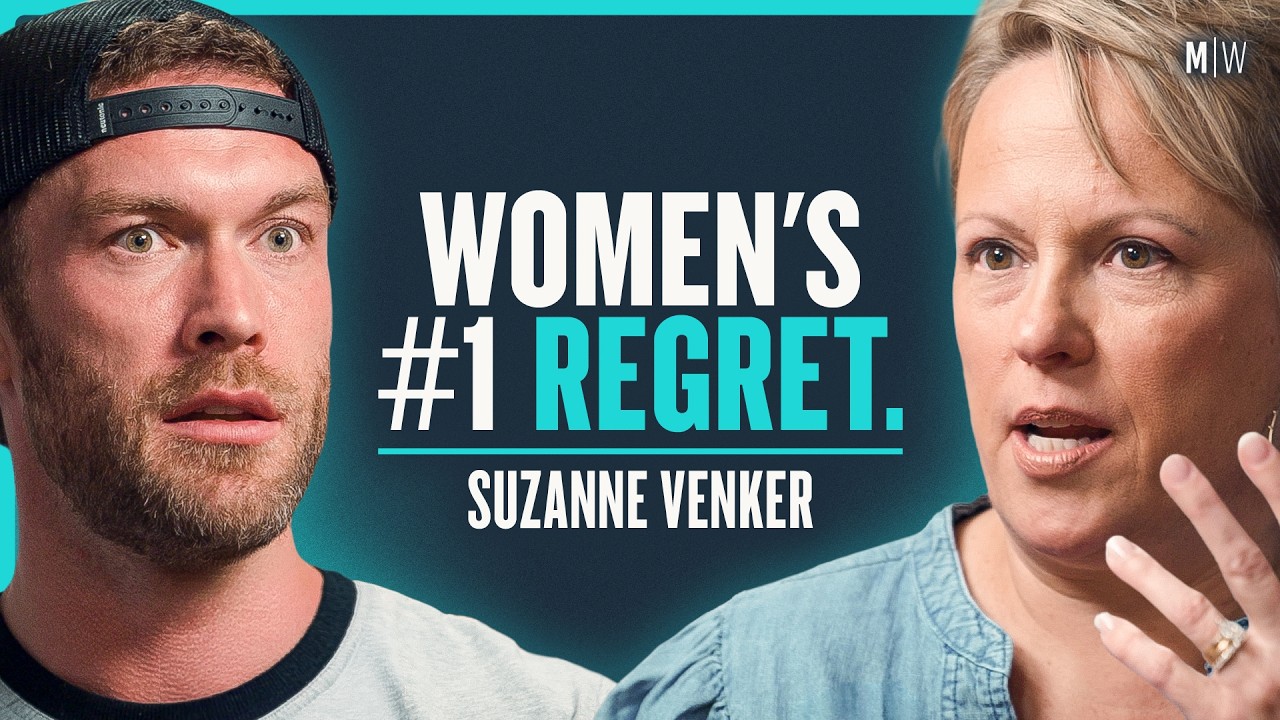
The Career Trap That Makes Women Miserable - Suzanne Venker - #1113

Modern Wisdom · 20 June 2026 · 5 Egleze moments
The Career Trap That Makes Women Miserable - Suzanne Venker - #1113 ▶

What happened in this episode?

Chris Williamson sits down with conservative author and cultural critic Suzanne Venker for a provocative two-hour conversation about marriage, motherhood, and the messages young women receive about building their lives. Venker, who has written extensively on feminism and family structure for 25 years, argues that modern women have been systematically misled by feminist ideology rooted in the dysfunctional family backgrounds of 1970s second-wave leaders. She claims these influential voices extrapolated personal trauma into universal narratives about marriage being oppressive, leaving generations of women unprepared for the biological and emotional realities of wanting children in their thirties. The conversation explores Venker's controversial thesis that women should structure their education and career choices around future family plans rather than career ambitions, choosing flexible professions and carefully vetting male partners for earning potential. She presents data showing 80% of childless women at menopause did not intend to be child-free, and links daycare normalization to attachment disorders and the childhood obesity epidemic. Williamson pushes back thoughtfully on economic constraints and challenges Venker to address the practicalities young women face, including cohabitation trends, student debt, and the tension between financial independence and maternal presence. Venker frames her advice as countercultural but evidence-based, urging women to reject the cultural imperative to live like men and instead embrace traditionally feminine roles without shame. The episode concludes with Venker's assertion that no career achievement compares to the meaning derived from raising children, though she acknowledges this runs counter to every mainstream message young women receive today.

What are the key points?

Which topics are covered?

How is this page sourced?

Programme
Modern Wisdom
Published
20 June 2026
Original episode
Open the original source ↗

Egleze verifies the speaker, source and timestamp for each linked moment. Unless a moment is explicitly marked independently verified, statements remain attributed claims by the named speaker rather than established facts.

Watch original episode More from Modern Wisdom

5 moments from this episode

Source-linked · editorially selected
01
Society

Venker Claims Founding Feminists Had Dysfunctional Backgrounds They Extrapolated to All Women

at 6:00 · Attributed speaker claim
If you study their backgrounds, you find that just about every single one of them had a very dysfunctional story or upbringing or background that caused them to turn away either from men or marriage as an institution. And rather than study their own story and come to terms with what happened to their, really their mom and dad is what we're talking about, they extrapolated that story to mean, oh, the whole system's screwed up. Oh, marriage is oppressive.

Suzanne Venker claims the most influential second-wave feminists of the 1970s had dysfunctional family backgrounds that shaped their anti-marriage messaging, which she argues became culturally dominant despite representing only a minority of women. She contends this messaging has misled generations of women into prioritizing careers over family without understanding the trade-offs.

02
Society

Study Shows 80 Percent of Childless Women Did Not Intend to Be Childless

at 46:33 · Attributed speaker claim
86% by the time the end of their maternal life. But don't forget that women who get to the end of their biological clock, they hit menopause and can't have kids, but didn't have kids. 80% of them didn't intend to be childless. 4 out of 5.

Venker cites data showing that of the 14% of women who reach menopause without children, 80% did not choose to be childless—they simply ran out of time. Only about 10% of all women are intentionally child-free, contradicting narratives that women are increasingly choosing not to have children.

03
Relationships & Family

Cohabitation Before Marriage Increases Divorce Risk by 20 to 50 Percent

at 1:05:52 · Attributed speaker claim
Divorce rate for people who cohabited before marriage, 31.4%. Divorce rate for people who did not cohabitate before marriage, 25.9%. Earlier research often found premarital cohabitation associated with roughly 20 to 50% higher divorce risk depending on controls and demographics.

Williamson cites research showing couples who live together before marriage divorce at significantly higher rates than those who don't. Venker attributes this to the 'sliding versus deciding' phenomenon—couples drift into marriage through inertia rather than making an intentional commitment decision.

04
Health, Longevity & Biohacking

Childhood Obesity Tripled When Mothers Left Home En Masse, Venker Claims

at 1:32:56 · Attributed speaker claim
The obesity, the childhood obesity, which tripled in the last 50 years, happened at the same time mothers left the home en masse. Because who do you think was cooking before? Before when we didn't have the obesity crisis, why was that? People talk about chemicals and oils and that's all fine and great, but the truth is there was a mom in a kitchen cooking.

Venker links the tripling of childhood obesity over 50 years to the mass entry of mothers into the workforce, arguing that home-cooked meals disappeared when no one was home during the day. She frames this as a lifestyle consequence of dual-income families that gets overlooked in obesity debates.

05
Relationships & Family

Venker Says Daycare Was Never Meant for Middle-Class Families

at 1:38:59 · Attributed speaker claim
Daycare was originally a Head Start program, and it was just initially designed for low-income families and/or one-income families who literally had no choice because mom had to go to work. When it opened up to just anybody who wanted to use it just because, regardless of their financial circumstances, that's when it ballooned and became eventually over time just a way of life.

Suzanne Venker argues daycare was designed as a last-resort safety net for poor families but has been normalized for all income levels, which she believes is harmful. She claims institutional daycare prevents proper attachment formation in children under three, leading to relationship problems in adulthood.