The Mel Robbins Podcast
Episode overview

#1 Neuroscientist: How to Unlock the Power of Your Mind Using The Science of Dreaming

The Mel Robbins Podcast · 5 Egleze moments
#1 Neuroscientist: How to Unlock the Power of Your Mind Using The Science of Dreaming
Episode summary

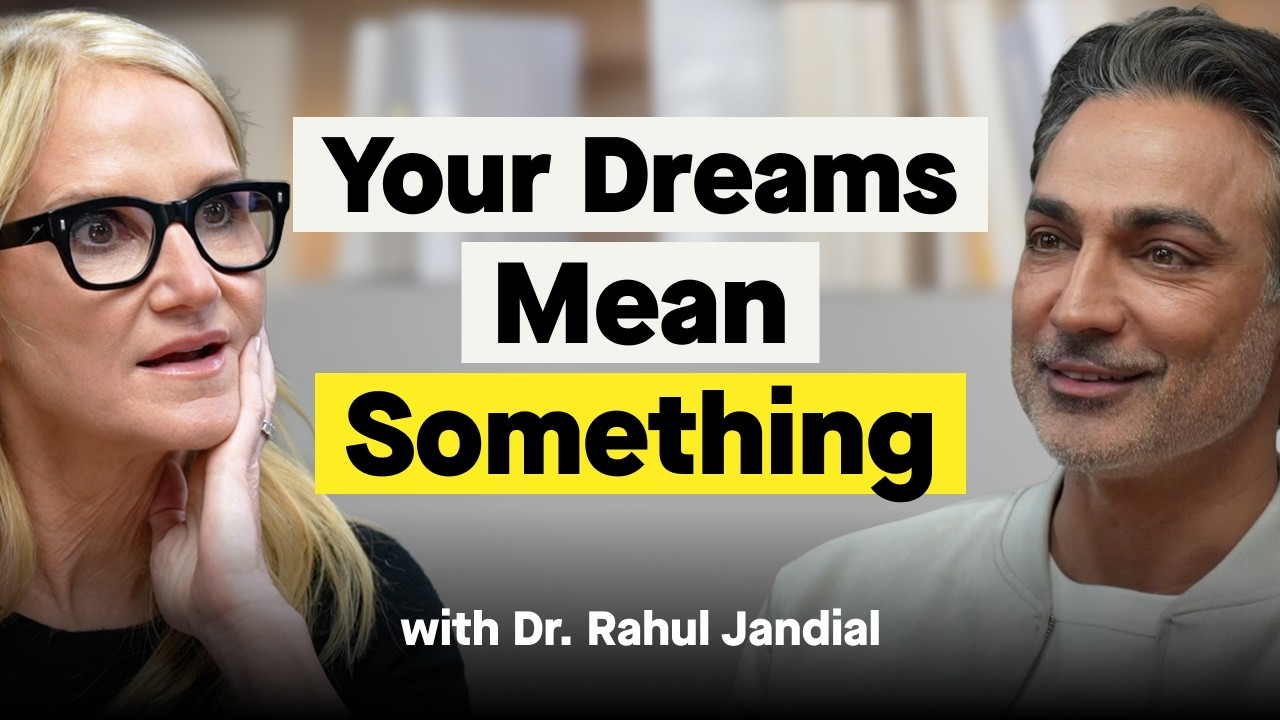
On this episode of the Mel Robbins Podcast, host Mel Robbins sits down with Dr. Rahul Jandial, a world-renowned neurosurgeon, cancer surgeon, and neuroscientist, to explore the science of dreaming and how understanding your dream life can unlock creativity, self-awareness, and problem-solving in waking life. Dr. Jandial, who serves as medical director of neurosurgical oncology at City of Hope Medical Center and directs his own neuroscience research lab, is the author of the New York Times bestseller This Is Why You Dream. The conversation opens with a striking revelation: humans spend roughly one-third of their lives dreaming, not merely sleeping, and brain scans show the dreaming brain is just as electrically active as the waking brain. Dr. Jandial explains that during dreaming, the executive network of the brain—responsible for logic and calculation—is dampened, while the imagination network and limbic system (emotion and creativity) are accentuated. This explains why dreams are vivid, emotional, and often illogical. The episode covers the science behind why we dream, the different phases of sleep, and what various types of dreams mean. Dr. Jandial presents compelling data on dreams as health predictors: over 90% of men who develop Parkinson's show dream pattern changes 15 years before diagnosis, and the return of nightmares in seemingly well-adjusted adults can signal suicide risk and mental health decline. He also discusses how dreams function as rehearsal—motor neurons fire identically whether you're running in real life or in a dream—and why dream recall and lucid dreaming can be cultivated through simple rituals at sleep entry and exit. The episode concludes with a four-step protocol for learning to lucid dream, involving setting an alarm 5-6 hours into sleep, staying groggy, using the power of suggestion, and looking for dream signs like distorted clocks or extra fingers. Dr. Jandial emphasizes that dreaming is a free, private, and universal tool for self-knowledge, creativity, and emotional balance.

Key points
Watch original episode More from The Mel Robbins Podcast

5 moments from this episode

Source-linked · editorially selected
02
Health, Longevity & Biohacking

Neurosurgeon Reveals Dreams Occupy Full Third of Human Life Not Just Sleep

Dr. Rahul Jandial, a world-renowned neurosurgeon and neuroscientist, revealed that contrary to popular belief, humans spend roughly one-third of their lives actively dreaming, not merely sleeping. This finding, based on brain electrical measurements, suggests dreaming is far more pervasive than previously understood and essential to human cognition rather than an accidental byproduct of rest.

Read this moment →
03
Health, Longevity & Biohacking

Ninety Percent of Parkinson's Patients Show Dream Changes 15 Years Before Diagnosis

Dr. Jandial presented data showing that over 90% of men who develop Parkinson's disease exhibit a specific dream disorder—REM behavior disorder—15 years prior to clinical diagnosis. This finding positions dream pattern changes as one of the earliest detectable warning signs of neurodegenerative disease, potentially opening a new window for early intervention.

Read this moment →
04
Health, Longevity & Biohacking

Recurrent Nightmares Can Be Rescripted by Journaling Happier Endings Before Sleep

Dr. Jandial described a scientifically validated treatment for nightmare disorder called imagery rehearsal therapy, in which patients journal alternate, positive endings to their recurring nightmares before sleep. The treatment works because of the brain's susceptibility to suggestion, and the fact that humans are fundamentally storytellers—reframing the narrative reshapes the dream itself.

Read this moment →
05
Health, Longevity & Biohacking

Brain Scans Prove Dream Rehearsal Fires Same Neurons as Real Physical Movement

Dr. Jandial cited neuroscience research demonstrating that when people dream about physical activities like running or throwing, the exact same motor neurons fire as during actual physical execution. This neurological equivalence suggests dream rehearsal may function as genuine practice, explaining why athletes and performers report performance improvements after dream training.

Read this moment →