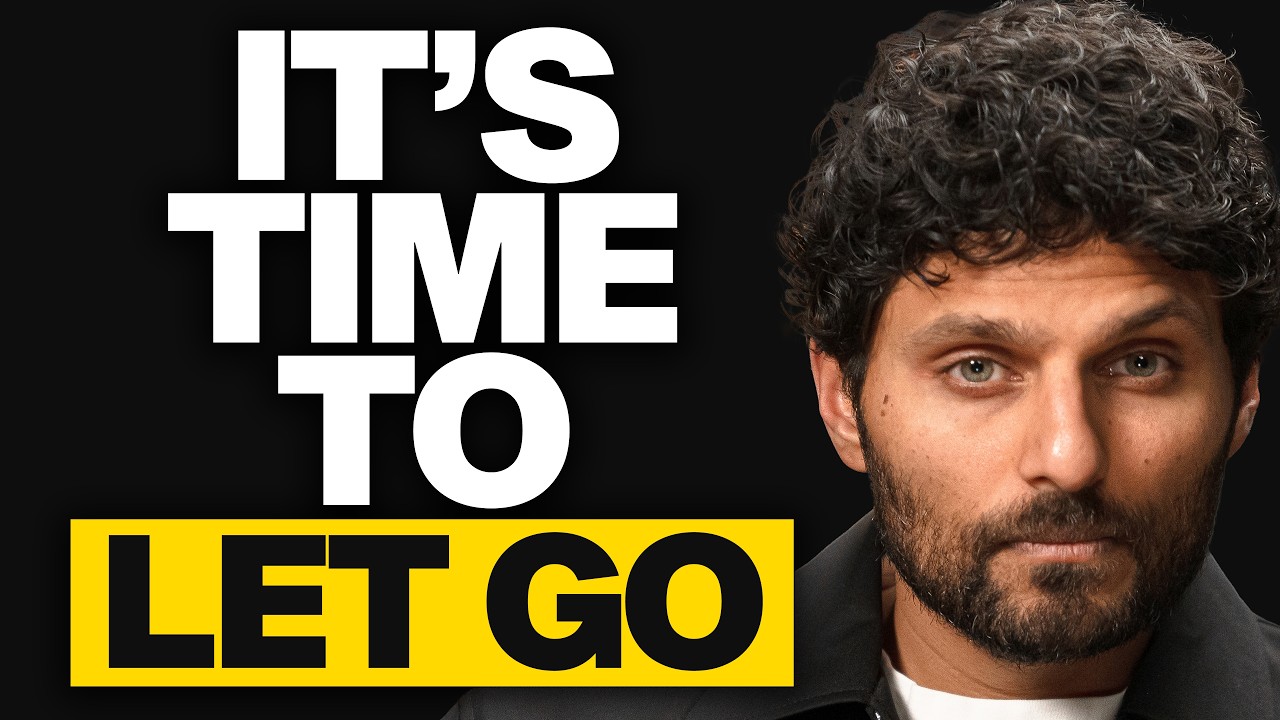
Episode summary
In this episode of On Purpose, host Jay Shetty delivers a monologue exploring the psychology of letting go and starting over in life. Rather than focusing on the mechanics of change, Shetty argues that most people don't struggle with beginning new chapters but with releasing old ones. He examines why attachment to past identities, relationships, careers, and timelines keeps people trapped in circumstances they've outgrown. Drawing on psychological concepts including loss aversion, the sunk cost fallacy, and narrative identity, Shetty explains how the brain's protective mechanisms make familiar suffering feel safer than uncertain possibility. He reveals that loss aversion causes people to feel losses twice as intensely as equivalent gains, making it nearly impossible to imagine the happiness waiting beyond difficult decisions. The episode addresses how people construct their identities through stories and why changing those narratives feels like self-betrayal, even when growth demands it. Shetty presents research showing that while people initially regret bold actions, long-term regret centers overwhelmingly on inactions and missed opportunities. He introduces psychological flexibility as a framework for moving forward despite fear and uncertainty, arguing that emotions should inform but not dictate decisions. Throughout the episode, Shetty emphasizes that multiple versions of a fulfilling life exist, challenging the belief in one perfect predetermined path. He encourages listeners to calculate not just the cost of leaving situations but the often-invisible cost of staying, including lost confidence, energy, and self-respect. The episode concludes with practical questions for evaluating whether to hold on or let go, treating change as experimentation rather than permanent verdicts.