OpenAI Burned 20.9 Billion Dollars in 2025 According to Audited Financials
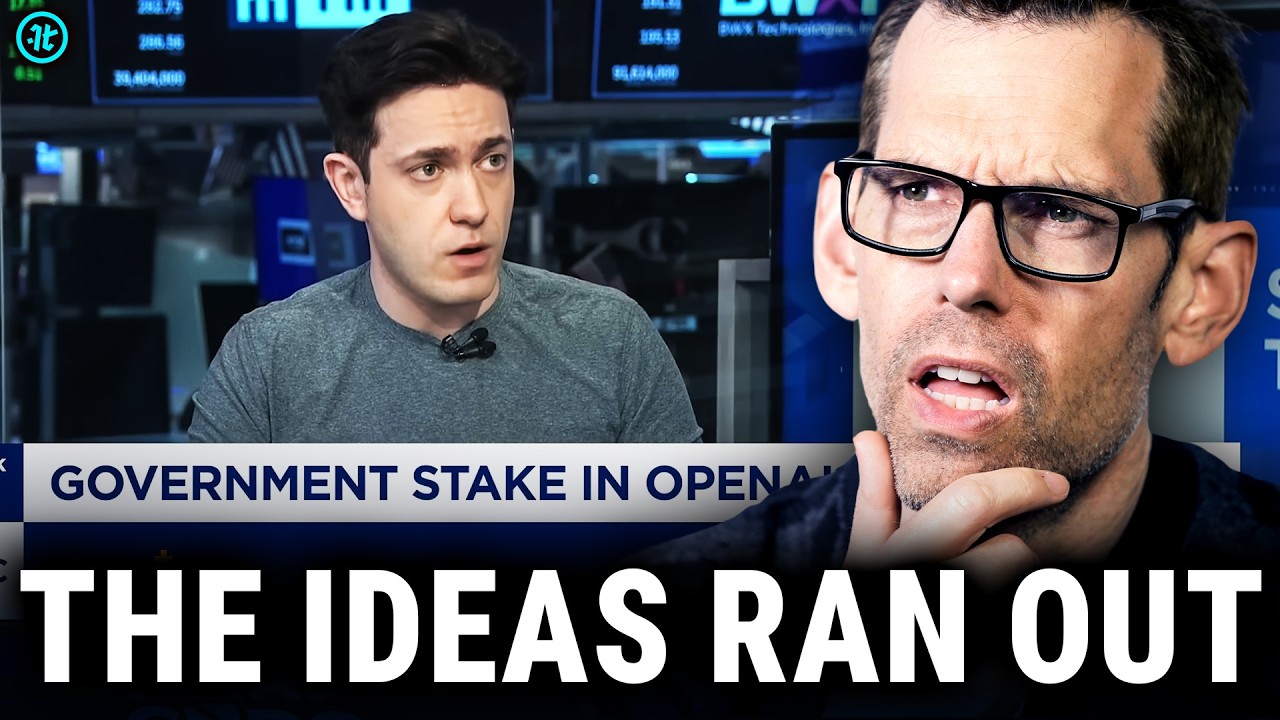
"OpenAI burned $20.9 billion in 2025, and that's the audited financials that the FT and I reported. And the problem with these companies is their margins are getting worse, and they actually— their costs increase linearly with their revenues. There is no proof that they can improve their margins."
About this episode
Tech analyst Tom Bilyeu interviews Ed Zitron, a prominent AI skeptic who argues the generative AI industry is headed for collapse despite massive investment. Zitron reveals that OpenAI burned $20.9 billion in 2025 according to audited financials obtained by the Financial Times, with costs scaling linearly with revenue and no path to profitability. He contends the AI boom mirrors previous infrastructure bubbles like railroads and fiber optics, where first-generation investors were wiped out. Zitron estimates the total addressable market for large language models at only $10 to $30 billion, not the trillions being priced in by hyperscalers like Microsoft, Google, and Meta. Oracle disclosed in its annual report that it faces nonpayment risk from OpenAI for 7.1 gigawatts of data center capacity, while Palantir CEO Alex Karp publicly stated that enterprises are refusing to adopt AI due to token costs and fears of intellectual property theft. Bilyeu pushes back on Zitron's bearishness, arguing that AI remains transformative even if current investors lose money, citing medical breakthroughs in protein folding and applications in coding. However, Bilyeu concedes the debt accumulation is terrifying and warns that AI-related obligations are being hidden across insurance, index funds, and retirement accounts, setting up a potential replay of the 2008 financial crisis. Zitron predicts the collapse will begin when data center debt stops flowing and the first hyperscaler pulls back on capital expenditures, triggering a market repricing. The discussion reveals a stark divide between AI believers who see revolutionary potential and skeptics who see unsustainable economics built on hype and cheap capital.
Key takeaways
- Ed Zitron reports OpenAI burned $20.9 billion in 2025 according to audited financials, with margins worsening as costs scale linearly with revenue and no proof of improvement.
- Oracle disclosed in its annual report the risk that OpenAI may not pay for 7.1 gigawatts of data center capacity, requiring an estimated $75 billion in annual revenue OpenAI cannot afford.
- Palantir CEO Alex Karp stated enterprises are rejecting AI from OpenAI and Anthropic due to prohibitive token costs, lack of ROI measurement, and fears of intellectual property theft.
- Zitron argues the AI industry is a $10 to $30 billion market pretending to be trillion-dollar opportunity, with hyperscalers investing because they have run out of hypergrowth ideas.
- Tom Bilyeu warns AI debt is being packaged and hidden in insurance, index funds, and retirement accounts, potentially recreating the conditions that led to the 2008 financial crisis.
- Zitron predicts the AI bubble will burst when data center debt stops flowing and the first hyperscaler pulls back on capital expenditures, forcing a market-wide repricing.
- Despite disagreeing on outcomes, both Bilyeu and Zitron agree the mismatch between AI infrastructure spending and revenue generation represents a historically unprecedented and dangerous pattern.