Putin Promises Escalating Retaliation Strikes on Ukraine Far More Powerful Than Incoming Attacks
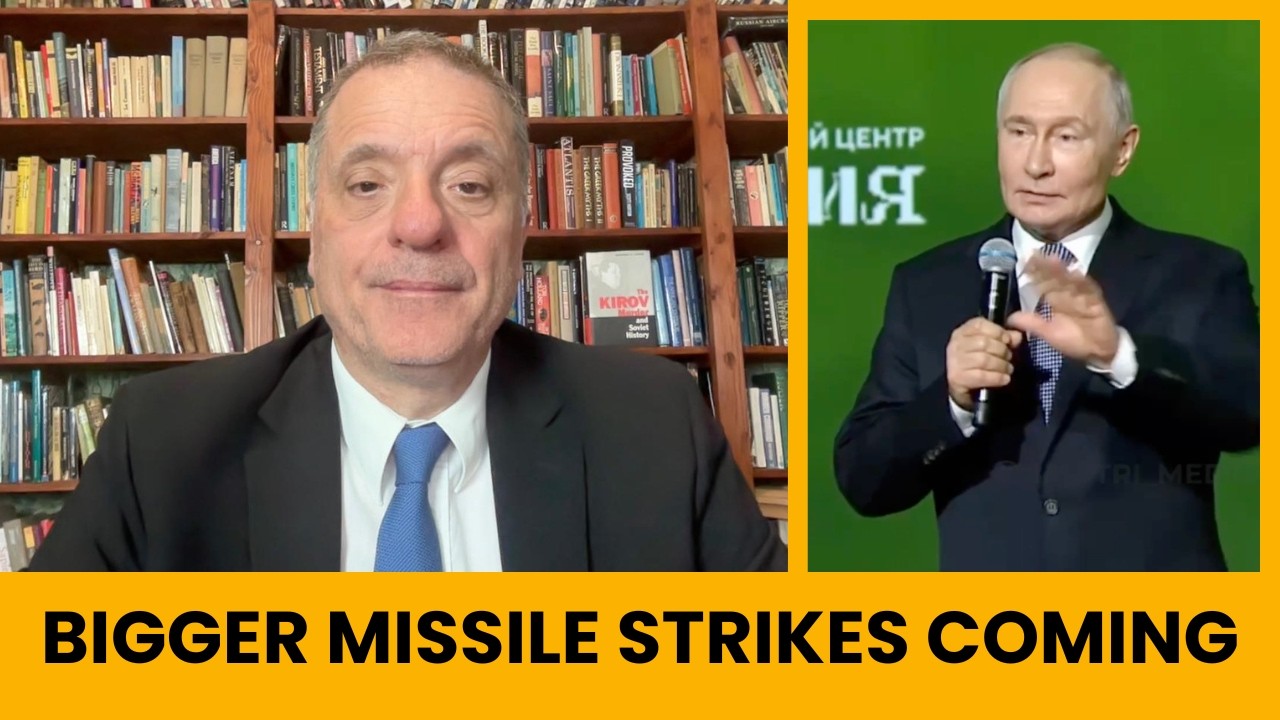
"Russia will respond in kind to Ukraine's attacks and strikes will be much more powerful. Our response will always be tit-for-tat. No matter where inside Russia they attempt to strike, our retaliation will be much more powerful. And the enemy will feel that. Hopefully they are feeling that already and they feel that on an increasingly larger scale."
About this episode
In a detailed analysis recorded July 13, 2026, the commentator examines escalating Russian military capabilities and Ukraine's deteriorating defensive position following a holiday in Montenegro. The episode focuses primarily on Vladimir Putin's announcement at a Russian Popular Front congress that Russia will conduct increasingly powerful retaliatory strikes against Ukraine in response to Ukrainian drone attacks on Russian territory. Putin explicitly stated Russian strikes will be "much more powerful" and grow in intensity with each iteration, with the analyst suggesting this signals deployment of the Oreshnik hypersonic system and other advanced weapons Russia has developed since 2022, including Kinzhal missiles, Iskander-M ballistic missiles, and Zircon cruise missiles. The analysis claims Kyiv has effectively lost its air defense capability, leaving only short-range systems operational and making the capital vulnerable to devastating FAB bomb strikes from Russian aircraft. President Zelensky has reportedly admitted Ukraine no longer has a functioning air defense system, with eyewitness accounts describing metro stations packed with civilians sheltering during strikes. The episode reports on the death of Senator Lindsey Graham from an apparent heart attack hours after visiting a Ukrainian drone factory that was subsequently struck by Russia, though the speaker expresses skepticism about conspiracy theories while noting timeline inconsistencies raised by former intelligence officials. A significant portion addresses the contradiction of Europe increasing Russian LNG purchases by 18% while simultaneously imposing sanctions and helping Ukraine attack Russian energy infrastructure, as European gas reserves remain critically low ahead of winter. The commentator criticizes the Financial Times for publishing an article treating the battle for Konstantinovka as ongoing despite video evidence showing Russian control of the strategically vital city, arguing this reflects Western media desperation and wishful thinking as Ukraine's military position deteriorates across multiple fronts including Liman, Sumy, Kharkiv, and Zaporizhzhia regions.
Key takeaways
- Vladimir Putin announced Russia will conduct increasingly powerful retaliatory strikes against Ukraine with each iteration, hinting at deployment of the devastating Oreshnik hypersonic system.
- Kyiv has effectively lost its air defense capability and now faces potential FAB aerial bomb strikes directly on the capital, with civilians sheltering in metro stations during Russian attacks.
- Senator Lindsey Graham died of an apparent heart attack hours after visiting a Ukrainian drone factory near Kyiv that was subsequently struck by Russian missiles, with questions raised about the official timeline.
- Europe increased Russian LNG purchases by 18% last month despite sanctions and plans to cease all Russian energy imports by January 2027, as gas reserves remain critically low for winter.
- The Financial Times published an article treating the battle for strategically vital Konstantinovka as ongoing despite video evidence confirming Russian control of the city.
- Russia has dramatically expanded missile production capabilities since 2022, including Kinzhal hypersonic missiles, Iskander-M ballistic missiles, Zircon cruise missiles, and mass-produced Geran drone systems.
- Russian forces are advancing across multiple fronts including Liman, Sumy region, Kharkiv, and toward Kramatorsk and Slavyansk, with the fall of Donbas potentially opening operational space for deeper advances westward.