Standard room lighting suppresses melatonin in 99 percent of people study finds
"What they found is that compared to dim light, exposure to just high room like brightness, like light brightness, it suppressed melatonin in 99% of individuals. What this essentially means, like when we look at all this data, is that your body's like internal night, so to speak, is being shortened by 90 minutes just from standard room lighting, more than your phone, more than all these other things."
About this episode
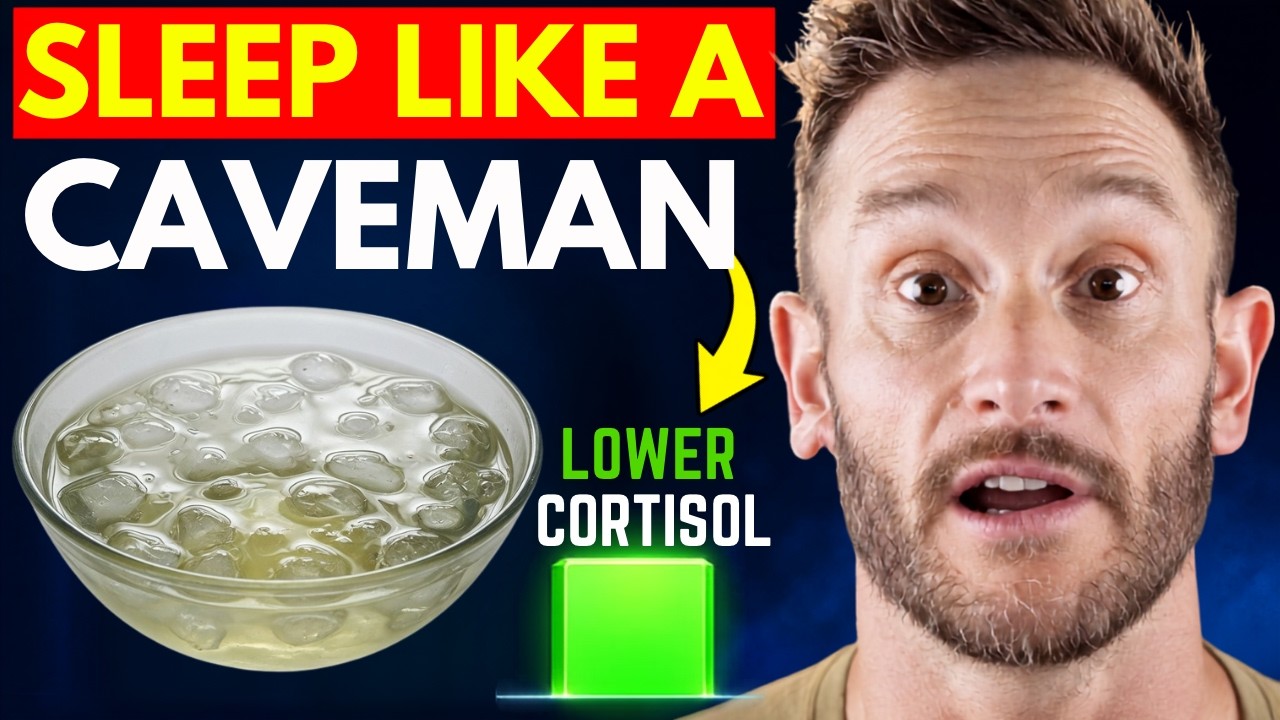
In this episode, the host presents five evidence-based interventions to lower cortisol and improve sleep quality without supplements, challenging common assumptions about what disrupts rest. The most striking revelation comes from an emergency room director who disclosed that vagal nerve stimulators, often dismissed as fringe biohacking tools, are actively used in clinical emergency settings to manage acute stress. The host personally endorses the Pulsed II device, reporting measurable improvements in heart rate variability. A second major finding draws from the Journal of Clinical Endocrinology Metabolism: standard room lighting suppresses melatonin in 99% of individuals, shortening the body's internal night by 90 minutes—a more significant factor than phone screens. The host explains that cortisol follows a precise 24-hour rhythm governed by the suprachiasmatic nucleus, with a healthy morning peak and evening trough. Modern life flattens this curve, blunting morning cortisol while keeping evening levels elevated. The five interventions target this imbalance: the mammalian dive reflex using cold water on the face, vagal nerve stimulation through humming or devices, strategic sauna use timed two to three hours before bed, grounding through direct skin contact with conductive surfaces, and eliminating bright artificial light after sunset. The host emphasizes that morning cortisol patterns at 7 a.m. shape sleep quality at 11 p.m., and each technique either sharpens the morning peak or lowers the evening trough. He provides specific implementation details, including targeting the forehead and eye sockets with ice water, aiming for lights below 10 lux and 3,000 Kelvin in the evening, and using sauna sessions of 15-20 minutes at 80-100 degrees Celsius. The host is transparent about mixed evidence on grounding but cites a pilot study showing significant nighttime cortisol reduction and symptom elimination.
Key takeaways
- Emergency room director reveals vagal nerve stimulators are used clinically in acute stress situations, validating the technology beyond wellness marketing
- Journal study finds standard room lighting suppresses melatonin in 99% of people, shortening internal night by 90 minutes more than phone screens
- Morning cortisol patterns at 7 a.m. directly shape sleep quality at 11 p.m. through reciprocal regulation with melatonin production
- Cold water on face activates mammalian dive reflex through trigeminal nerve, immediately suppressing sympathetic nervous system and lowering cortisol
- Sauna use timed 2-3 hours before bed drives core temperature up then activates parasympathetic cooling response that enhances deep sleep
- Five minutes of sustained humming produces measurable improvements in heart rate variability by mechanically vibrating vagal nerve fibers
- Grounding during sleep for 8 weeks significantly reduced nighttime cortisol and eliminated subjective symptoms in nearly all study participants