Nobel Laureate Reveals U.S. Exports Tens of Billions in Paid Plasma While Other Countries Ban Payment
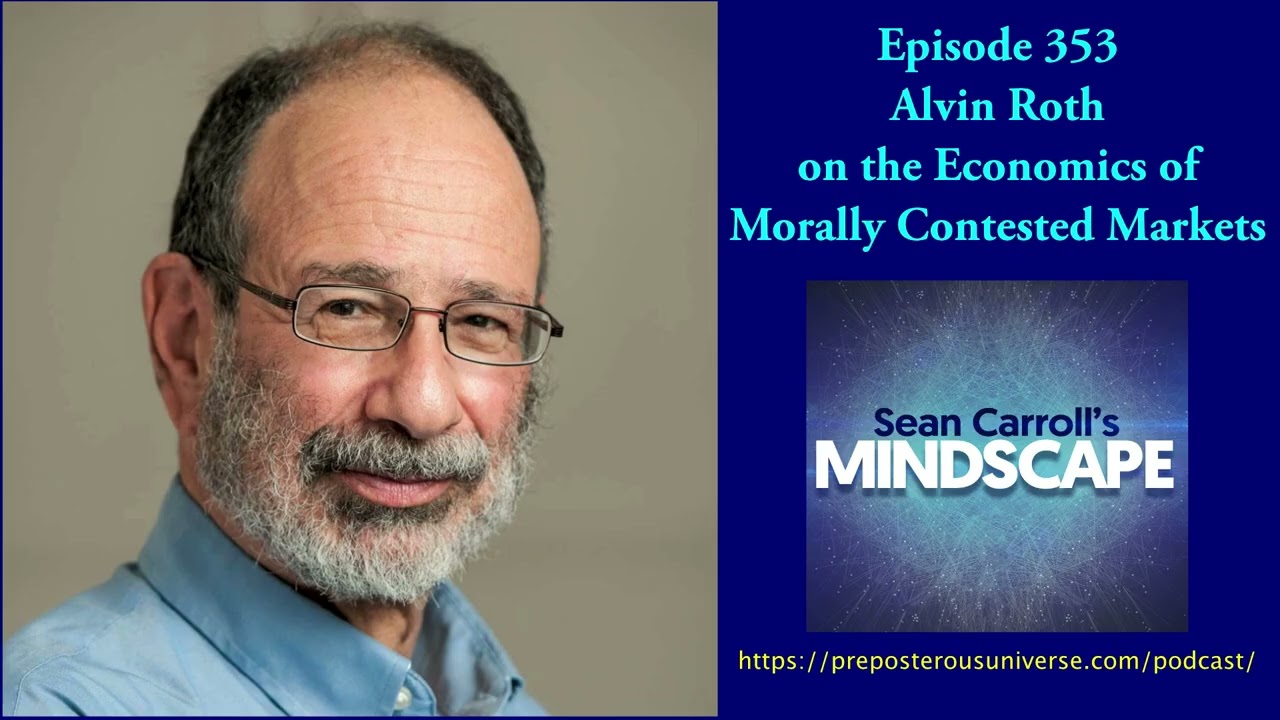
"We export tens of billions of dollars of plasma and plasma products every year because we pay donors. There's no shortage of plasma here. And the people who donate plasma are on the whole not as rich as the people who don't donate plasma. It's something people do to supplement their income."
About this episode
In this episode of Mindscape, host Sean Carroll interviews Nobel Prize-winning economist Alvin Roth of Stanford University about his new book, Moral Economics: From Prostitution to Organ Sales, What Controversial Transactions Reveal About How Markets Work. Roth, a pioneering market designer, challenges listeners to reconsider which transactions society should permit or prohibit, arguing that moral judgments about markets must account for real-world consequences, not just intentions. The conversation opens with Roth distinguishing between commodity markets where prices do all the work and matching markets like employment or kidney exchange where relationships matter. He introduces the concept of "repugnant transactions"—exchanges some people want to engage in but others morally oppose—using examples ranging from same-sex marriage and abortion to kidney sales and drug markets. A central revelation is that Iran is the only country allowing paid kidney donation, while the U.S. has 90,000 people on transplant waiting lists and most die without receiving organs. Roth designed kidney exchange systems that facilitate transplants without payment and advocates for the End Kidney Deaths Act, which would compensate anonymous donors through tax credits. He exposes how the U.S. exports tens of billions in paid blood plasma while other nations ban payment yet depend on American supply, and notes research showing plasma donation centers reduce payday loan dependency. Perhaps most striking is Roth's comparison of drug prohibition versus the hitman market: identical harsh penalties successfully eliminated commercial assassination but utterly failed to curb drug addiction, with over 40% of federal prisoners incarcerated for drug offenses while overdoses continue. He calls for experimentation and evidence-based policy rather than purely moral positions, noting even prisons cannot keep drugs out. The episode concludes with Roth discussing medical aid in dying, revealing that Justices Gorsuch and Barrett previously opposed it and predicting Supreme Court intervention similar to abortion. Throughout, Roth emphasizes that markets are human artifacts requiring thoughtful design, and that both markets and market bans need social support to function—support that exists for preventing contract killing but has failed catastrophically for drug prohibition.
Key takeaways
- Iran is the only country legally allowing paid kidney donation, sanctioned by Shia fatwas, while 90,000 Americans await transplants with most dying before receiving one.
- Roth compares drug prohibition to hitman markets, noting identical penalties successfully eliminated contract killing but completely failed to reduce drug addiction or overdoses despite over 40% of federal prisoners having drug convictions.
- The United States exports tens of billions annually in blood plasma from paid donors while other countries ban payment yet depend on U.S. supply; research shows plasma centers reduce payday loan usage.
- The End Kidney Deaths Act would compensate anonymous kidney donors through tax credits to increase the 500 annual non-directed donations that enable kidney exchange chains.
- Supreme Court Justices Neil Gorsuch and Amy Coney Barrett previously opposed medical aid in dying, which Roth predicts will reach the Court similar to abortion as 12-13 states now permit it.
- Roth designed kidney exchange systems allowing incompatible patient-donor pairs to swap kidneys, including international exchanges between UAE and Israel, and advocates for U.S.-Canada collaboration.
- Markets require social support to function well, as do bans on markets—prohibition worked against hitmen but failed against drugs, suggesting experimentation and evidence-based policy over purely moral stances.