← All stories
Crime & Justice

Stanford Economist Claims Drug War Fails While Hitman Market Successfully Suppressed
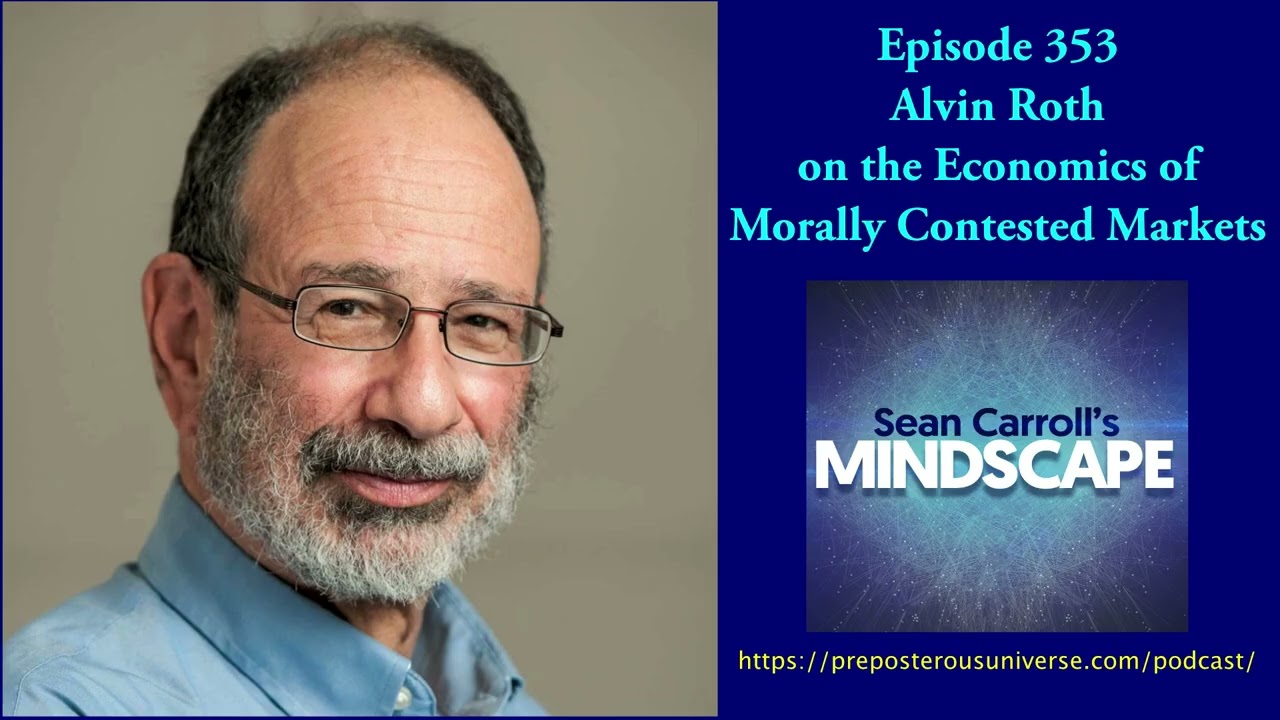
Sean Carroll Mindscape · 353 | Alvin Roth on the Economics of Morally Contested Markets · May 11, 2026
Stanford Economist Claims Drug War Fails While Hitman Market Successfully Suppressed

Sean Carroll Mindscape
353 | Alvin Roth on the Economics of Morally Contested Markets
"Why is it easy to buy drugs but hard to hire a hitman? Our laws are the same. If we catch drug dealers or hitmen, we put them away for a long time, but it's working for hitmen. There's very little market for commercial killing. The same laws that work so well against hitmen aren't working so well against drugs."
Alvin Roth argued that identical legal penalties produce radically different outcomes: commercial assassination has been virtually eliminated while drug markets thrive despite enforcement. He noted that over 40% of federal prisoners have drug convictions yet overdose deaths remain high, and cited the inability to keep drugs out of prisons as evidence that purely police and military methods have failed.

About this episode

In this episode of Mindscape, host Sean Carroll interviews Nobel Prize-winning economist Alvin Roth of Stanford University about his new book, Moral Economics: From Prostitution to Organ Sales, What Controversial Transactions Reveal About How Markets Work. Roth, a pioneering market designer, challenges listeners to reconsider which transactions society should permit or prohibit, arguing that moral judgments about markets must account for real-world consequences, not just intentions. The conversation opens with Roth distinguishing between commodity markets where prices do all the work and matching markets like employment or kidney exchange where relationships matter. He introduces the concept of "repugnant transactions"—exchanges some people want to engage in but others morally oppose—using examples ranging from same-sex marriage and abortion to kidney sales and drug markets. A central revelation is that Iran is the only country allowing paid kidney donation, while the U.S. has 90,000 people on transplant waiting lists and most die without receiving organs. Roth designed kidney exchange systems that facilitate transplants without payment and advocates for the End Kidney Deaths Act, which would compensate anonymous donors through tax credits. He exposes how the U.S. exports tens of billions in paid blood plasma while other nations ban payment yet depend on American supply, and notes research showing plasma donation centers reduce payday loan dependency. Perhaps most striking is Roth's comparison of drug prohibition versus the hitman market: identical harsh penalties successfully eliminated commercial assassination but utterly failed to curb drug addiction, with over 40% of federal prisoners incarcerated for drug offenses while overdoses continue. He calls for experimentation and evidence-based policy rather than purely moral positions, noting even prisons cannot keep drugs out. The episode concludes with Roth discussing medical aid in dying, revealing that Justices Gorsuch and Barrett previously opposed it and predicting Supreme Court intervention similar to abortion. Throughout, Roth emphasizes that markets are human artifacts requiring thoughtful design, and that both markets and market bans need social support to function—support that exists for preventing contract killing but has failed catastrophically for drug prohibition.

Key takeaways

More stories More from Sean Carroll Mindscape