Off grid real estate founder reveals 200000 to 250000 dollar monthly payroll burn rate
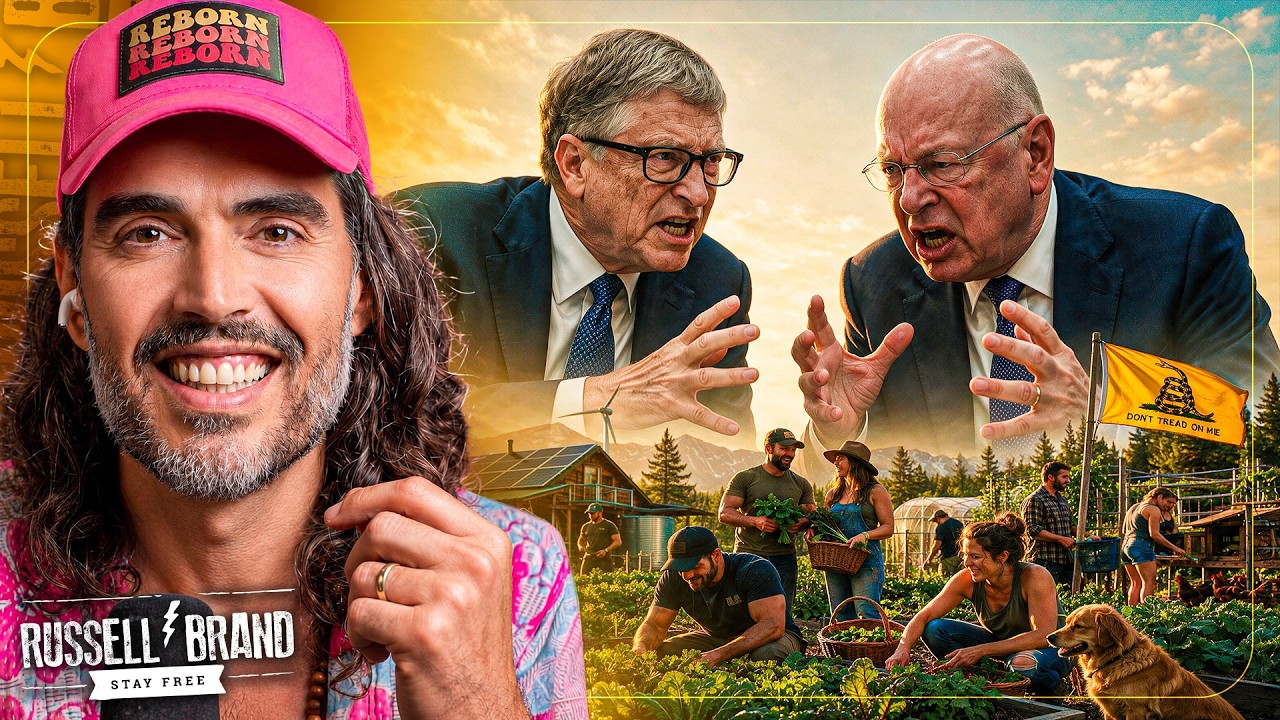
"The truth is that now that everything that I've done, no matter how purposeful Axe is, no matter how much land I open up, and no matter how many properties, no matter how many people I help out finally be able to move off-grid and all this, and I will fight, I will fight as hard as I can fight, it's never going to go bring my little Colt back. But I'm not going to let that be an opportunity to get me to stop, even though I face so many different things that would crush most people. We just month to month, our overhead to run this company month to month is about $200,000 to $250,000 just for payroll."
About this episode
Russell Brand interviews TJ Vizio Day, the 32-year-old founder of Axe Decentralized Real Estate, in an extraordinary conversation that blends faith, grief, entrepreneurship, and alternative living. Vizio Day, who lost his two-year-old son Colty just one month before this recording, reveals how he continues building an off-grid community empire despite profound personal tragedy. He discloses that his company operates with monthly payroll costs between $200,000 and $250,000, with total overhead exceeding $500,000, and explains how missing a single deal can create massive cash flow crises. The entrepreneur shares a striking claim that three separate landowners who attempted to renege on property deals were immediately hospitalized, experienced changes of heart, and then proceeded with transactions—events he interprets as divine intervention. Brand and Vizio Day explore biblical principles underlying the off-grid movement, discussing how centralized food systems, toxic products, and dependence on government infrastructure keep populations controlled. Vizio Day details his vision for helping families achieve self-sufficiency through land ownership, regenerative farming, and local food production, contrasting his ethical approach with standard developer practices of exploiting distressed sellers. The conversation takes deeply personal turns as Vizio Day describes his grief journey, explaining how he uses physical training with weighted backpacks to process loss and how he's learned to recognize demonic versus divine voices in his thoughts. Brand, who faces his own legal challenges, opens up about his struggle to surrender control and trust God fully, acknowledging his tendency to claim credit for blessings while fearing future outcomes. Both men discuss the concept of peace that surpasses understanding, exploring how crisis strips away illusions and forces dependence on God. The episode examines arousal theory and maintaining emotional equilibrium during extreme stress, with Vizio Day explaining how staying within his window of tolerance allows him to lead effectively despite impossible circumstances. Throughout, they return to the central thesis that local, self-sufficient communities offer the only viable alternative to increasingly centralized control systems, and that the current cultural moment demands radical solutions built on ancient wisdom.
Key takeaways
- TJ Vizio Day lost his two-year-old son Colty one month ago but continues operating Axe Decentralized Real Estate with monthly overhead exceeding $500,000
- Vizio Day claims three landowners who reneged on property deals were immediately hospitalized, changed their minds, and proceeded with transactions
- Axe Decentralized Real Estate operates on monthly payroll of $200,000 to $250,000 with precarious cash flow dependent on individual deal closures
- Russell Brand discusses his ongoing legal trial and personal struggle to surrender control and maintain faith rather than self-reliance
- Vizio Day argues centralized food systems, toxic products, and government dependence constitute deliberate control mechanisms masking true intentions
- The entrepreneur rejects standard developer practices of exploiting distressed sellers through death, divorce, and displacement, instead paying asking prices
- Both men explore how crisis and suffering create dependence on God and strip away the illusion of self-sufficiency and control