Financial Expert Warns Dollar Crash Up More Dangerous Than Crash Down
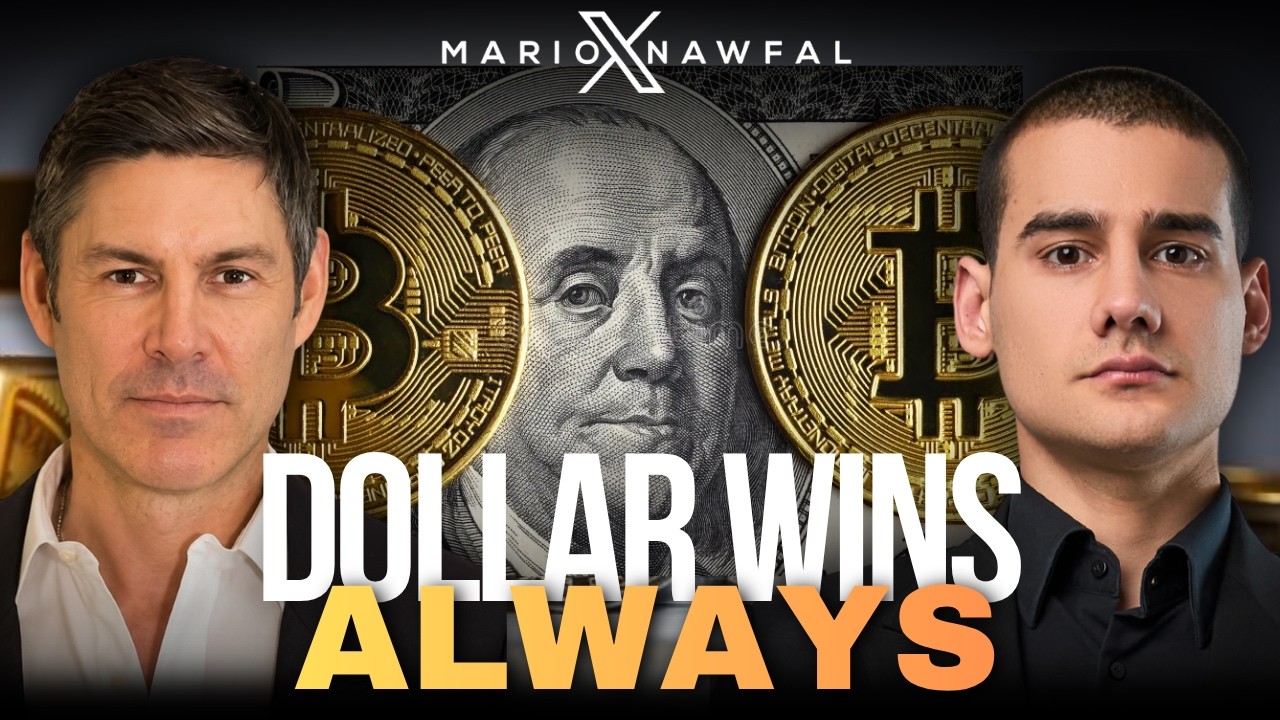
"I always say that I'm not so much worried about the dollar crashing down. What I am worried about is the dollar crashing up. I think what I can say with confidence is that we are in the late stages of a credit cycle. If you look at a late-stage credit cycle and look at the characteristics, it's literally just check, check, check, check. Like, every one of the characteristics in a late-stage credit cycle you can see playing out right now, in front of our eyes."
About this episode
In this wide-ranging conversation, the host interviews a financial expert who shares contrarian insights on currencies, precious metals, and the global economy. The most striking revelation comes from the guest's personal experience in Argentina, where he discovered that gold, silver, and Bitcoin were effectively worthless during a currency crisis, with locals preferring their rapidly depreciating peso due to network effects. The guest challenges conventional wisdom about alternative currencies, arguing that the U.S. dollar's dominance stems not from its store of value but from its unmatched network effects and financial infrastructure, comparing it to how the iPhone succeeded through its app ecosystem. He warns that the greater danger facing the global economy is not a dollar collapse but a dollar surge, which would make servicing dollar-denominated debt impossible and trigger asset sales worldwide. The expert confidently asserts that all indicators of a late-stage credit cycle are currently present, though he cannot predict whether the coming contraction will resemble the dot-com bust or the more severe 2008 financial crisis. On deglobalization and manufacturing, he argues that bringing production back to America requires regulatory certainty rather than a weak dollar, citing how Argentina's weak currency failed to attract manufacturing due to regulatory chaos. The conversation touches on the impossibility of dethroning the dollar without a replacement that is 100 times better, the role of central bank responses in delaying or accelerating cycles, and the difficulty of assessing China's true economic condition given unreliable data. Throughout, the guest emphasizes that there are no solutions in economics, only trade-offs, and that network effects consistently trump other monetary characteristics in real-world crises.
Key takeaways
- During Argentina's currency crisis, locals refused gold, silver and Bitcoin even as the peso lost 20% monthly value, proving network effects dominate store of value
- The guest warns all characteristics of a late-stage credit cycle are present now and an economic contraction of uncertain severity is likely coming soon
- A strengthening dollar poses greater danger than a weakening one by making global dollar-denominated debt impossible to service and forcing mass asset sales
- The dollar cannot be dethroned without a replacement 100 times better because its dominance comes from financial infrastructure and derivatives not store of value
- Bringing manufacturing back to America requires regulatory certainty and reform rather than a weak dollar according to the financial expert
- The guest experienced firsthand that gold dealers in Argentina either refused to buy or demanded 50% haircuts during the currency crisis
- European countries pursuing nuclear weapons and gold hoarding creates crosscurrents that lower the probability of robust global economic growth ahead