← All stories
Science

Space Debris Could Trigger Kessler Syndrome Chain Reaction Destroying All Satellites
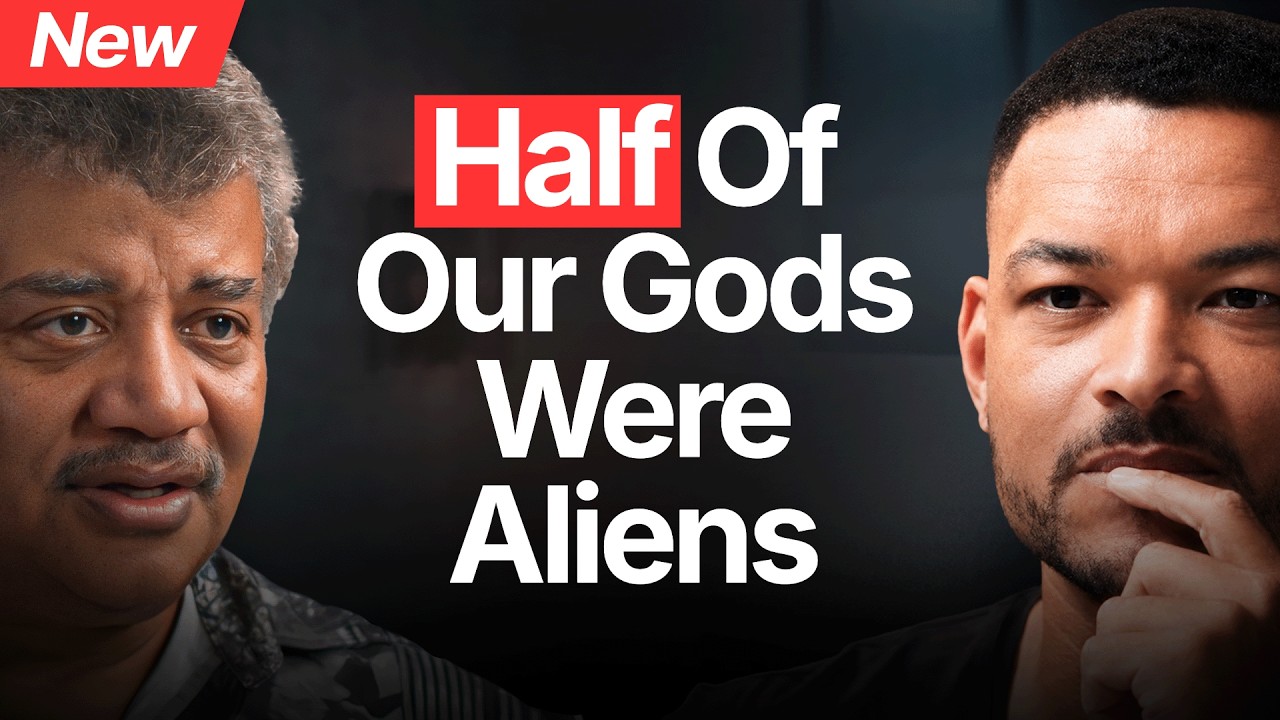
Diary of a CEO · Neil deGrasse Tyson: Bring Out The Aliens! · July 9, 2026
Space Debris Could Trigger Kessler Syndrome Chain Reaction Destroying All Satellites
Diary of a CEO
Diary of a CEO
Neil deGrasse Tyson: Bring Out The Aliens!
"If you destroy a satellite, let's say it breaks into 10 pieces each going orbital speed. Orbital speed is is 17,000 miles an hour. That's way faster than a rifle bullet. So little pieces of satellite can be far more devastating than a high-powered rifle bullet shot into another satellite. If any one of them hits another satellite, breaking it into 10 pieces, you go from one to 10 to 100 to a thousand. Within just a few orbits, 100% of the satellites can be taken out."
Tyson explains Kessler syndrome, the cascading collision scenario predicted in 1978 where destroyed satellites create debris that destroys more satellites exponentially. With 10,500 SpaceX satellites already in orbit and projections of 100,000 active satellites by 2040, he warns the threshold for this catastrophic chain reaction may be approaching, though he believes we haven't reached it yet.

About this episode

Astrophysicist Neil deGrasse Tyson joins Steven Bartlett for a wide-ranging conversation challenging popular assumptions about aliens, consciousness, space exploration, and humanity's place in the cosmos. Tyson directly rebuts the simulation hypothesis popularized by Elon Musk, arguing that because humans cannot yet create simulated universes with sentient beings, we must be either the original universe or the last in the simulation chain—reducing the odds we're simulated from near-certainty to roughly 50-50. He exposes the Artemis moon program as driven purely by geopolitical competition with China rather than science, stating bluntly that America never went to the moon for scientific reasons. On the subject of extraterrestrial life, Tyson argues intelligent civilizations almost certainly exist given the universe's size and age, but questions why we haven't encountered them—suggesting space travel may simply be too difficult. He explains that if aliens observed Earth, they would likely conclude automobiles are the dominant species based on their behavior and prevalence. Tyson firmly rejects psychedelics, arguing the human brain already barely works and introducing chemicals would only further compromise perception of objective reality. He provides a graphic description of death by black hole, detailing how tidal forces would snap a human body at the spine then continue bifurcating it exponentially while extruding it through spacetime like toothpaste. Warning about space debris, he explains Kessler syndrome—the catastrophic chain reaction where one destroyed satellite could eliminate all satellites in orbit—and notes projections of 100,000 active satellites by 2040 make this threshold increasingly plausible. Throughout, Tyson emphasizes that science exists to transcend the limitations of human perception and that his life's purpose is spreading curiosity rather than seeking personal memorialization.

Key takeaways

More stories More from Diary of a CEO