Ukraine Received Aid Totaling Two and Half Times Its GDP Since War Began
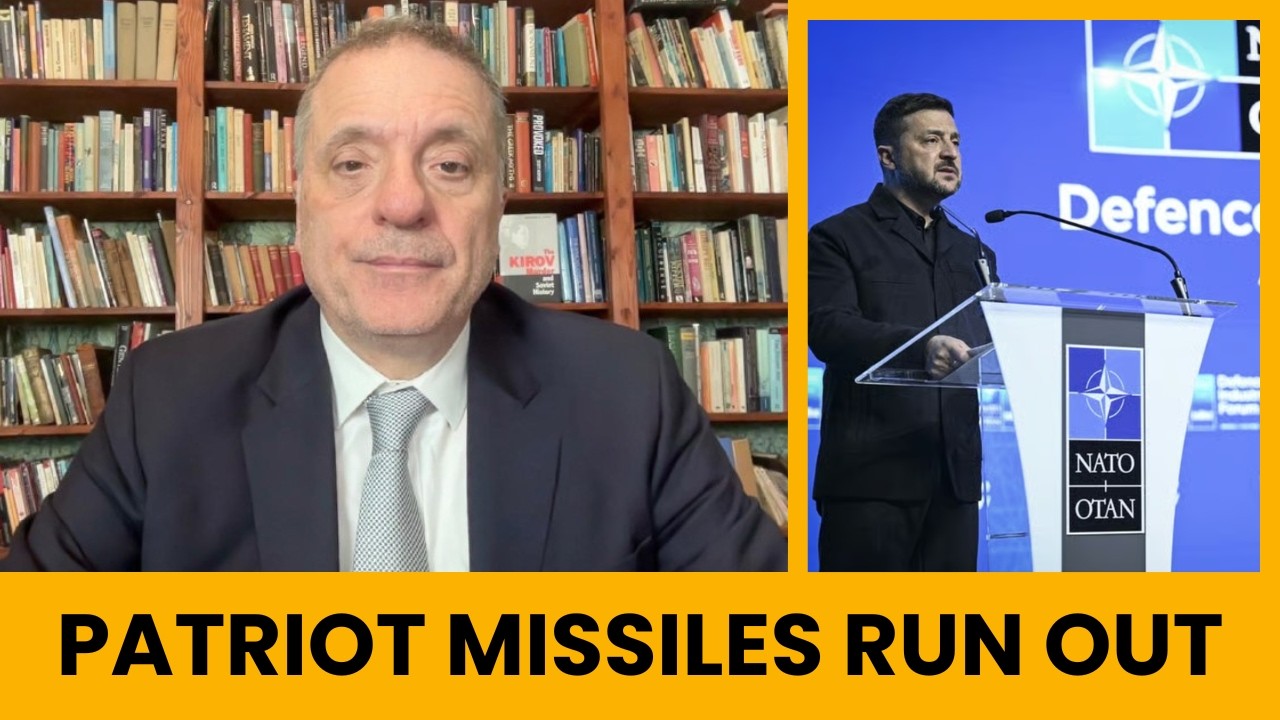
"If you totalize the aid provided to Ukraine over the last four and a half years since the start of the special military operation, if you totalize aid, add military and civilian aid and lump them all together, then Ukraine has received more in aid from the West than its GDP. In fact two and a half times more than its GDP. And yet its nominal GDP is about the same as it was at the start of the war. Well, that is of course completely artificial. Nominal GDP is simply propped up by all this enormous flood of western aid. True GDP actually organicely generated GDP in Ukraine has collapsed."
About this episode
In a detailed analysis dated July 7, 2026, Alexander Mercouris examines Russia's likely escalation of its Special Military Operation in Ukraine to a formal anti-terrorism operation by year's end, citing recent comments by Kremlin spokesman Dmitri Peskov as preparation for the shift. The episode focuses heavily on battlefield developments and strategic implications as Russian forces near complete control of Donbass, particularly the imminent fall of Liman and ongoing operations around Sloviansk and Kramatorsk. Mercouris details a devastating Russian strike on a Kiev arsenal storing U.S.-supplied cluster munitions and depleted uranium shells that forced evacuation of tens of thousands, which Ukrainian officials confirmed as the most destructive single strike of the war. The analysis reveals Ukraine has completely exhausted its Patriot missile interceptor stockpiles, leaving it defenseless against Russian strikes, while Zelensky demands European allies surrender their remaining supplies. Mercouris extensively critiques Western production constraints, noting even maximum projected U.S. output cannot meet Ukraine's consumption rates. He presents data showing Ukraine has received Western aid totaling 2.5 times its GDP since 2022, yet nominal GDP remains artificially flat while organic industrial production has collapsed by a third. Russian Deputy Foreign Minister Sergei Ryabkov's dismissal of European negotiation overtures as diversionary tactics effectively closes prospects for diplomatic resolution. The episode argues Russia's legal framework upgrade becomes inevitable once Donbass is secured, as military leadership will demand clearer operational authority beyond the current SMO constraints. Mercouris predicts catastrophic consequences for Ukrainian forces defending Sloviansk-Kramatorsk as retreat across open steppes during autumn rasputitsa would be disastrous. He concludes that Western rhetoric about Ukraine regaining initiative masks a deteriorating military situation across all fronts, with Russian offensives intensifying in 2026 beyond the single-axis advances of 2024.
Key takeaways
- Russia expected to upgrade Ukraine Special Military Operation to anti-terrorism operation by end of 2026 as Donbass liberation nears completion and diplomatic prospects evaporate
- Russian strike on Kiev arsenal storing U.S. cluster munitions and depleted uranium shells caused massive explosion forcing evacuation of tens of thousands in most devastating single strike of war
- Ukraine has completely exhausted Patriot missile interceptor stockpiles leaving air defenses unable to stop Russian strikes while production cannot meet consumption rates
- Russian Deputy Foreign Minister Sergei Ryabkov dismissed European negotiation overtures as diversionary tactics and ruled out diplomatic resolution to conflict
- Western aid to Ukraine has totaled 2.5 times the country's GDP since 2022 yet organic industrial production collapsed by one-third with nominal GDP artificially propped up
- Ukrainian forces face potential catastrophic losses defending Sloviansk-Kramatorsk with no fortified cities beyond and retreat across open steppes during autumn likely disastrous
- Russian offensives have evolved from single-axis advances in 2024 to multi-front operations in 2025-2026 with increasing intensity across entire front line including Sumy and Kharkov regions