← All stories
Politics

Tech founder who fled Soviet Union warns against socialism's seductive trap in America
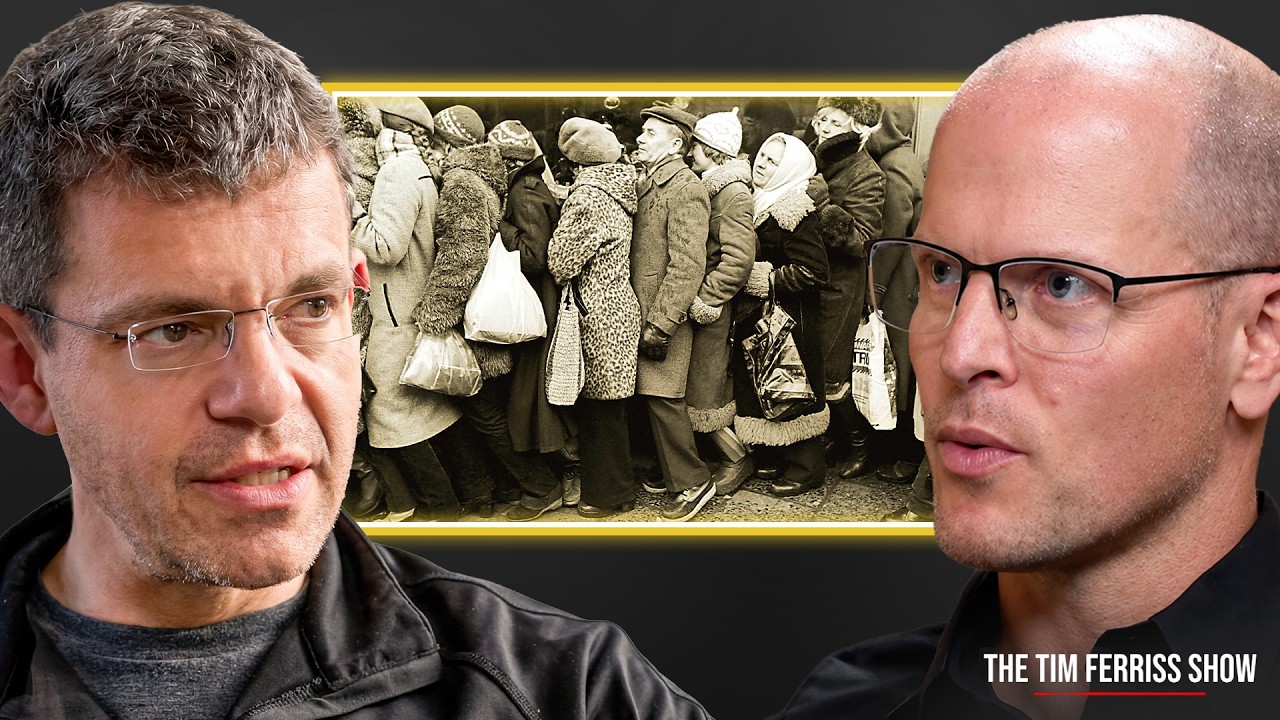

Tim Ferriss Show · Max Levchin's Warning on Socialism · July 6, 2026
Tech founder who fled Soviet Union warns against socialism's seductive trap in America
Tim Ferriss Show
Tim Ferriss Show
Max Levchin's Warning on Socialism
"The ideas of socialism are amazing. It's this, you know, me for my fellow men and share and share alike and do the right thing because it's the right thing to do, not because there's a financial incentive to do it. All those things sound amazing. And so it's seductive, the idea of a worker's paradise without the greedy lenders, capitalists, bankers, sort of all the sort of things we were fed as children, or I was fed as a child in Soviet Union, at first blush, you're like, yeah, it makes sense."
A tech founder who immigrated to the United States from the Soviet Union at age 15-16 warns that socialist ideas, while initially appealing, inevitably lead to corruption and stagnation. Drawing on firsthand experience, he describes how government redistribution systems empower those in control to steal resources while eliminating market competition that drives innovation and efficiency. He expresses deep concern about growing socialist sentiment in America, arguing citizens lack understanding of how corrupting collectivist systems become in practice.

About this episode

In a wide-ranging conversation, a technology founder and CEO who immigrated to America from the Soviet Union delivers an urgent warning about socialism's growing appeal in the United States. Drawing on his childhood experience arriving at age 15-16, the entrepreneur argues that while socialist ideas sound compassionate and fair on the surface, they invariably create systems that reward corruption, eliminate competition, and stagnate innovation. He recounts vivid memories of Soviet life, including government store workers who were perpetually well-fed while the general population starved because those controlling redistribution inevitably steal for themselves. The founder acknowledges capitalism's genuine problems, including income inequality and the painful disruption workers face when their skills become obsolete, making socialist messaging compelling to many Americans. However, he insists free markets remain humanity's best tool for improving living standards despite their imperfections. Rather than government redistribution, he advocates for philanthropy and what he calls pro-social capitalism as solutions. His company Affirm represents this philosophy in practice, attempting to build financial products optimized for societal benefit rather than pure profit maximization. The founder expresses particular concern that Americans lack direct experience with collectivist systems and therefore don't understand their inherently corrupting nature. He argues that centrally planned economies eliminate the competitive pressure that drives innovation and efficiency, leading to perpetual stagnation, citing the Soviet Union's use of rotary phones decades after the West adopted touch-tone technology. While respecting religious frameworks for philanthropy and acknowledging the need for social safety nets, he firmly rejects concentrating power in government hands as a solution to capitalism's shortcomings.

Key takeaways

More stories More from Tim Ferriss Show