← All stories
Money

Russia's Central Bank Overcooled Economy With 10 Percent Real Interest Rates
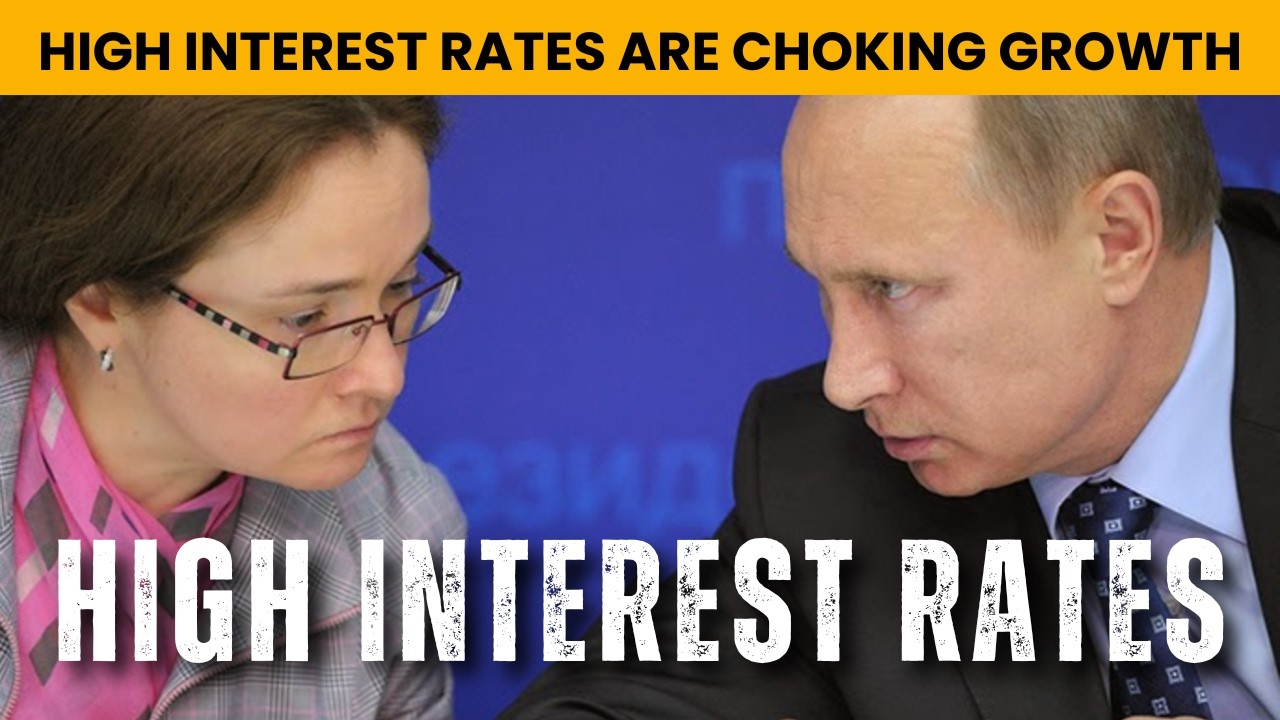

The Duran · Putin's Loyalty to Nabiullina Is Costing Russia Growth · July 5, 2026
Russia's Central Bank Overcooled Economy With 10 Percent Real Interest Rates
The Duran
The Duran
Putin's Loyalty to Nabiullina Is Costing Russia Growth
"My point of view is that the economy cannot exist for long at extremely high rates uh real high rates that exist today and our real rates are around 10% that is the central bank's policy rate minus current inflation and 10% is a rate that can be applied in the short term in order to cool the economy. What we see today in my opinion is quite obvious. We have already overcooled the economy."
German Gref, CEO of Russia's largest bank Sberbank, publicly stated that Russia's Central Bank has overcooled the economy by maintaining real interest rates at 10 percent, far above what businesses can sustain. Despite central bank chief Elvira Nabiullina's recent half-point cut from 15 to 14.5 percent, real rates remain punishingly high as inflation falls, with small businesses and consumers paying 12-20 percent on loans. The criticism is notable because Gref, who owns Sberbank through the Russian central bank, has traditionally been viewed as a monetary hawk aligned with liberal economic policy.

About this episode

Alexander and his host discuss Russia's central bank interest rate policy and its impact on economic growth, with a focus on mounting criticism from major business leaders. Despite apparent positive economic indicators including wealth growth of 37 percent between 2020 and 2025 and rising real wages, Central Bank chief Elvira Nabiullina maintains real interest rates at 10 percent, which critics argue is strangling small and medium-sized businesses. German Gref, CEO of Sberbank, Russia's largest bank owned by the central bank itself, publicly stated the economy has been overcooled and cannot sustain such high rates long-term. Alexander explains that while larger industrial groups like Rosneft and Rosatom fund operations through retained profits and are unaffected, small businesses and consumers face loan rates of 12-20 percent. Nabiullina's recent half-point cut from 15 to 14.5 percent is essentially meaningless as falling inflation maintains the same real rate gap. Alexander reveals this pattern mirrors 2014-2019 when Nabiullina kept real rates at 5 percent for five years until Putin personally intervened. He argues she believes the economy is at full capacity and any rate reduction would cause overheating and inflation, while critics like Gref contend significant spare capacity exists. The most significant revelation is that Putin will not replace Nabiullina regardless of economic criticism due to her past loyalty and execution during critical moments, including stabilizing the economy in 2022 and cleaning up the banking system. Alexander suggests Putin may eventually intervene again, possibly in 2026, but emphasizes that personal loyalty trumps performance concerns in Russian leadership decisions.

Key takeaways

More stories More from The Duran