← All stories
History

Ken Burns Claims George Washington Owned 577 Enslaved People
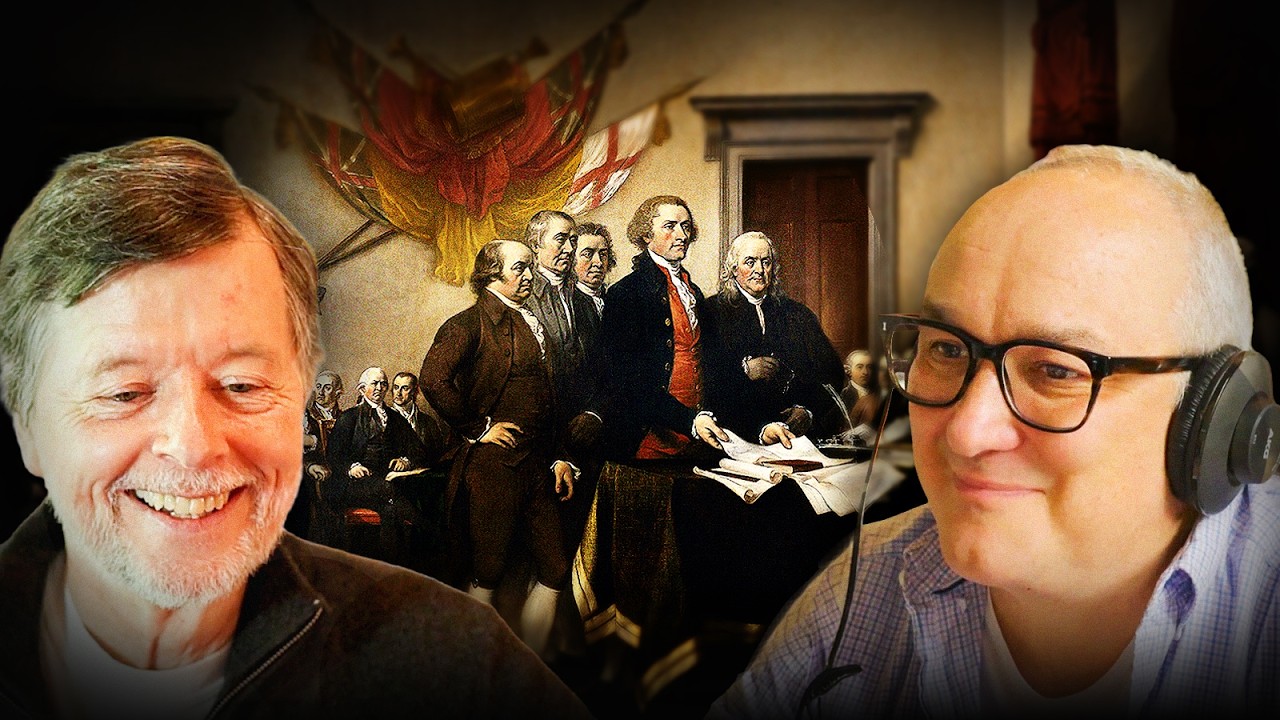
The Rest Is History · The American Revolution’s Biggest Myth With Ken Burns · July 4, 2026
Ken Burns Claims George Washington Owned 577 Enslaved People
The Rest Is History
The Rest Is History
The American Revolution’s Biggest Myth With Ken Burns
"He owns 577 human beings. As the historian and writer Rick Atkinson says, two-thirds of the way through a magisterial trilogy of the American Revolution says, you can't square that circle, and you can't. There's no excuse you can make, man of his times, whatever. It's just not right."
Documentary filmmaker Ken Burns states that George Washington personally enslaved 577 people, citing historian Rick Atkinson's assertion that this fundamental contradiction cannot be reconciled with Washington's legacy. Burns emphasizes there is no acceptable justification for this, rejecting the common 'man of his times' defense. This figure provides specific scale to Washington's slaveholding in a major public history platform.

About this episode

Documentary filmmaker Ken Burns joins The Rest Is History podcast to discuss his latest series on the American Revolution, released during the conflict's 250th anniversary. Burns argues land—specifically westward expansion beyond British-imposed Appalachian boundaries—was the primary driver of colonial separatism, more than taxation. He reveals that approximately 20,000 African Americans fought in the war, with three-quarters siding with the British who offered freedom, and emphasizes that the Declaration of Independence's egalitarian language immediately activated marginalized groups despite founders' hypocrisy. Burns contends the revolution would have failed without French intervention after Saratoga, and that George Washington's voluntary surrender of power was uniquely essential to establishing democratic norms. He acknowledges Washington owned 577 enslaved people, calling this an inexcusable contradiction. The filmmaker defends the revolution's global significance as the first tangible expression of Enlightenment ideals, while host Dominic Sandbrook challenges whether American exceptionalism holds given Canada and Australia achieved comparable freedom without violent separation. Burns describes the 'Ken Burns effect'—the documentary technique of panning and zooming on still photographs—as emerging from his friendship with Steve Jobs, who named the iMovie feature without permission in 2003. The episode explores how both British and American narratives minimize inconvenient aspects: Britain largely ignores the war in education, while Americans downplay French military contributions and Washington's tactical battlefield losses.

Key takeaways

More stories More from The Rest Is History