Analyst Claims Russian Strikes on Kiev Are Softening Up Operation Before Assault
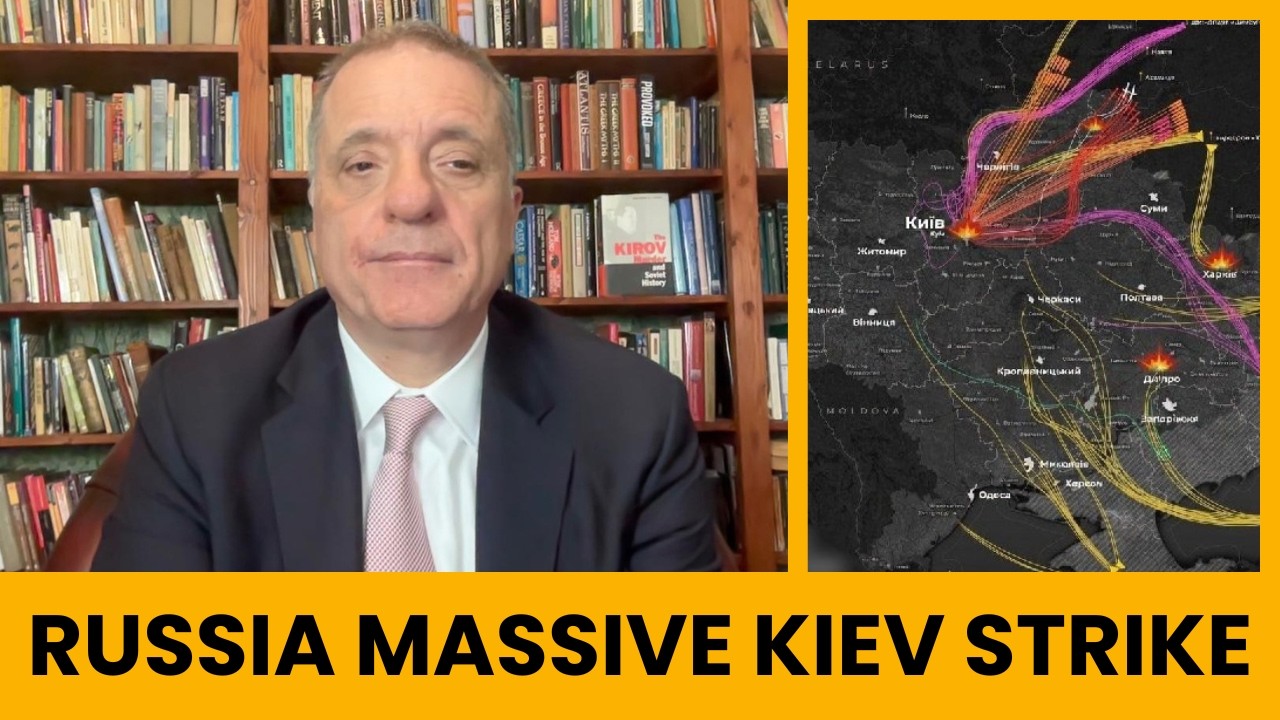
"If you are the Russians and you are indeed intending at some point in the next few weeks, months or perhaps year to attack Kiev itself, to storm Kiev itself, then what you need to do is to soften its defenses. And well, to me at least, this operation, these attacks on Kiev, which as I said, I now anticipate are going to intensify, especially after the orchnik begins to be used do seem to me to be consistent with a Russian softening up operation ahead of a potential Russian operation to capture Kiev itself."
About this episode
In this July 2, 2026 analysis, the speaker examines Russia's massive 70-missile strike on Kiev and argues it represents part of a systematic campaign to soften Ukrainian defenses ahead of a potential Russian assault on the capital. The attack, one of the largest concentrated strikes on a single city since the war began, utilized multiple missile types including subsonic cruise missiles, ballistic missiles, and reportedly hypersonic Zircon systems, killing 13 people. The speaker reveals that a reliable intelligence source has confirmed Russia is preparing a major offensive toward Kiev through Chernigov region from Bryansk, information corroborated by Ukrainian General Syrsky's statements about Russian orders to capture the capital. Russian operations around Sumy and ongoing strikes appear consistent with this plan. On the battlefield, Russian forces continue advancing across multiple fronts, with particular pressure on Slavyansk, Kramatorsk, and Orekhov, prompting warnings that Ukraine should withdraw troops to avoid cauldron situations similar to Avdiivka. The speaker criticizes European defense and energy policies, revealing that UK Prime Minister Starmer's announced £15 billion defense increase actually cuts funding to the British Army, Navy and Air Force while sacrificing road and energy infrastructure spending. He also highlights President Trump's threat to cut US natural gas exports to Europe over methane regulations, noting the irony that Europe replaced reliable Russian gas with supplies from a country willing to use energy as political leverage. The analysis warns of accelerating Russian offensive operations through summer, predicting major Ukrainian territorial losses in Donbass and Zaporizhzhia, potentially including operations against Kiev itself.
Key takeaways
- Russia conducted its largest concentrated missile strike on Kiev using approximately 70 missiles and hundreds of drones, killing 13 people in what may be a softening-up operation before a ground assault on the capital
- A reliable intelligence source confirms Russia is preparing a major offensive toward Kiev through Chernigov region from Bryansk, with Ukrainian General Syrsky stating Russian forces have orders to capture the capital
- Russian forces are advancing on multiple fronts with intensifying pressure on Slavyansk, Kramatorsk, and Orekhov, creating conditions for potential cauldron encirclements if Ukraine does not withdraw troops
- UK Prime Minister Starmer's announced £15 billion defense spending increase actually represents funding cuts to the British Army, Navy and Air Force, with most money directed to nuclear forces while road and energy infrastructure budgets are slashed
- President Trump threatened to halt US liquefied natural gas exports to Europe over EU methane regulations, demonstrating energy leverage Russia never employed despite formerly supplying most of Europe's gas
- European natural gas reserves stand at dangerously low levels ahead of winter, raising concerns about potential price spikes and blackouts similar to the 2021-2022 crisis
- The speaker predicts major Ukrainian territorial losses across Donbass and Zaporizhzhia over coming months, with potential Russian operations against Kiev creating conditions for European panic by autumn