Edward Norton Admits He Based Death to Smoochy Character on Woody Harrelson
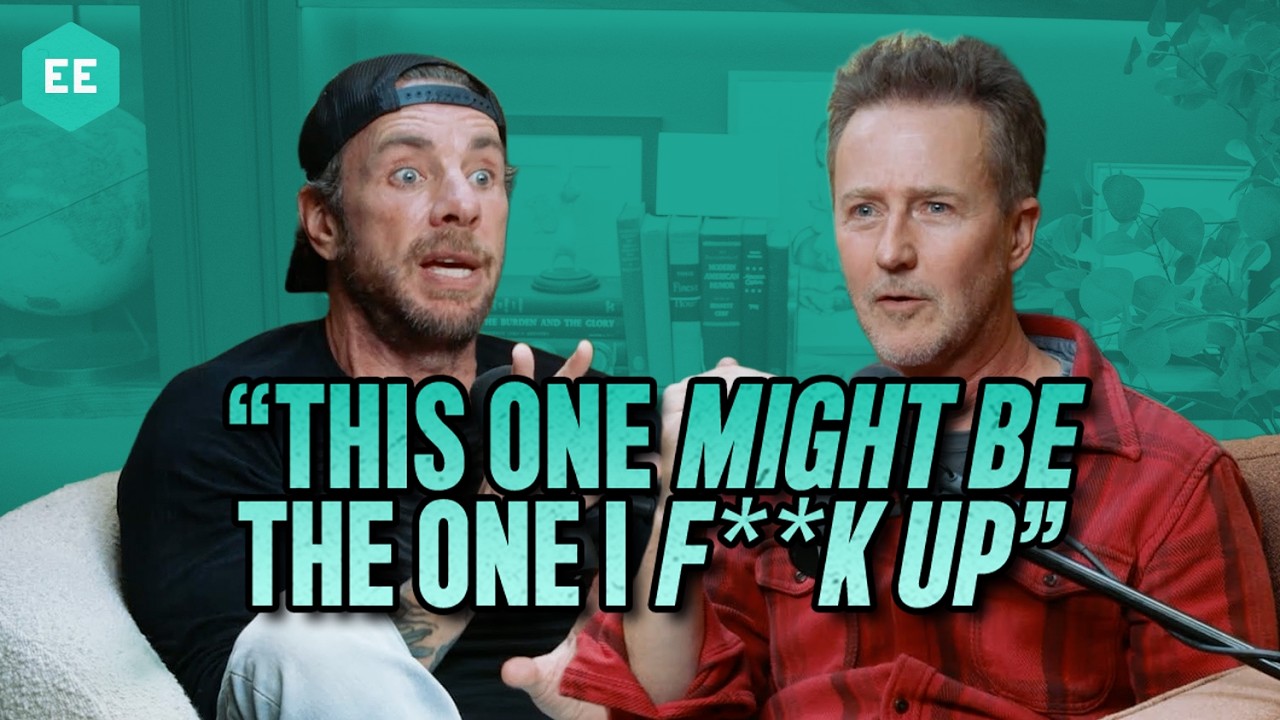
"I just decided, like, that Sheldon Mopes was Woody. And, you know, and it took Danny, like, it took Danny a couple days too, where he was like, oh my God."
About this episode
Actor Edward Norton discusses his approach to character acting in a wide-ranging conversation with host Dax Shepard, revealing specific techniques and inspirations behind some of his most memorable roles. Norton divides actors into two categories: iconic performers like Clint Eastwood and Harrison Ford who audiences seek out for consistent qualities, and shapeshifters who serve as vessels channeling different characters. Norton firmly places himself in the latter category, describing his process as absorbing and channeling experiences rather than projecting a consistent persona. The Oscar-nominated actor details his technical approach to mimicry, explaining that successful impersonation requires understanding where sound physically resonates in the mouth and face rather than just hearing vocal patterns. Norton credits his childhood fascination with interesting people for developing this skill, admitting he would spend hours imitating actors and other compelling figures in front of mirrors. He reveals that he still works extensively with trusted actor friends and mirrors when preparing roles like folk musician Pete Seeger. In a notable disclosure, Norton confirms he based his character Sheldon Mopes in Death to Smoochy entirely on Woody Harrelson's vocal patterns and mannerisms, a choice that initially puzzled director Danny DeVito during the first days of shooting. Norton describes his acting philosophy as embracing uncertainty with each new project, maintaining a healthy fear that each role might be the one he fails to crack, while trusting in a process of deep immersion into the world and psychology of each character.
Key takeaways
- Edward Norton reveals he based his Death to Smoochy character Sheldon Mopes directly on mimicking Woody Harrelson's voice and mannerisms, telling director Danny DeVito the inspiration would come to him.
- Norton categorizes himself as a shapeshifter actor who channels characters rather than an iconic performer like Clint Eastwood or Harrison Ford who project consistent qualities audiences seek.
- The actor explains successful vocal mimicry requires understanding where sound physically resonates in the mouth and face, not just hearing the voice patterns.
- Norton admits to spending his childhood imitating interesting people in front of mirrors because he felt uninteresting himself and wanted to embody compelling qualities.
- He still works extensively with mirrors and trusted actor friends when preparing roles, describing a process of deep immersion until the character suit fits.
- Norton maintains a philosophy of never feeling certain he will succeed with the next role, always fearing each new project might be the one he fails to crack.
- The actor describes his craft as enjoying diverse experiences without the consequences of committing his whole life to any single pursuit or identity.