Iranian Parliament Speaker Seeks Strategic Military Relationship with China to Liberate Jerusalem
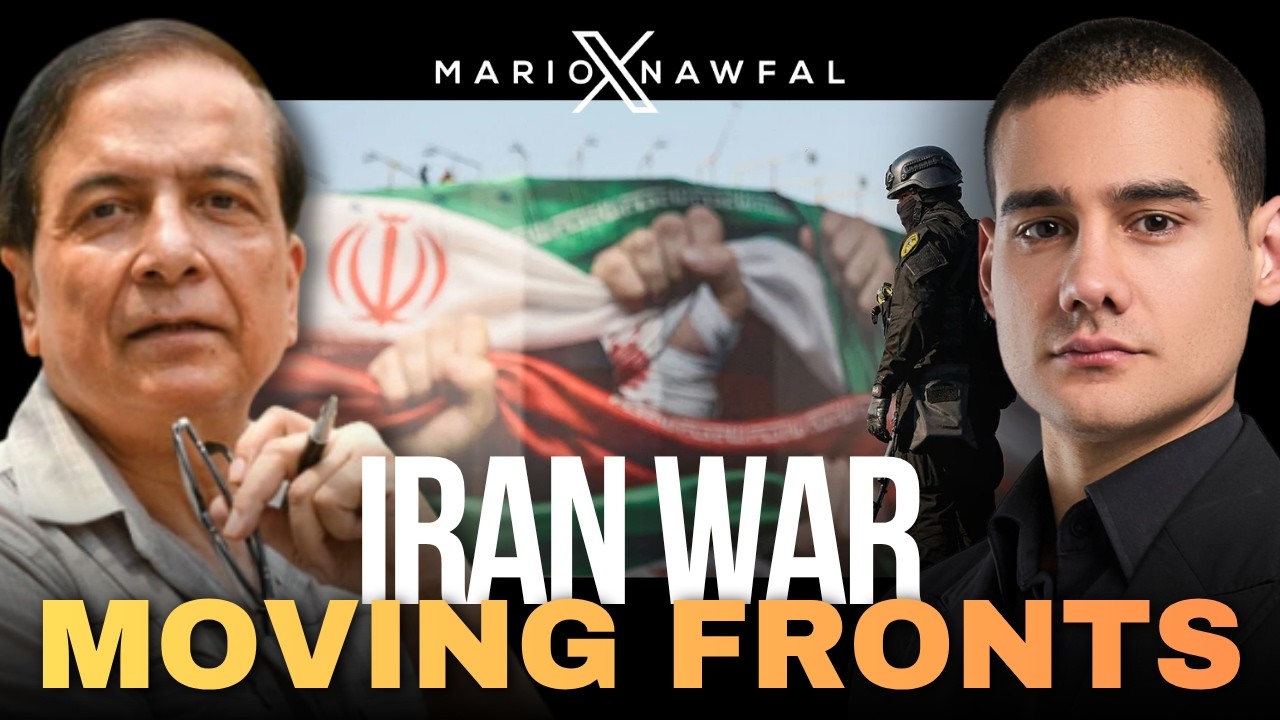
"Kalibaaf who is the Iranian speaker now he's going to China and a key thing that he has said is that with the Chinese he is looking at now taking the bilateral relationship which was commercial to the strategic level and along with that he has given an interview where he has said Kalibaaf has said that one of the things they were looking at is how to avenge the killing of the supreme leader that can only be done by the liberation of Jerusalem."
About this episode
Geopolitical analyst Mario Nawfal interviews former Indian Colonel Pravin Sawhney to assess rapidly deteriorating security situations across West Asia and Ukraine. Sawhney delivers a stark assessment: the Trump administration has no intention of honoring the recently signed Iran-US MOU, evidenced by US Central Command establishing alternative security arrangements for the Strait of Hormuz that directly contradict the agreement's recognition of Iranian-Omani sovereignty. He cites Admiral Brad Cooper's July 1st conference in Bahrain involving Syria and Lebanon, plus the formalization of a permanent US embassy in Jerusalem, as proof Trump prioritizes maintaining petrodollar hegemony and Israeli expansion over regional peace. The conversation occurs against a backdrop of acute instability: a cafe bombing in Damascus kills four, Houthi-Saudi forces mobilize in Yemen threatening the Bab el-Mandeb Strait, and a US Navy Seahawk helicopter crashes in the Arabian Sea with one crew member missing. Sawhney reveals Iranian Parliament Speaker Kalibaaf is in China seeking to elevate bilateral relations from commercial to strategic military level, explicitly to coordinate the liberation of Jerusalem and avenge the Supreme Leader's assassination. On Ukraine, Sawhney claims Putin has abandoned the diplomatic 'Anchorage spirit' following his meeting with Trump and signaled a shift from Special Military Operation to full war doctrine, which under Russian policy permits first-use of tactical nuclear weapons. He cites Russian hardliner Sergey Karaganov's influence and Putin's recent declaration on liberating Donbas and Novorossiya extending to the Black Sea. The episode captures 74 Russian missiles and 496 drones striking Kiev overnight in what officials call the largest attack of the war, killing 13 and injuring 86. Both analysts conclude that rather than disengaging from foreign conflicts, Trump is doubling down on NATO and Middle East involvement, abandoning earlier peace rhetoric while the world moves toward proxy and potentially direct great power confrontation.
Key takeaways
- Former Indian Colonel Pravin Sawhney asserts Trump administration is actively undermining the Iran-US MOU by establishing parallel Strait of Hormuz security arrangements through Central Command
- Putin has signaled shift from Special Military Operation to war doctrine in Ukraine, which permits first-use of tactical nuclear weapons under Russian policy
- Iranian Parliament Speaker Kalibaaf seeks strategic military relationship with China explicitly to coordinate liberation of Jerusalem and avenge Supreme Leader's assassination
- Russia conducted its largest attack on Kiev with 74 missiles and 496 drones, killing 13 and injuring 86, demonstrating escalation despite ongoing diplomatic overtures
- US signed permanent embassy agreement in Jerusalem and refuses to withdraw forces from Gulf region despite MOU provisions, indicating commitment to Greater Israel and petrodollar maintenance
- Houthi and Saudi-backed forces mobilizing in Yemen threatening Bab el-Mandeb Strait while Syria faces renewed instability with Damascus cafe bombing killing four
- Trump criticizing NATO funding levels while simultaneously backing alliance expansion, seeking greater European military spending primarily on American weapons systems