← All stories
History

Emmanuel Nobel Controlled More Oil Than Standard Oil Before WWI
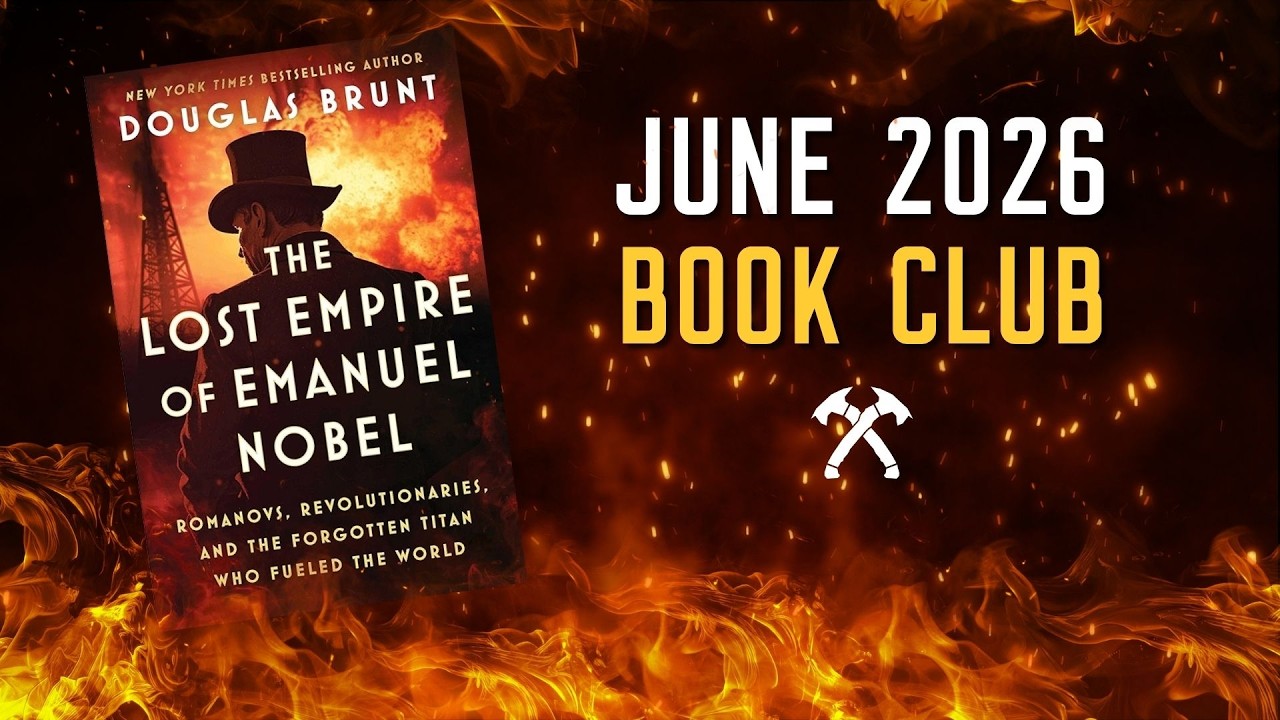
Danger Close · The Lost Empire of Emanuel Nobel · June 27, 2026
Emmanuel Nobel Controlled More Oil Than Standard Oil Before WWI
Danger Close
Danger Close
The Lost Empire of Emanuel Nobel
"By his estimation, the town now contained the aristocracy of half of Petrograd, assorted government ministries, and several relatives of the murdered Tsar Nicholas II. When World War I started, Nobel controlled more oil than anyone in the world. It was far bigger even than Standard Oil."
Emmanuel Nobel's Russian petroleum empire was larger than Rockefeller's Standard Oil by 1914, controlling the world's most abundant oil reserves in southern Russia. World War I became the first mechanized war requiring massive fuel supplies for submarines, planes, and navies, making Nobel's oil the prize every power sought to control during the conflict and subsequent Bolshevik Revolution.

About this episode

Host Jack Carr interviews author Douglas Brunt about his new book The Lost Empire of Emmanuel Nobel, which resurrects the forgotten history of Alfred Nobel's nephew who built the world's largest oil empire in Russia before being erased by Stalin's regime. Brunt reveals that Emmanuel Nobel controlled more petroleum than Standard Oil by 1914 and pioneered the first ocean-going oil tankers, but his industrial achievements were systematically deleted from history after the Bolshevik Revolution. The conversation uncovers explosive historical connections, including that Joseph Stalin worked in Nobel's oil fields as a youth, giving him the knowledge to later target those reserves, and that Emmanuel enforced his uncle Alfred's will creating the Nobel Prize despite pressure from Sweden's king and his own family who wanted the fortune. Brunt argues Stalin's rewriting of the Nobel family out of Russian history directly inspired George Orwell's 1984, and that the Russian Revolution may be the most important event of the last five centuries given its cascading consequences including Communist China, the Cold War, and producing history's two worst mass murderers in Stalin and Mao. The discussion also explores World War I as the first oil war, the role of Rasputin in destabilizing the Tsarist regime, and how Standard Oil's relationship with the U.S. State Department gave it advantages over Nobel during the revolutionary period. Brunt details his research process including archives in Stockholm and announces this book completes a turn-of-the-century trilogy with The Mysterious Case of Rudolf Diesel, with a third volume coming on another figure connected to both men.

Key takeaways

More stories More from Danger Close