Big Food Exploits Outdated Science to Make False Health Claims on Unhealthy Products
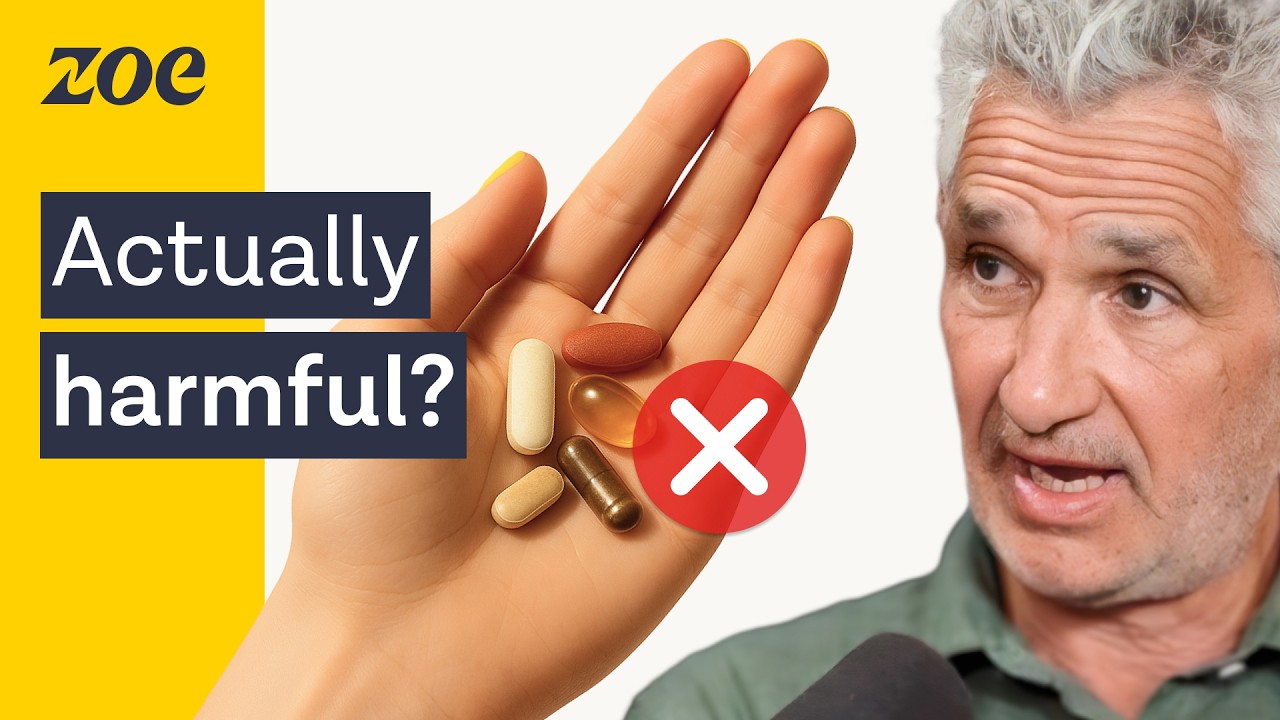
"This allows big food manufacturers to stick labels on foods that are blatantly unhealthy, contain 30% sugar, with a healthy label saying enhance or boosts your immune system when the science really doesn't back it up."
About this episode
On this episode of Zoe Recap, host Jonathan Wolf was joined by Professor Tim Spector and Professor Sarah Berry for a comprehensive examination of the supplement industry, its claims, and what the science actually supports. Spector opened with a controversial revelation that calcium supplements, which he previously prescribed to menopausal women, do not prevent fractures as intended and are instead associated with increased heart disease risk, possibly by hardening arteries. The conversation traced the historical origins of supplements back to industrialization and wartime deficiency crises, explaining why the modern supplement industry is built on outdated post-war science that no longer applies to well-nourished populations. Spector accused major food manufacturers of exploiting this legacy by adding trace minerals to sugar-laden processed foods and making unsubstantiated immune-boosting health claims. He further revealed that most supplements are now manufactured in Chinese factories using genetically engineered microbes, with surveys showing some products don't contain their labeled ingredients. Berry provided important nuance, identifying specific populations that genuinely benefit from supplementation including pregnant women taking folic acid, which reduces neural tube defects by 30-75%, elderly people with inadequate diets, vegans needing B12, and those with iron deficiency anemia. Both experts emphasized that for the majority of people eating reasonably balanced diets, vitamin and mineral deficiency is extremely rare, and the body tightly regulates nutrient levels within narrow ranges. Adding excess amounts through supplementation offers no benefit and can actually be harmful, forcing organs to work harder to eliminate toxins. The episode concluded with sharp criticism of premium supplements marketed at vulnerable consumers with inflated health promises.
Key takeaways
- Spector revealed calcium supplements don't prevent fractures and are associated with increased heart disease risk, contradicting decades of medical advice.
- Big Food companies add trace minerals to unhealthy high-sugar foods and make unsubstantiated immune-boosting health claims using outdated post-war science.
- Most supplements are manufactured in China through genetically engineered microbe fermentation, with some not containing their labeled ingredients.
- Folic acid supplementation for pregnant women reduces neural tube defects by 30-75%, representing clear evidence-based benefit.
- Vitamin and mineral deficiency is extremely rare in well-nourished populations eating reasonably balanced diets.
- The body tightly regulates nutrient levels and excess supplementation offers no benefit while potentially causing harm by straining organs.
- Specific groups benefit from supplements including elderly with inadequate diets, pregnant women, vegans needing B12, and those with iron deficiency anemia.