← All stories
Health, Longevity & Biohacking

Professor Lord Claims Inflammation Directly Breaks Down Muscle Mass Through Cortisol
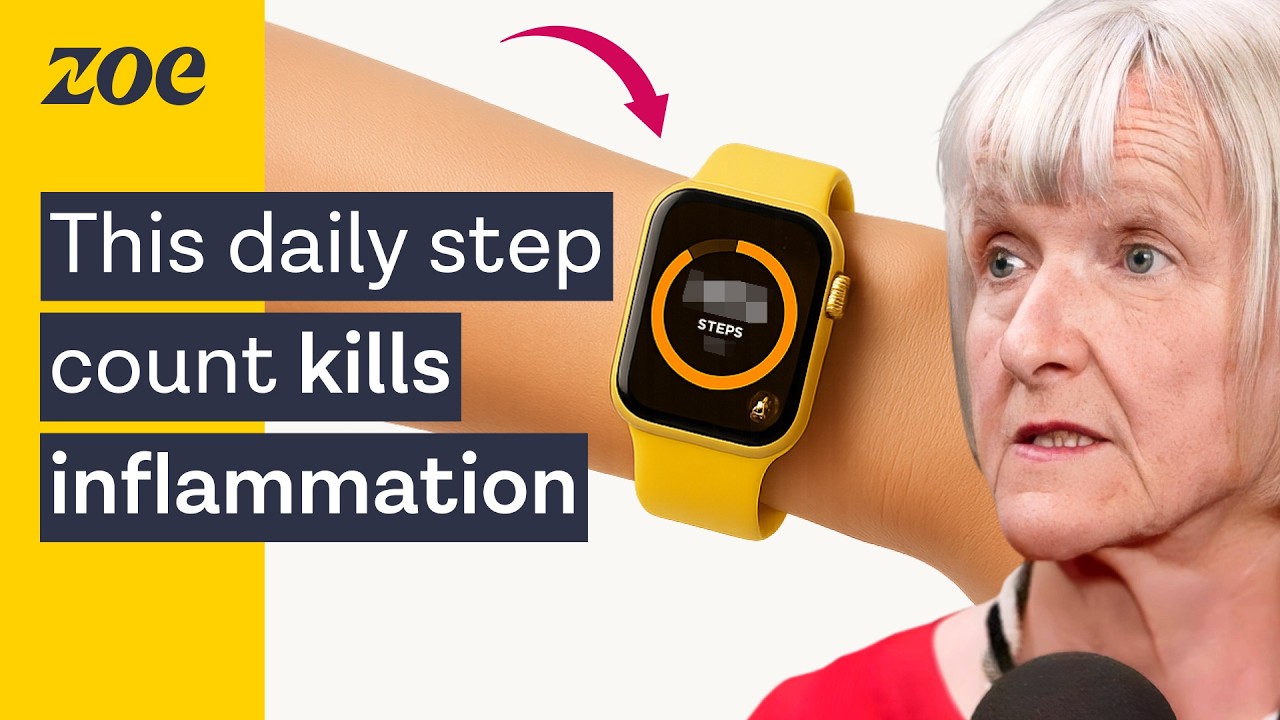
ZOE Science & Nutrition · Most replayed moment: Easy Steps to Reduce Inflammation and Slow Ageing | Professor Janet Lord · June 16, 2026
Professor Lord Claims Inflammation Directly Breaks Down Muscle Mass Through Cortisol
ZOE Science & Nutrition
Most replayed moment: Easy Steps to Reduce Inflammation and Slow Ageing | Professor Janet Lord
"This inflammation actually does lots of things to muscle. It slows down the production of molecules that you need to grow the muscle. They're called growth factors. So it suppresses that. It also causes the production in the muscle of hormones, stress hormones. And again, some of your viewers may have heard of one called cortisol. And cortisol breaks muscle down."
Professor Janet Lord revealed that chronic low-level inflammation actively degrades muscle tissue by suppressing growth factors and triggering cortisol production within muscles themselves. This mechanism directly causes age-related frailty and sarcopenia, contradicting the assumption that muscle loss is simply an inevitable part of aging.

About this episode

In this episode of Zoe Recap, host Jonathan Wolf speaks with Professor Janet Lord about inflammaging, the connection between chronic low-level inflammation and accelerated aging. Lord, a leading researcher in aging and immunity, explains that unlike acute inflammation from injury or infection, inflammaging involves persistent low-grade inflammation that accumulates over years and drives age-related diseases including dementia, cardiovascular disease, and cancer. The conversation reveals surprising mechanisms: Lord presents evidence that chronic inflammation actively degrades muscle tissue by suppressing growth factors while triggering cortisol production within muscles themselves, directly causing age-related frailty rather than aging being inevitable. Lord also explains that moving muscle functions as a major immune system regulator by producing anti-inflammatory cytokines that educate immune cells, positioning physical activity as a direct pharmacological intervention. The discussion challenges common assumptions about helping elderly parents, with Lord advocating for resistance and stairs rather than ease and ground-floor living. A key finding is that prolonged sitting can undo exercise benefits by halting anti-inflammatory cytokine production from muscles, making sedentary time breaks as important as dedicated exercise. Lord recommends both aerobic exercise to reduce inflammation and resistance training to maintain muscle mass and strength, emphasizing that simple interventions like climbing stairs daily can significantly extend healthy lifespan by combating inflammaging at its source.

Key takeaways

More stories More from ZOE Science & Nutrition