Financial Advisor Attempted $125,000 Commission Scheme Replacing Equity Investments With Life Insurance
"They had lots of runway and time on their side. They hired a new investment advisor. And after one year having saved their first $150,000, the advisor came back to them in year two with a really big idea. He wanted them to stop investing in equities altogether and put all their savings into a whole life policy for the next 10 years. And to put it in perspective, the insurance coverage that they were being sold could have been handled with a simple 10-year term policy for $3,000, leaving $147,000 still to be compounding inequities. But instead, the proposal had mashed everything together in one to me, complicated product for them at their stage."
About this episode
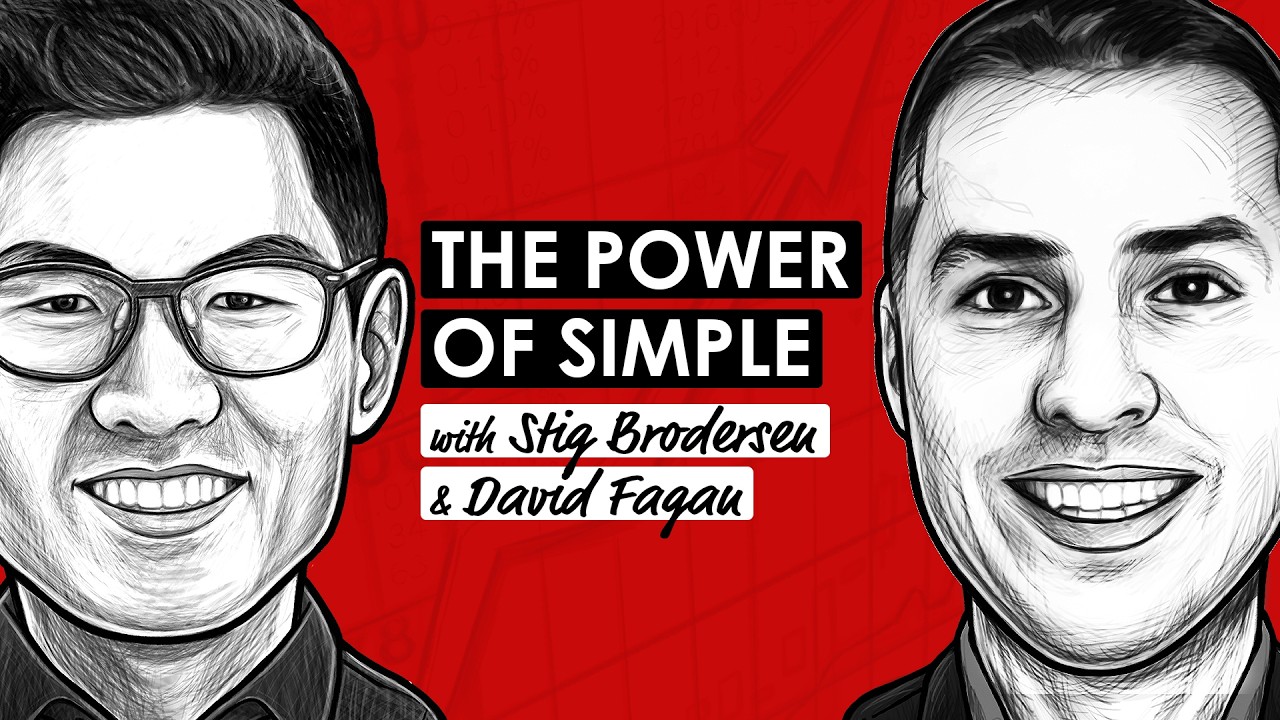
On this episode of The Investor's Podcast, host Stig Brodersen is joined by close friend and managing partner at MBF Chartered Professional Accountants David Fagan for a deep conversation on why simplicity consistently beats complexity in investing, business, and life. The episode's most striking revelation came when Fagan shared that a portfolio manager at a major Canadian bank admitted he couldn't manage a multi-million dollar portfolio using just a few ETFs because it would look too simple, exposing how industry incentives prioritize complexity over client outcomes. Fagan also detailed a case where a financial advisor attempted to redirect a client's $150,000 annual equity investments into a whole life insurance policy that would have generated over $125,000 in first-year commissions, demonstrating how complexity often disguises misaligned incentives. The conversation explored why 98% of Canadian equity managers and 90% of US large-cap managers failed to beat their benchmark indexes over 15 years, yet investors continue chasing sophisticated strategies. Drawing on mental models like Occam's Razor and the concept of irreducibility, Fagan explained how his accounting firm built success through radical focus and saying no to opportunities that add complexity. The discussion touched on behavioral finance, personality types, and why human nature drives us toward complexity even when simplicity produces superior long-term results. Brodersen and Fagan examined how industries from healthcare to finance benefit from maintaining unnecessary complexity, and why most people would achieve better financial outcomes through basic strategies like automated savings and low-cost index funds. The episode concluded with an announcement of their new educational initiative, Compounding Simplicity, aimed at helping Canadian business owners manage their own portfolios through simple, evidence-based approaches.
Key takeaways
- Portfolio manager at major Canadian bank admitted he cannot use simple 3-4 ETF strategy for multi-million dollar accounts because it would look too basic to justify fees.
- Financial advisor pushed client to redirect $150,000 annual savings from equities to whole life insurance generating over $125,000 first-year commission for the advisor.
- 98% of Canadian equity managers and 90% of US large-cap managers underperformed their benchmark indexes over 15 years despite adding complexity.
- Fagan's accounting firm built success through radical focus using one-hour flight discipline and saying no to opportunities outside their niche serving owner-managed businesses.
- Most investors would achieve better outcomes through automated savings systems and low-cost index funds rather than chasing sophisticated investment strategies.
- Complexity often exists not because it's necessary but because it's expected and profitable for intermediaries in financial services and other industries.
- Brodersen and Fagan launched Compounding Simplicity website and YouTube channel to educate Canadian business owners on simple portfolio management without professional help.