← All stories
Politics

Swedish Finance Minister Admits Democratic Socialism Was Absolutely Impossible in Practice
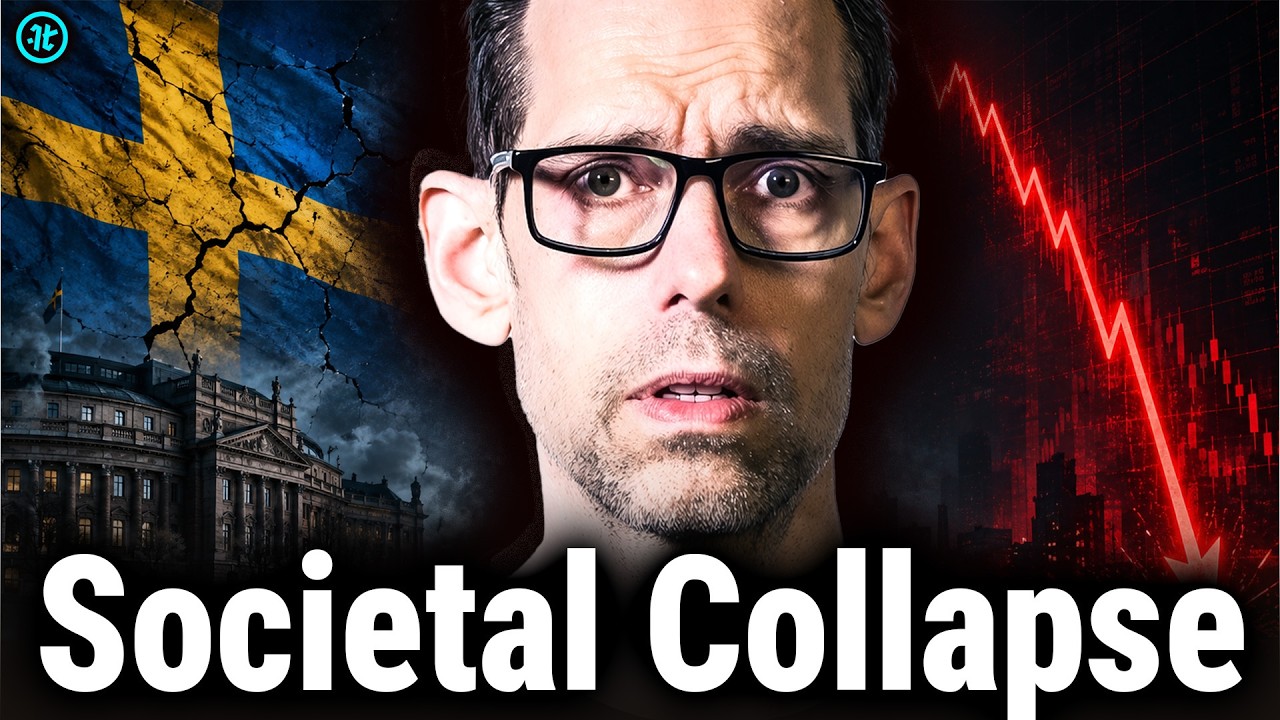
Impact Theory · The Sweden Socialists Point To Doesn't Exist — It Collapsed In 1990 | Tom Deepdive · May 19, 2026
Swedish Finance Minister Admits Democratic Socialism Was Absolutely Impossible in Practice

Impact Theory
Impact Theory
The Sweden Socialists Point To Doesn't Exist — It Collapsed In 1990 | Tom Deepdive
"What we believed in as young socialists simply turned out to be impossible in practice. The whole thing with democratic socialism was absolutely impossible. It just didn't work. There was no other way to go than market reform."
Kjell-Olof Felt, Sweden's Social Democrat finance minister during the 1980s and 1990s economic crisis, publicly admitted that democratic socialism failed in practice after Sweden's welfare state collapsed. His admission directly contradicts claims by American socialists who hold up Sweden as proof that their model works, when Sweden actually abandoned it.

About this episode

In this episode, the host delivers a monologue dismantling the American socialist movement's claims about Sweden's welfare state, revealing that the Nordic model they champion was actually abandoned after catastrophic failure in the 1990s. The episode opens with the story of children's author Astrid Lindgren facing a 102% tax bill in 1976, illustrating the absurdity of Sweden's progressive tax system before its collapse. Sweden's economy crashed from 4th richest in the world in 1970 to 13th by 1993, with GDP dropping 5%, unemployment quintupling, and currency losing a third of its value. The host reveals that Sweden's Social Democrat finance minister Kjell-Olof Felt publicly admitted democratic socialism was impossible in practice, yet American politicians like AOC, Bernie Sanders, and New York mayoral candidate Zohran Mamdani continue citing Sweden as proof their policies work. The episode systematically proves that Sweden's subsequent prosperity came from aggressive free market reforms: abolishing wealth and inheritance taxes, slashing corporate tax rates from 52% to 20.6%, privatizing state-owned banks and energy companies, introducing school choice, and allowing private healthcare. The host argues no country over 100 million people has ever sustained high growth, low inequality, and a large welfare state simultaneously due to power law distributions in wealth creation. He warns that America already spends Nordic-level percentages on welfare (22% vs 24% of GDP) but runs $1.8 trillion annual deficits, making further expansion catastrophic. The episode concludes with four policy prescriptions: accepting natural inequality as the price of growth, eliminating federal debt before expanding programs, acknowledging that welfare requires shared cultural values to prevent abuse, and learning from Sweden's actual market-based reforms rather than its abandoned socialist experiment.

Key takeaways

More stories More from Impact Theory