Hitchens predicts UK could face a ‘money dies’ moment and imposed poverty
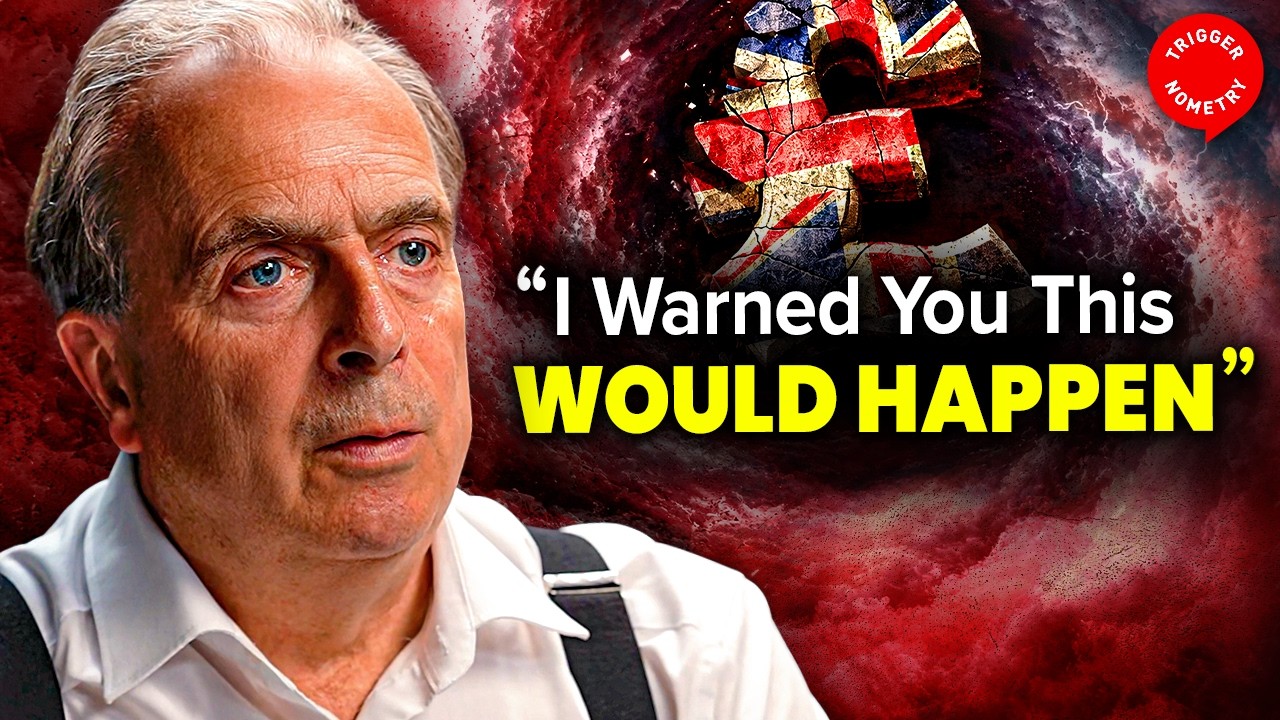

"When money dies, which is the great The great fear that I have, that the money which we use simply ceases to exist, really. It just becomes paper and binary code, and it doesn't pay for anything. And when money dies, then that's what happens."
About this episode
Peter Hitchens tells Triggernometry he believes Britain is on a downward trajectory driven by long-term economic, institutional and cultural failures, arguing the state has expanded while the family has weakened, making provision for children and old age both more costly and less effective. He criticises what he calls a national “delusion” about Britain’s power and wealth, and links this to foreign-policy ambitions and defence spending choices, including the nuclear deterrent.
On public finances, Hitchens warns of a potential currency and fiscal “cataclysm”, describing scenarios where money “dies” and living standards fall abruptly, drawing on his experience of post-Soviet Russia to illustrate how quickly middle-class security can collapse. He also makes a specific historical claim that the UK defaulted on its First World War debt to the United States by stopping payments in 1934.
The conversation ranges across Britain’s 20th-century history: Hitchens argues the gravest UK mistake was entering the First World War, which he says bankrupted and transformed the country, and he disputes popular narratives about Britain’s post-Second World War status and the “special relationship” with the US. He also criticises pandemic-era conformity and what he views as the public’s appetite for big government.
In closing, Hitchens says the UK is not discussing what he sees as repeated efforts to prepare the public for war, and he questions portrayals of Russia as an imminent military threat.
Key takeaways
- Hitchens says Britain is “borrowing money to pay the interest on its debts” and argues multiple core institutions are failing, from criminal justice to transport.
- He argues that replacing family functions with state provision has been both expensive and damaging, and says reversing women’s mass entry into paid work is now structurally difficult.
- He predicts a potential fiscal/currency rupture in which money “ceases to exist” in practical terms, leading to sudden impoverishment and social disorder.
- He claims the UK stopped paying its First World War debt to the US in 1934 and “actually defaulted” on it.
- He argues the UK entered the First World War unnecessarily and that it triggered a long-term national decline in wealth, power and cohesion.
- He says Britain’s “special relationship” with the US is largely a fantasy, recounting that he saw the UK “ruthlessly squashed” by the Clinton administration on Ireland.
- He alleges British public messaging is encouraging war readiness and questions whether Russia has the capability implied by official warnings.